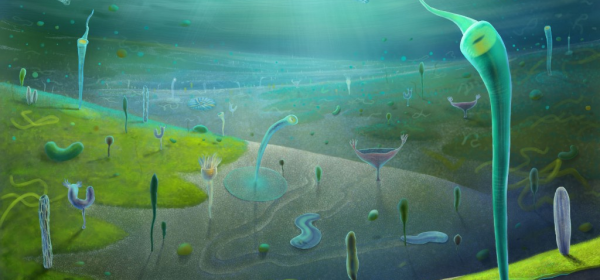
The explosion of complex life may have occurred four million years earlier than previously thought. © Xiaodong Wang

China: The Origins of Complex Life Pushed Back to Before the Cambrian! (6.4.2026)

Associate Professor Fan Wei, a leader of the group, says, “After years of fieldwork, we finally found several sites with the right conditions where animal fossils are preserved together with abundant algae.”

Unlike most Ediacaran sites, where organisms are preserved as impressions in sandstone, the Jianchuan fossils are preserved as thin carbon-rich films. This is type of preservation is more typical of famous Cambrian sites such as the Burgess Shale in Canada.

This exceptional preservation reveals anatomical details rarely seen in Ediacaran fossils, including feeding structures, digestive systems and organs used for movement.

Associate Professor Ross Anderson, a co-author of the study from the Oxford Universities Museum of Natural History, says, “Our results indicate that the apparent absence of these complex animal groups from other Ediacaran sites may reflect differences in preservation rather than true biological absence.”

“Carbonaceous compressions like those at Jiangchuan are rare in rocks of this age, meaning that similar communities may simply not have been preserved elsewhere.”
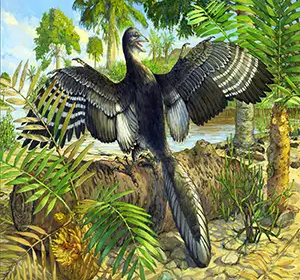
Illustration showing Archaeopteryx in life, including its tertial feathers that would have helped it fly. Credit: Michael Rothman. Click image to enlarge.

US: Ongoing Analysis of – Archaeopteryx Fossil – Continues to Proves Darwin Right! (21.3.2026)

Differences in modern birds

Modern birds evolved shorter upper arm bones and specialized tertial feathers to close this gap.

Remarkably, the Chicago specimen of Archaeopteryx shows it had long tertial feathers too – something unseen in its flightless dinosaur relatives.

“Our specimen is the first Archaeopteryx that was preserved and prepared in such a way that we can see its long tertial feathers,” she noted.

These feathers, absent in closely related non-avian dinosaurs, suggest those creatures couldn’t fly.

“That tells us… Archaeopteryx could,” O’Connor added. “This also adds to evidence that suggests dinosaurs evolved flight more than once – which I think is super exciting.”

Evolutionary Development Mapped!

China: Scientists Uncover Mysteries of Early Life Evolution on Earth! (20.12.2024)

The research has revealed that life’s evolution from simple to complex in about 1.5 billion years is not a linear process but a pattern of alternating long-term stagnation and relatively rapid growth.

The results also highlighted the profound effects of sudden environmental shifts, such as temperature and oxygen level, on early complex life, offering crucial implications for studying alien life in harsh conditions and evaluating the future habitability of Earth, said Tang Qing from Nanjing University, the first author and one of the corresponding authors of the paper.

A peer-reviewer praised the work as “a long overdue paper to examine the fossil record of the Proterozoic,” which will make for “a plethora of papers following [its] publication.”

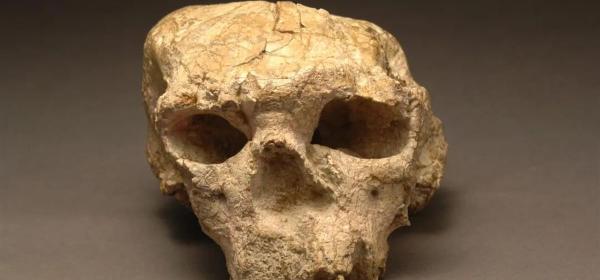
New ‘Third’ Fossilized Skull of “Yunxian Man” (Homo Erectus) Found in Central China! (29.9.2022)

In 1989 and 1990, the first and second such skulls, dating from 800,000 to 1.1 million years ago, were unearthed at an early Paleolithic period site in central China’s Hubei Province. The fossil skulls are believed to belong to Homo Erectus and were named “Yunxian Man.”

The new fossil, named “No. 3 Skull of Yunxian Man,” was discovered about 35 meters from the excavation location of the first two skull fossils, with similarities in terms of burial environment and the technical characteristics of their companion stone artifacts.

Archaeologists have carried out systematic excavations at the site since 2021, which led to the new discovery. Part of the new skull has been unearthed, with no obvious deformation visible so far.

Experts said that the new discovery will provide important evidence showing the evolution of Homo Erectus and its origin and development in China and East Asia.