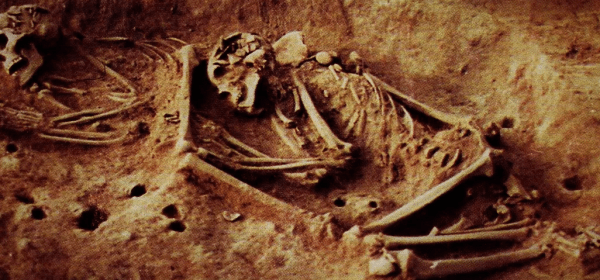
These skeletons of two hunter-gatherer individuals excavated at the Checua archaeological site north of Bogotá, Colombia, helped uncover the genetic details of a mysterious population. Ana María Groot / Universidad Nacional de Colombia

Colombia: Ancient Checua DNA Reveals “New Group of Humans” With No Genetic Ties to People Today! (4.1.2026)

Scientists have found genetic evidence of an ancient group of people in Colombia with no modern-day descendants. It’s as if they simply vanished from the face of the Earth. What’s more, they’re also not closely related to the ancient Native American populations that scientists had thought would be their ancestors.

“This is unexpected,” Andre Luiz Campelo dos Santos, an archaeologist from Florida Atlantic University who did not participate in the research, tells Adithi Ramakrishnan at the Associated Press. “Up to this point, we didn’t believe there was any other lineage that would appear in South America.”

An international team of researchers described the discovery in a study published in late May in the journal Science Advances. They analyzed DNA from the bones and teeth of 21 individuals found at five archaeological sites in the Altiplano—the high plains around Bogotá—dating to between 500 and 6,000 years ago. The analyses represent Colombia’s first ancient human genomes ever to be published.
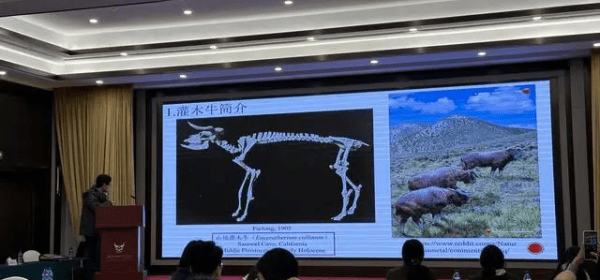
Shrub Ox Evolved Outside North America!

China: North American Shrub Ox Fossils Discovered in Eurasia! (24.10.2024)

Phylogenetic studies show that shrub oxen formed a sister group with musk oxen, indicating a closer evolutionary relationship between the two compared to other bovidae. 

“Building on previous research, we expanded our study to include Quaternary musk oxen and concluded that their evolution can indeed be divided into two groups: high-horned and low-horned species. These two groups migrated from Eurasia to North America during the Late Early Pleistocene to Early Middle Pleistocene, and the Late Middle Pleistocene, respectively,” Bai stated.

This research provides new material on the diversity and evolution of musk oxen and is significant for understanding faunal exchanges between Eurasia and North America during the Quaternary period.