Tibet: Special Education Provides Love for Disabled Children!

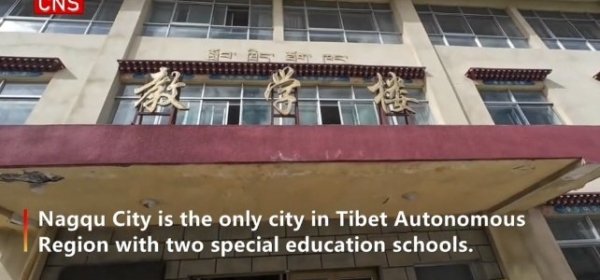
Founded in 2013, Nagqu Special Education School is the first comprehensive special education school in Nagqu City for children and teenagers with various types of disabilities — visually impaired, deaf, dumb and mental disabilities. In May 2022, a second special education school was established in Nagqu. It focuses on hearing, speaking and visually impaired students, while the first one has become a school for students with mental disabilities.  

China: New Law Assists Visually Impaired Citizens! (2.9.2023)

In Beijing, Liao Juan, an associate professor at Capital Normal University’s School of Management, said the law closely addresses the demands and expectations of the elderly and the disabled in terms of system design, establishing standards, and construction requirements.

She said the process of formulating the law is the best example of how the nation’s top legislature responds to public needs.

To implement the law and make it work effectively, the Ministry of Industry and Information Technology said it will give stronger support to technological innovation in constructing accessible services.

The use of new technologies to guide the blind, along with voice control and speech recognition, will be encouraged, the ministry said, adding that it will also require enterprises to “bridge the digital gap” to ensure the elderly and disabled enjoy technological convenience.

The China Disabled Persons’ Federation has promised to organize visits to accessible facilities and provide feedback to relevant departments.

The federation also said it will compile and publish more books in Braille and provide versions for those with poor vision.

‘Silent’ Restaurant Provides Livelihood to the Deaf, Mute! (28.9.2022)

When asked why she insisted on only providing jobs to the deaf-mute for 12 years, Li said she had witnessed the difficulties they experience as a child, with six of her family members both deaf and mute, and facing limited job opportunities, etc.

I chose to open a hot pot restaurant and make it easier for the disabled to prepare and serve dishes, with gas stoves replaced with induction equivalents, which are safer for deaf employees to use, Li said.

Xinxiang City is home to more than six million residents, of which more than 40,000 are deaf and mute, and with only one school for them to attend.

Li’s parents used to study at this school, meaning the employees in the hot pot restaurant are mainly their classmates. Now deaf people who are applying for work often take the initiative to ask Li for a job.

I hope that the deaf and mute can work and live normal lives, using their strength to earn a reasonable living, Li said.