Older" and "White" Boyfriend!Alleged "

US: Murdered Chinese Woman – Zhuang Menghan [庄梦涵] – Accused US “Boyfriend” of Abuse! (14.2.2025)

A 23-year-old Chinese student who was found dead at her off-campus residence on Feb. 4 had accused her boyfriend of abuse in a social media post, but the post was later deleted.

In the post, the victim said, “This guy abused me… He always acts like he’s innocent. He’s trying to send me to jail and everything he says is 99 percent lies. I thought it was true love, but I was blind.”

The Chinese Consulate General in Los Angeles confirmed her death on Wednesday.

Zhuang Menghan, also known as Emily King, was a fourth-year undergraduate student at the California Institute of the Arts (CalArts). A report from the local coroner revealed that she died from multiple injuries.
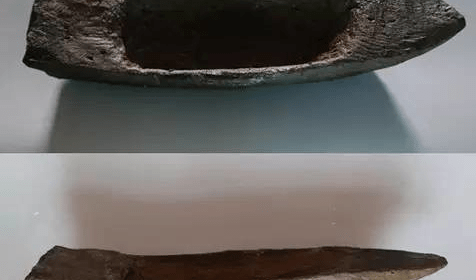
Ancient Chinese Canoe!

Ancient China: 5000 BCE Neolithic Boat Discovered at Hemudu, [Yuyao] Zhejiang! (13.3.2024)

From grasping usurping natural floating objects (such as people straddling a tree trunk or holding a gourd as a means of crossing a body of water) to waist-floats (perhaps several gourds tied together with ropes to increase the buoyancy of the mid-riff) to rafts (flat and wide buoyant objects tied together to increase the buoyancy – enough to bear the weight of a person whilst floating across the water). The emergence of rafts was a clear sign of a great technological leap forward for humanity which removed a traveller getting wet and actively creating proper water vehicles. Later, with the help of stone axes and fire (according to Friedrich Engels), a “boat” (as a “Canoe”) was made from a whole piece of wood. An example of this is pictured above which stems from the 7,000-year-old (c. 5000 BCE) Neolithic ruins discovered at Hemudu, Yuyao, situated in Zhejiang.

Early Modern Humans in China!

China: East Asian Homo Sapiens Study [45,000 BP] – Reveals Complex Characteristics! (17.2.2024)

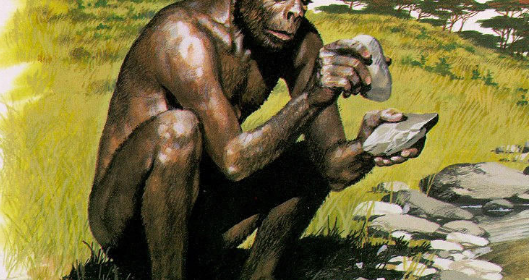
They made and used composite tools to hunt equids, ate meat and bone marrow, and used animal skins, Yang added.

Archaeologists also found that the stone tools, ornaments and bone implements unearthed at the site exhibit both Eastern and Western characteristics, providing evidence of the complex human communication in East Asia at the time.

The study has updated the traditional understanding of the diffusion and cultural development of Homo sapiens in East Asia, Yang said.