Before the ‘Big Bang’, space and time did not exist. Following the ‘Big Bang’, time and space existed simultaneously – everywhere. It is after the

Proletariat Blogging in the Heart of (UK) Predatory Capitalism! Exploring the Interface between Matter and Perception, Chinese Buddhism, Daoism, Hakka Ethnography, and All Aspects of Radical Politics, History, Psychology and Philosophy – 全世界无产者联合起来!
Before the ‘Big Bang’, space and time did not exist. Following the ‘Big Bang’, time and space existed simultaneously – everywhere. It is after the
This could imply that the ‘virtual’ nature of these particles actually represents a ‘gap’ in current human perception, and that when human scientific understanding advances beyond its current state, what was once thought to be ‘virtual’ particles will be understood in a new light. Of course, such a development in human faculties might well render Heisenberg’s Uncertainty Principle obsolete.
In a very real sense, materially based science has seen beyond its own limited methodology, and proven its original models of the physical universe to be redundant. Simply put, (and a point of argument correctly made by the idealists and religionists), matter is not what humanity thinks it is.
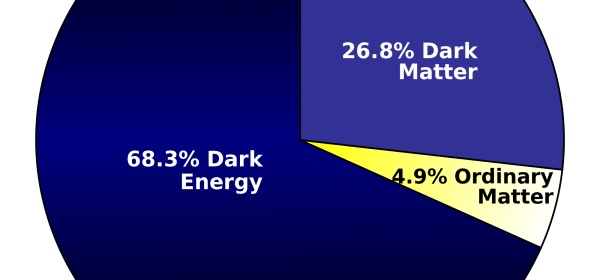
Another way in which these ‘unseen’ substances are known to be present is through the effect they appear to have on objects moving through what was once thought to be ’empty’ space. There appears to be a ‘gravitational’ effect on objects moving through apparently ’empty’ space that should not be happening if space was in fact ’empty’.
Today, through the use of advanced technology and mathematics we know that this is scientifically correct. This would suggest that Democritus had an experience no less important than the enlightenment of the Buddha, as it radically redefined humanity’s perception of reality and existence, and yet generally speaking, there are no temples containing statues of Democritus, or people applying a meditative method to replicate his mode of thought.
 SANGHA KOMMUNE (SSR)