Churchill originally stated that he thought all Nazi German (and Axis) War Criminals should be ‘shot’ as quickly and as quietly as possible at the

Proletariat Blogging in the Heart of (UK) Predatory Capitalism! Exploring the Interface between Matter and Perception, Chinese Buddhism, Daoism, Hakka Ethnography, and All Aspects of Radical Politics, History, Psychology and Philosophy – 全世界无产者联合起来!
Churchill originally stated that he thought all Nazi German (and Axis) War Criminals should be ‘shot’ as quickly and as quietly as possible at the
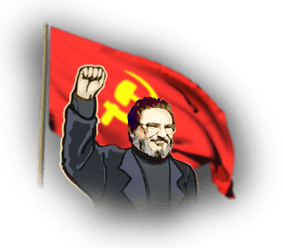
Between 1964 and 1980, the Shining Path followed a path of primarily ideological agitation against this revisionism, but in 1980, Abimael Guzman changed the operating stance of the Shining Path to one of Revolutionary armed struggle. This was in response to the ever growing influence of the United States in Peru, and the intensification of government-led massacres carried-out against the ordinary Peruvian people (the majority of which were comprised of masses of peasantry, as was the case with pre-Revolutionary China).
This arousal of working class consciousness unfolded hand in hand with the intensification of bourgeois angst and resistance, which threatened to boil over into an all-out war between the competing bourgeois countries. This situation was reflected by the fact that the various congresses of the Second International dedicated much thinking time to the solving of the problem of what policy should be adopted by the international working class within their respective countries, should war breakout between those countries. In other words, should the developing working class regress into the old pattern of simply following the lead of the bourgeoisie in time of war, and kill one another in the name of ‘nationalism’ for their respective countries? In the 1907 Stuttgart congress, the Second International – with the help of Lenin – issued what was thought of at the time, to be a definitive statement upon the matter (see opening quote). In essence, the Second International in 1907 called upon its constituent members to use every available means to prevent a war from happening, or to shorten a war by the same means should hostilities have already broken out.
 SANGHA KOMMUNE (SSR)