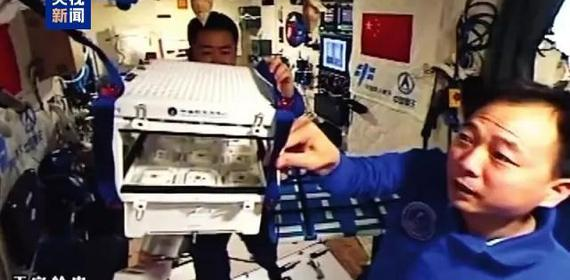
Footage from cameras aboard the spacecraft. (Photo courtesy of CCTV)

China’s “Red Menace” Grows in Space! (24.3.2026)

In September 2022, cosmonauts on the Shenzhou-14 mission became the first Chinese crew to eat vegetables they had grown in orbit. The mission completed full growth cycles for crops, including wheat and dwarf tomatoes. It also achieved the first full life-cycle cultivation of rice in space, from seed to seed.

Subsequent crews have continued to expand the range of crops grown aboard the station, including lettuce varieties and cherry tomatoes. More recently, astronauts have experimented with sweet potatoes, with samples returned to Earth for further study.

Space-based plant cultivation is aimed at supporting long-duration missions by providing food and aiding oxygen and water recycling, while advancing research for deep-space exploration. Microgravity may also alter plant growth cycles, offering insights into plant biology and potential applications on Earth.
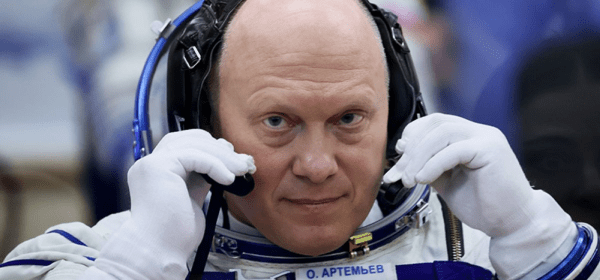

Russian cosmonaut Oleg Artemyev was excluded from the Crew-12 crew!

Russia: Hero Cosmonaut “Excluded” from Elon Musk Folly! (3.12.2025)

Telegram channel about cosmonautics “Yura, I’m sorry!” writes that Artemiev, who was training at the SpaceX base in Hawthorne, California, was suspended last week. The cosmonaut allegedly photographed SpaceX engines and other internal materials of SpaceX on his phone, after which he took the materials from the base.

54-year-old Oleg Artemyev, according to data from the website of the Gagarin Cosmonaut Training Center, made three flights into space and spent a total of 560 days there. Since 2019, he has been a deputy of the Moscow City Duma, a member of United Russia.

Chinese Science - Space Hospital Could Look Like This!

China: Futuristic Space Hospital Being Designed! (7.8.2025)

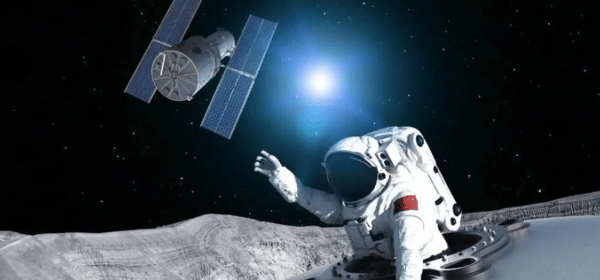
The Shenzhen University of Advanced Technology and the Shanghai Engineering Centre for Microsatellites recently signed a cooperation agreement to jointly establish a space hospital in the future. This project aims to enhance astronauts’ health and expand in-orbit medical monitoring and life support capabilities.

The future space hospital will make breakthroughs in fields such as aerospace, medicine and biology, and conduct cutting-edge research in space life and health support. It will also prepare research on non-astronauts space travel, interstellar exploration and other space health support needs, the China Science Daily reported Wednesday.

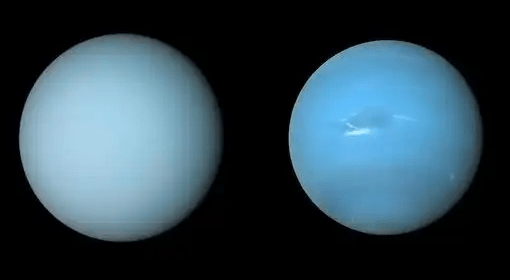
Uranus and Neptune Photographed by Voyager 2

China: Socialist Science Plans to Venture Farther into Deep Space by Exploring Mars, Jupiter, Uranus & Neptune! (24.7.2025)

“Ice giants preserve pristine gaseous materials that record the evolutionary history of protostellar clouds and crucial information about planetary formation. These planets serve as vital subjects for studying the solar system’s origins and exoplanets,” Yang Mengfei, a senior scientist at the China Academy of Space Technology in Beijing and chief designer of the Chang’e 5 lunar mission, told China Daily in an exclusive interview. An ice giant is a colossal planet composed mainly of elements heavier than hydrogen and helium, including oxygen, nitrogen, carbon and sulphur. Two planets in the solar system, Uranus and Neptune, are categorized as ice giants. According to Yang, Uranus has the coldest atmospheric temperature in the solar system, with a minimum of about minus 224 C, and the most tilted rotation axis among all planets in the solar system. Meanwhile, Neptune, the farthest planet from the sun, has the strongest surface winds, reaching speeds of up to 2,100 kilometres per hour. Moreover, Triton, Neptune’s largest moon, is considered “the most likely extra-terrestrial body in the solar system to host microbial activity”, and may provide key clues to life’s origins.

PRC Moon Shot!

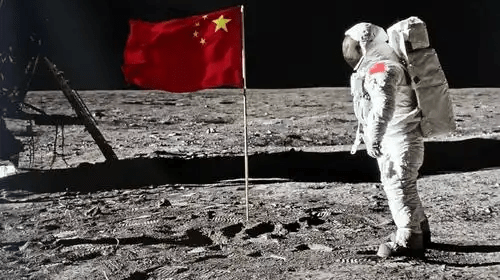
China: Manned Lunar Programme Adnvances for 2030 Moon Landing! (4.3.2025)

After reaching their pre-set orbital positions, the Lanyue lander and the Mengzhou vessel will rendezvous and dock. Two crew members will enter the lander, which will then undock and descend toward the lunar surface for an engine-assisted soft landing.

On the moon, the cosmonauts will drive a Tansuo rover to carry out scientific tasks and collect samples. Upon completion of their assignments, they will return to the Lanyue module, which will fly them back to their spaceship waiting in lunar orbit.

In the final stage, the astronauts will carry the samples into the Mengzhou spacecraft, which will then undock and carry the crew back to Earth.

To prepare for the challenging adventure, China has selected its fourth group of cosmonauts, who are currently training for lunar landing and surface operations.

China Manned Space Agency (CMSA)

China: Logos Unveiled for 3 “Socialist” Space Missions in 2025! (20.1.2025)

According to the CMSA, crews for the Shenzhou-20 and Shenzhou-21 missions will consist of three astronauts each. Shenzhou-20 is set to dock with the radial port of the space station’s core module, while Shenzhou-21 will dock with its front port.

The main tasks of the astronauts will include extravehicular activities, cargo outbound deliveries via the station’s cargo airlock module, and the conducting of space science experiments and technology tests.

In the second half of 2025, China plans to launch the Tianzhou-9 cargo spacecraft from the Wenchang Space Launch Site in its southern Hainan Province. This mission will deliver supplies for astronauts, propellants to ensure the space station’s operation, various types of payloads, and more.

China’s manned space station project has entered its application and development stage — with two manned spacecraft missions and one to two cargo missions planned annually.

1 2 3