Galmptom Traction Engine

Galmpton: Encountering a Superb Traction Engine! (1.8.2024)

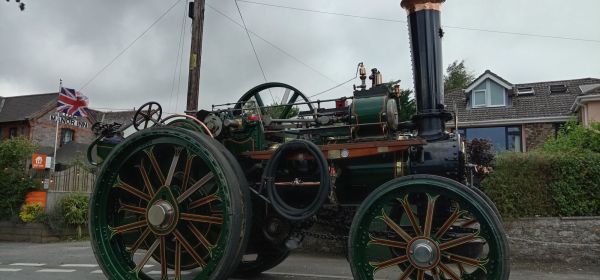
Indeed, what Goldsworthy Gurney first envisioned as an “Automobile” to be driven on open roads – became widely known as a “Traction Engine” from around 1850 in the UK. Ironically, whilst carry a single driver on country roads – whilst moving between farming fields – these devices were not allowed to evolve into the Motor Car envisioned by Goldsworthy Gurney. Only much later would a petrol-driven motor car be allowed to be developed. Whilst driving back from Exeter to Galmpton on Friday evening (Friday, August 1st, 2024) – whilst traversing the narrow streets of Galmpton – we encountered the above “Traction Engine” which was apparently joining many other examples in a local fayre that was about to be held! How lucky we were!
Old Billy - What a Great Horse!

UK: Remembering “Old Billy” [1760-1822] with Love and Respect! (21.7.2024)

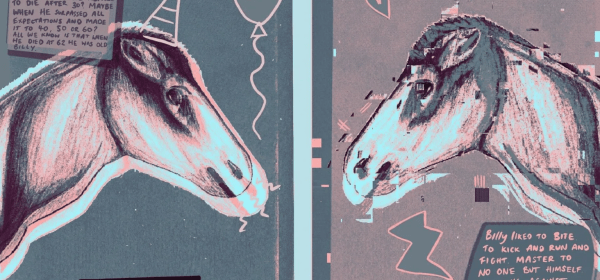
The taxidermied head was acquired by Bedford Museum, while Old Billy’s skull went to Manchester Museum, where it has been displayed below a neon sign bearing the horse’s name.

Such has been Old Billy’s enduring appeal that a children’s book telling the horse’s story was published in 2023 and Ms Reid said it was hoped the return of the head would inspire other work.

“There’s something about Old Billy which has really captured our imaginations,” she said.

“We loved the beautiful children’s picture book about him which was recently created by two artists from the town [and] now there’s music and artwork being made about Old Billy and we’ll be hosting workshops and talks.”

Old Billy is at Warrington Museum’s Cabinet of Curiosities between 19 July and 20 November and is free to view.

Veteran Star Medal: Alfred Gregory Wyles – WWII British Army Service [1940-1946]! (4.11.2023)

Although he joined the Royal Warwickshire Regiment – famous for its ‘Last Stand’ at Dunkirk – due to his ‘sharp-shooting’ ability he was soon transferred to the 1st Buckinghamshire Battalion (the ‘Light Bobs’) of the Oxford and Buckinghamshire Light Infantry (Territorial Army) where he was placed in an Anti-Tank Platoon. During D-Day, the ‘Light Bobs’ landed in the first-waves of Allied troops that hit ‘Sword Beach’. His Unit was tasked with fighting their way in-land ten-miles to Caen – where it was to relieve D Company of the Ox & Bucks Ligyt Infantry (Professional) – which had landed as ‘Glider Troops’ around midnight of June 6th, 1944. Due to these required military objectives – my grandfather trained with the Glider Troops around the Exeter Canal System – which resembled the canal system around Caen. Indeed, this association has sometimes ‘confused’ exactly what function my grandfather fulfilled due to him possessing a ‘Winged Pegasus’ badge!