READ ARTICLE HERE: Communism as Bodhisattva Activity Although in the West Buddhism has been hijacked and distorted by a capitalist, bourgeois agenda, in large parts
Tag: Buddhism
Conscious Awareness and Empty Space
Within modern (material) science, empty space is defined as the measurable distance between two objects. This is correct and an undeniable fact. Of course, for

Jill Bolte Taylor – the Woman Who Re-Built Her Brain
Having suffered a stroke in 1996, Jill Bolte Taylor – a neuroscientist – rebuilt her brain functionality through the use of a detached observation of
Brief Notes: Neuroscience and Buddhist Thought
Around 2,500 years ago, the ancient Greek philosopher Hippocrates put forward the idea that the brain might be the centre of the mind (disagreeing with
Email: Marx and Buddha (19.3.2018)
Dear Prof. Z Thank you for yet again another intriguing email. I thank you for remembering my text. I read much about Marxism in Chinese
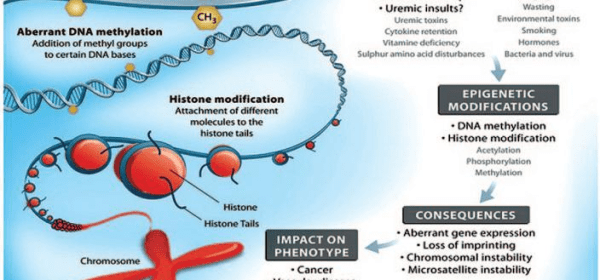
The Science of Epigenetics Verses the Pseudo-Science of Epigenetics! (4.3.2018)
This is not an attack on religion or a denial that belief systems are useful for human existence. On the contrary, what follows is a short and concise explanation of a very complex biological process which strives to identify the subject of epigenetics as a material or ‘hard’ science, and epigenetics as a belief system. When epigenetics is interpreted as a belief system (and consequently serves the function of a religion) it still presents its ideas in the language of science, when the underlying ideology is one of theology. The battle occurs because religious epigenetics insists upon being interpreted as a ‘science’. This insistence by a religious movement to be seen as a science attracts the descriptive label ‘pseudo-science’, which we use here, but with no intended disrespect. Although we advocate a continuous search for good knowledge and self-understanding, everyone has the right to decide for themselves and make their own minds up. As practitioners of Chinese Buddhism, we confirm that meditation practise has a positive affect upon the health of the mind and body, but we do not assert that the mind ‘interferes’ with natural biological processes. Instead, it seems clear to us that a proper scientific understanding of biological processes enables the mind to ‘assist’ by making good and informed choices in life that aid the natural biological processes unfold in a positive manner. This is more a matter of not ‘getting in the way’ of naturally unfolding processes, rather than entertaining the mistaken notion that the mind can interfere in these natural processes. This is just our ideas – think for yourselves.
 SANGHA KOMMUNE (SSR)