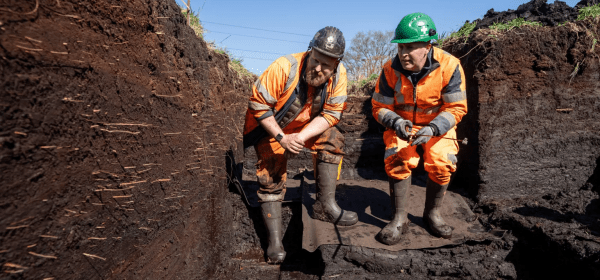
Archaeologists made the discovery underneath layers of peat on Honeygar Farm in Westhay

UK: Neolithic “Trackway” Discovered by Archaeologists in Honeygar Farm [Somerset]! (22.3.2026)

Britain used to be full of marshes through which the Celts built trackways to travel about – probably between the various tribes. Presumably, these marshes ran through (and around) forests – as the UK used to be covered in dense foliage. Therefore, the Celts did build their own type of natural pathways – but these were “natural” and very different to the roads constructed by the Roman engineers – which seemed “severe” and “unnatural” by comparison. Furthermore, the Romans destroyed the traditional landscape that Druidism and Celtic culture developed and grew within. The Romans cleared the forests and drained the marshes – thus destroying the very essence of the British Celt culture that had existed for thousands of years. The Romans committed genocide, forcibly established their culture – and then left. Part of this Roman domination was that the Celts were “primitive” and possessed no culture of their own. A policy straight out of the imperialist play-book.
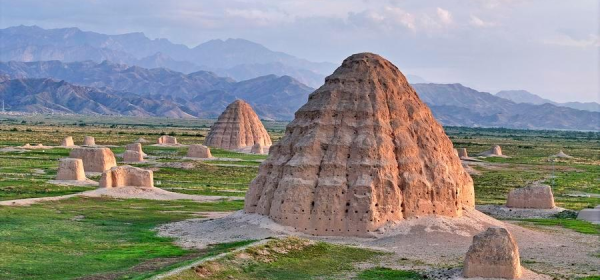
A drone photo taken on July 10, 2025 shows two mausoleums of the Xixia Imperial Tombs in northwest China's Ningxia Hui Autonomous Region. (Xinhua/Wang Peng)

China: Archaeology Proves “Oldest” [5,300-Year-Old] Continuous Culture! (1.2.2026)

A cornerstone of this research is the Erlitou site in central China’s Henan. Excavated since 1959, this site is widely regarded by Chinese scholars as a major urban center associated with the Xia Dynasty (2070-1600 B.C.), traditionally considered China’s first dynasty.

The most critical discovery at the site is the presence of China’s earliest grid-patterned capital layout, offering rare insights into the capital system of early states.

Erlitou is part of a constellation of key sites. From the ritual complexes at the Niuheliang site in Liaoning to the exquisite pottery at the Taosi site in Shanxi, each discovery has helped clarify the picture of China’s early history.

This grand narrative of continuity is given tangible form through a national network of 150 major archaeological sites, 65 national archaeological parks, and over 240 on-site museums. Together, they form an indelible material record spanning millions of years of human history, 10,000 years of culture and over 5,000 years of Chinese civilization.

A Hoocąk language guide shows words in the Ho-Chunk language and their American English translations at the "Our Shared Waters" program at Lake Mendota on Sept. 24, 2024, in Madison. (Credit: PBS Wisconsin)

US: Wisconsin Archaeologists find 16 Ancient Indigenous Canoes in Lake Mendota! (15.1.2026)

For some strange and odd reason, at least three right-wing news outlets in the UK are today [15.1.2026] a) falsely reporting this story as if it has just happened, and b) falsely claiming that its findings are “changing history”! As you can see, the AP article I am referencing below us dated the 25.11.2025 – with the research at Lake Mendota in Madison, beginning in 2021 – with many of the pivotal discoveries occurring during 2022 (with others following). I have also read an article dating to January-February 2025. Therefore, contrary to the British rightwing media – this story is not “new”. Although the oldest canoe found so far is 5,200 years-old BP (constructed around 3,200 BCE) – one of the researchers thinks that there may be a canoe dating to around 7,000 years-old BP (constructed 5,000 BCE) lurking somewhere in the mud. The same researcher states that the oldest two canoes found so far in the US are from Florida and and also date from 7,000 years-old BP (constructed 5,000 BCE). Again, contrary to the claims made by the British rightwing media – these finds do not “change” ancient America history – they “confirm”

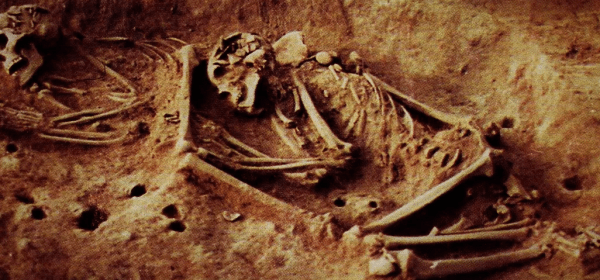
These skeletons of two hunter-gatherer individuals excavated at the Checua archaeological site north of Bogotá, Colombia, helped uncover the genetic details of a mysterious population. Ana María Groot / Universidad Nacional de Colombia

Colombia: Ancient Checua DNA Reveals “New Group of Humans” With No Genetic Ties to People Today! (4.1.2026)

Scientists have found genetic evidence of an ancient group of people in Colombia with no modern-day descendants. It’s as if they simply vanished from the face of the Earth. What’s more, they’re also not closely related to the ancient Native American populations that scientists had thought would be their ancestors.

“This is unexpected,” Andre Luiz Campelo dos Santos, an archaeologist from Florida Atlantic University who did not participate in the research, tells Adithi Ramakrishnan at the Associated Press. “Up to this point, we didn’t believe there was any other lineage that would appear in South America.”

An international team of researchers described the discovery in a study published in late May in the journal Science Advances. They analyzed DNA from the bones and teeth of 21 individuals found at five archaeological sites in the Altiplano—the high plains around Bogotá—dating to between 500 and 6,000 years ago. The analyses represent Colombia’s first ancient human genomes ever to be published.

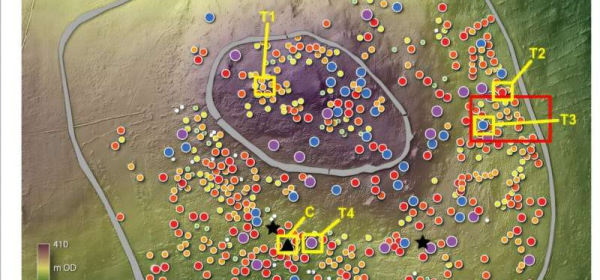
Photogrammetry map of Brusselstown Ring showing locations of what may be roundhouse footprints!

Eire: Scientists Unearth Ireland’s Largest Prehistoric Hillfort Settlement! (1.1.2026)

Additional survey work revealed a unique structure near one of the trenches. The flat interior outlined by large stones, uncommon for roundhouses at the site, made it unlikely to be a prehistoric roundhouse itself. From previous surveys, it was known that a stream flowed into the structure from a rocky outcrop uphill.

Given its shape and size, it is hypothesized that this might be a Bronze and Iron Age water cistern like those found elsewhere in Europe. Because Brusselstown Hill would have had to accommodate a large population, a source of freshwater would make sense. If further investigations confirm the structure to be a water cistern, it would represent the first of its kind in an Irish hillfort.

More research is needed to better understand the extent and nature of Brusselstown Hill’s potential water cistern, establishing the nature and chronology of the enclosing elements and better understanding how and why the settlement may have been abandoned.

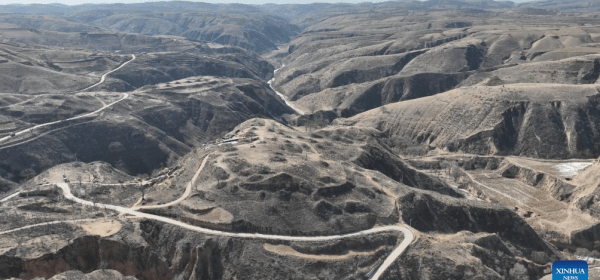
This file photo shows ancient stone fortresses in Yulin, northwest China's Shaanxi Province. (Photo by cultural heritage and archaeology team of the city of Yulin/Xinhua)

China: Survey Team Discovers 573 Ancient Stone Fortresses in North-West! (13.11.2025)

The survey revealed that these settlements spanned from about 2800 BC in the late Yangshao period to around 1000 BC in the Shang and Zhou (1046-221 BC) dynasties.

Mostly distributed along riverbanks, the stone fortresses were surrounded by numerous ordinary settlements without defensive stone walls, indicating a clear clustered relationship, said Ma Mingzhi, head of the team.

The development of these stone fortresses shows a clear evolution from small to large in scale, from simple to complex in layout, and from rudimentary to mature in construction techniques — with social hierarchy becoming increasingly distinct.

The survey provides crucial information for a comprehensive understanding of the origin, development, spread and evolution of prehistoric settlements in northern China, Ma added.

1 2 3 5