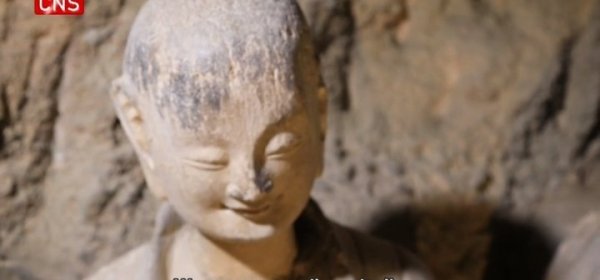
The early Buddhist groups in China mirrored that of the extant Confucian scholiastic system – often forming around married laymen – with disciples taking the surname of the teacher as their ‘Dharma-Name’ and essentially becoming an extension of his family. Grottoes such as that featured below were places where Buddhists could meet, share and practice their understanding of Indian Buddhist philosophy. An understanding of Buddhist monasticism started to arrive and distinguish itself in China from the existing lay-practice around the 5th century CE – the date I believe this ‘smiling’ monk appears to date from. Whereas Buddhist lay-practitioners did not shave their heads (like Daoists and Confucians) – monastic Buddhists (male and female) were required to shave their heads – indicative of their ‘rejecting’ of the desire-laden conventions that define, guide and justify the external world.
 SANGHA KOMMUNE (SSR)