Duddington Bridge - 2025

Northants: Ancient Duddington – Tixover Bridge! (27.7.2025)

As soon as we entered the graveyard – everyone started shouting-out the name “Wyles”! I was astonished as I had become so used to having a name that hardly anyone had heard of. It turns-out that names in the UK – just like anywhere in the world – developed in local areas and spread-out as populations moved about. It turned-out that Duddington has been cut-off from mainstream society for years – with my direct relatives not leaving until around 1905. Even today – the world has passed Duddington by. None of the broader changes of society have touched Duddington at all. The local population today are wealthy and conservative with a “C” and “c”. Although I do not share these views myself – I have to admit that these attitudes have preserved my family history until I became aware of it – and have been able to gather all the data together for anyone interested to benefit freely from it. Today, myself and Gee headed to Duddington around 6aam in the morning to get some early research in. We are staying in the Duddington area to carry-out some much needed genealogical investigations and we are making important headways already!


An undated handout photo issued by the RAF of Battle of Britain pilot, Group Captain John 'Paddy' Hemingway DFC. Photograph: Family handout via Ministry of Defence/PA

Eire: Last Known Battle of Britain pilot – Irishman John Hemingway – Dies Aged 105! (18.3.2025)

Mr Hemingway was one of 36 Irish pilots who fought in the Battle of Britain, including Wing Commander Brendan ‘Paddy’ Finucane, who was one of the RAF’s most successful fighter aces in the war, and Victor Beamish, a scion of the brewing industry. Both were killed in the war.

In 2019, Mr Hemingway gave an interview to The Irish Times on the occasion of his 100th birthday. He told military historian Joseph Quinn: “I can’t say don’t drink. I can’t say don’t fool about with people. I can’t say don’t fly aeroplanes. I can’t say don’t shoot and get shot at – I’ve done everything, and I’m an Irishman. The only advice I can give to people is be Irish!”

Mr Hemingway’s wife Bridget died in 1998. They had three children.

He lived with daughter in Canada for many years before returning to Ireland in 2011. Mr Hemingway spent his last years in the Trinity Care Foxrock Nursing Home.

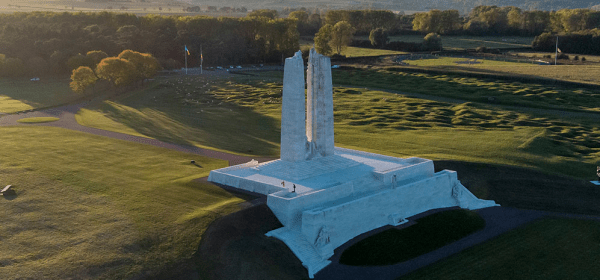
Canadian National Vimy Memorial

UK: Canada Must be a “Country” – Its Troops Attacked Witley & Epsom in 1919! (27.2.2025)

What makes his death significant is that his murderer was never really brought to justice and that some in authority supported this for political reasons.

The “riotous mob” was in fact more than 400 soldiers on the rampage and the words “found death” on his gravestone were used rather than murdered.

Why was this? It was 10 years later that Sergeant Green’s murderer, when arrested in Canada on another offence, admitted his guilt.

By then Scotland Yard was not really interested and a prosecution was never considered. What caused this apparently callous action and why was justice not pursued as vigourously as we might have expected?

Throughout the Great War, many troops from the British Empire had fought with distinction. Canada produced about 600,000 men from 1914-18, taking 210,000 casualties, with over 56,000 dead.

They were awarded 63 Vicoria Crosses. The awesome Vimy Ridge memorial in northern France bears testimony to their bravery and loyalty during that dreadful period.

However, when war ended in November 1918, many troops, easpecially those from overseas, expected to be de-mobbed and repatriated as quickly as possible. Unfortuanely this did not happen.

In fact de-mobilisation plans had been in the Government’s thoughts since 1917.

War Secretary Lord Derby thought that in order to help the country’s economy, the most skilled workers should be released first into the key industries.

However these were the very workers who had been the last to be conscripted and the unfairness of this caused small scale mutinies within the British Army in Calais, Folkstone and London.

This inequitable system was changed by the new Minister of War – a certain Winston Churchill – in January 1919.

He decided men should be de-mobbed on the basis of age, length of service and number of wounds received. This in effect was a “first in- first out” policy.

This worked well for British troops, but Dominion troops were left hanging around for months. In March 1919 disgruntled Canadian troops rioted in Rhyl and this was repressed only after a number of men had been killed.

London (Green Park): Canada Memorial (WWI & WWII) – Memorial du Canada! (25.8.2023)

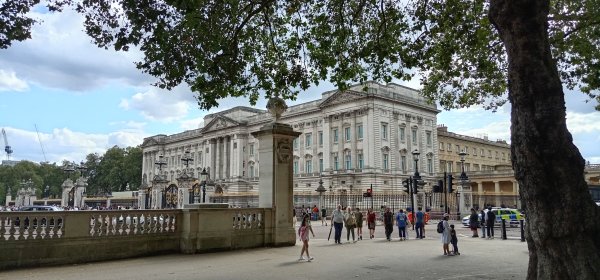
This sculptured memorial is constructed of red granite which forms a ‘walkway’ divided into two distinct halves. One half represents Britain whilst the other half represents Canada and the two country’s joint participation in WWI and WWII. The inclined sculpture is inset with 506 bronze maple leaves (the Canadian emblem) and the country’s coat of arms. Water flows across the sloping surface and creates an illusion of floating leaves. Situated to the rear of the Canada Memorial is Buckingham Palaces,