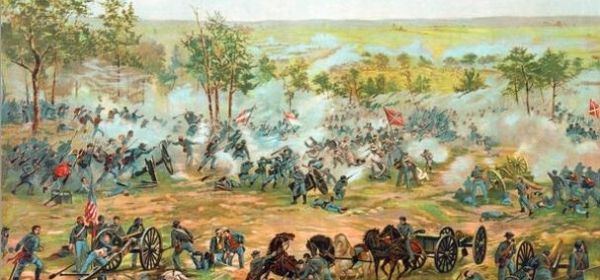
Battle of Gettysburg - Painting by Paul Philippoteaux

CSA: Confederate Army Uniforms, Hats, Ranks & Badges c. 1861! (27.4.2025)

Sometimes, CSA Units proudly wore “Blue” – whilst certain Union Units proudly wore “Grey”. Both sides also possessed Units that dressed (and acted) like English Red-Coats – a designation that then sent shudders through most people due to the reputation the Red-Coats possessed – namely that of strict discipline and ruthless close-quarter-fighting (all wounded were bayoneted as an act of compassion – due to the lack of any reliable medical treatment). English Red-Coats would march indifferently into enemy-fire – safe in the belief that once the distance was closed – the enemy would pay the price. The CSA Units attempted to replicate this attitude and make the Union pay for the damage its forces inflicted upon the Southern States.
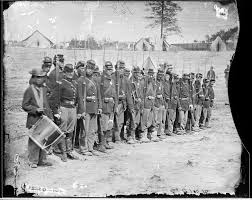
Possibly a a Photograph of the "Philadelphia Greys"

CSA: General Robert E Lee Sues for “Peace” [1863] – Pennsylvanian “Minutemen” Non-Existent! (17.3.2025)

This reflected a remarkable situation. A Confederate Army was riding rampant through the Pennsylvanian countryside – the State within which Washington DC is situated – and yet “no one” amongst the young, elderly, disabled or wounded men (considered medically “unfit” to join the Regular Army due to ill-health or age) were prepared to defend the Union. Within the city of Philadelphia, 8,000 men of the already existing “Philadelphia Greys” bravely volunteered to march to the front in defence of the Union. Due to the general lack of volunteers from the ordinary population – the city of New York sent 12,000 of its own existing Militiamen to supplement the regular Union Army. How brave these men were! Militiamen are often called “Sunday Soldiers” – as they are working men, fathers and patriarchs who live in society, work and look after their families. They come together once a week, once a month, or just a few times a year to compare notes, fire their weapons, and discuss homestead self-defence. They are not frontline soldiers. Of course, Confederate citizens showed the same extent of bravery when the time came. 

Battle of Chancellorsville

CSA: Would a Confederate Victory Have Led to a Socialist Revolution? (28.2.2025)

However, the Southern ideas of honour and their so-called aristocratic thinking were overblown and these ideas actually sometimes played to the South’s benefit, as the men in the South followed natural leaders and often times appointed them on their own (via popular vote). All too often, in the North, Officers were often political appointees – desk-bound Officers who hadn’t seen a battlefield in years – or ever. Or men who simply bought their way into a General’s uniform. One of the more stereotypical views of the South was the aforementioned backward, backwoodsman. Think about that for a moment. Yes – a significant portion of the Confederate Army was poor, uneducated, and illiterate. Some left-leaning historians have said  – with some accuracy – that the poor Whites of the South had more in common with the slaves – than they did with the leading families who owned most of the land and the fabulous estates like the fictional “Tara” in Gone With the Wind.

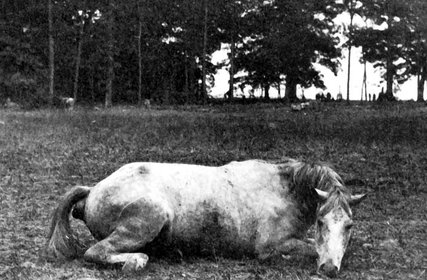
Library of Congress“Dead Horse of Confederate Colonel; both killed at Battle of Antietam,” by Alexander Gardner

CSA: Piles of Thread-Bare Confederates at Antietam [Sharpsburg] – Notes on Their Sacrifice! (31.1.2025)

The Union Army paid the farmer $1 per dead Confederate body and the farmer made $60 out of the deal. He dug a new well in a different place for the cost of $2 – making a wartime profit of $58. No one knows the names of these Confederate soldiers – and if it was not for a report being made by the Union soldiers concerned – no one would know about these men today. Of course, there was great bravery on both sides – but the spin placed on the war by the winners has skewed how the Confederacy is viewed today. These Confederate men (and boys) advanced into the Union fire with the utmost discipline and determination. They believed 100% in their cause – which was for the freedom of their individual countries (termed “States”). At the time, this war was not only about slavery – but has been made ONLY about slavery since 1865. Many believed the federalisation of the United States was a betrayal of the 1776 War of Independence – and nothing short of a great evil!

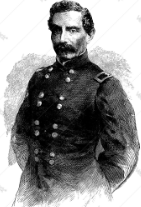
P. G. T. Beauregard - Creole

Brigadier General P. G. T. Beauregard: How a “Mixed-Race” Confederate General Defeated the North! (14.11.2024)

Indeed, many of his aunts and uncles were White people who had inter-married with Black, Mexican, and Native American partners. Indeed, whilst serving in the US Army prior to the war – P. G. T. Beauregard – his advancement was blighted by the fact that the US Military Authorities purposely discriminated against him on the grounds that he was “Not Trustworthy” – as he was the product of a family that deliberately “Race-Mixed”. This judgement kept him out of West Point as a Teacher (he had trained there in his youth – but was not permitted to pursue a substantive career in that institute) – until he was mistakenly posted as an “Instructor” at this College of Officer-Training in the US during 1861 (just prior to the breakout of hostilities). His appointment lasted just one-day until the mistake was realised by a Union pen-pusher. P. G. T. Beauregard was immediately removed on the grounds that the US does not allow any but “pure-raced” individuals exercising direct influence over the developing generations of US Military Officers. Indeed, the US Authorities applied this judgement by continuously referring to P. G. T. Beauregard as a “Creole” – implying that he was psychologically and physically “inferior” due to “race-mixing”.

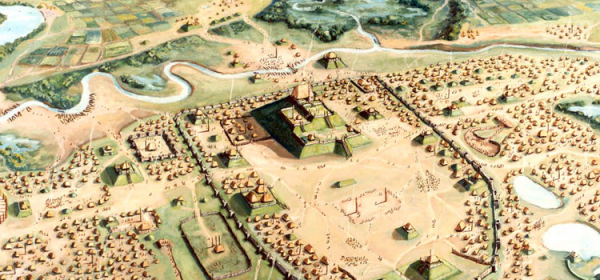
Around 50,000 Lived in Cahokia at its Peak!

Cahokia: Native Americans Lived in Cities – Climate Change NOT Responsible for Demise! (9.8.2024)

Natural climate change has always happened – and is happening now – with the caveat that certain Environmentalists now suggest that the agency of human behaviour also contributes to the process of climate change. Indeed, it has become stylish in certain quarters for climate change (natural or unnatural) to be blamed for environmental alterations that cannot be readily or conveniently explained. Until recently, the dominant hypothesis – presented as fact – was that the ancient (Pre-Colombian) City of Cahokia (located in the region of St Louis) had disappeared in the 1200s (13th century) exclusively due to climate change. New academic research, however, has provided reliable (objective) academic evidence that climate change was not partially (or entirely) responsible for the demise of Cahokia.

1 2 3 4