Translator’s Note: The Vietnamese people are originally from Southern Chins. When the Tang (Cantonese) people migrated into their homeland – they migrated out of China
Proletariat Blogging in the Heart of (UK) Predatory Capitalism! Exploring the Interface between Matter and Perception, Chinese Buddhism, Daoism, Hakka Ethnography, and All Aspects of Radical Politics, History, Psychology and Philosophy – 全世界无产者联合起来!
The reasons for the Confederate States of America (1861-1865) stem from the first English colonies (circa late 15th century), the 1776 (American) Declaration of Independence, and the internal politics of the fledgling nation known as the “United States of America” (USA). The White colonisaltion of the Americas (which killed around 60 million natives by 1610) is premised on the “Genocide” of non-White people (White settlement killed so many that a mini-ice-age was felt across Europe).
When you read these clarifications of North American history – please do not forget these facts. I fully support the freedom of my Black, Yellow and Brown brethren without question or reservation. I also acknowledge the bravery of the 1.5 million (mostly “White”) peasants and workers (mostly men – but some women) who fought for the CSA. Black, Yellow, and Brown people also fought in the CSA – including Chinese people. I ask the inconvenient question “Why” was this the case…
Translator’s Note: The Vietnamese people are originally from Southern Chins. When the Tang (Cantonese) people migrated into their homeland – they migrated out of China
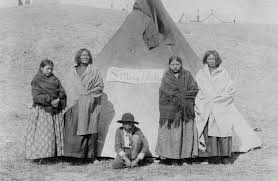
Indeed, the voluntary and determined presence of Indians in the Confederate Infantry defied all Northern attempts to paint the South as culturally backward. The North had never succeeded in convincing the Indians to be happy about their own genocide – but here was the Confederate South treating the Indians as fellow “human-beings” – and making way for their warriors to serve alongside White Men in the frontlines. On the official front, the Confederacy formed a specific Indian Regiment led by General Albert Pike. During the Civil War, he commanded the Confederacy’s Indian Territory, and raised troops in this area – and exercised Field Command in at least one battle (although Watson mentions his name – and Indian troops – a number of times). After the South lost the Civil War – the North simply carried-on its pre-war policy of genocide – depicting the Indians as “savages” and wiping their pro-Confederate struggle from the history books.
The Civil War was now in its waning months. The North’s superior industrial strength and never ending supply of manpower had taken their toll over the downtrodden Confederacy. Everything was going downhill for the Rebels. After the fall of Vicksburg the Union had concentrated practically all its force against the “other Rebel army,” the Army of Tennessee. This army was the last hope for the South. It was led by General John Bell Hood who at this time was a physically beaten and emotionally unstable man. He had lost the use of one arm at Gettysburg and lost a leg at the Battle of Chickamauga. He had to be literally strapped to his horse to travel. Hood’s condition well depicted the general condition of the Army of Tennessee at this stage of the war.
Osprey Publishing is a British Publishing Company specializing in military history originally based in Oxford. Being English myself – and having been born in Oxford – I appreciate a clear-thinking and non-bias account of historical matters. The book above – Confederate Infantry [1861-1865] penned by the British experts Ian Drury & Gerry Embleton (1993) – is an extraordinary introduction to the subject of the Confederate Army in general – and the Confederate infantryman in-particular. An estimation of the Confederate causalities sustained during four-years of fighting (1861-1865) is as follows:
Confederate Casualties = 483,026
Killed in Action (KIA) = 94,000
Wounded in Action (WIA) = 194,026
Died of Diseases = 164,000
Died as Prisoners of War (POWs) = 31,000
Something of an oddity for a man who is often demonised in modern discourse as being the “defender of slavery”. Be that as it may, free Black men did exist in the South – and chose to join the Confederate Army – as free men. As the war wore-on – and the number of the White male population dwindled – it became ever apparent that the only resource the South possessed was its population of Black (male) slaves. General Pat Cleburne (the Irish-British volunteer killed at Franklin during late 1864) had suggested to Davis that the slaves be “freed” and conscripted into the Confederate Army. At the time, the conservative elements of the Confederate Congress refused to consider this idea. Following the Battle of Franklin (30.11.1864) and the huge casualties suffered by the Confederacy – Jefferson Davies decided to exercise his executive power and authorise 40,000 slaves to be co-opted into the Confederate Army to form Labour and Guarding Corps to free-up White soldiers for frontline duty. However, with the Confederate defeat at the Battle of Nashville (16.12.1864) – Davis stated that all slaves should now be freed and recruited into the Confederate Army – BEFORE the Union could get a chance to liberate them – and use these men against the South!
General Holzclaw Stated, “Five separate colour-bearers, one after the other, seized the fallen flag and attempted to plant it over our works. Each one was shot-down. Urged on by their White Officers – these Black soldiers repeatedly surged against the breastworks. They came only to die!” Indeed, so impressed by the bravery of these Black soldiers was General Holzclaw, that he cited their bravery in his official “Battle Report”. This would be read by the likes of Robert E Lee and Jefferson Davis – so such a report contained much significance. Although the Union would win this battle overall – it did not prevail on this small part of the Nashville battlefield. Of course, such stubborn Confederate action only delayed the inevitable defeat – but it did give the Black Regiments (there others that fought during this battle and even around this area) a chance to show the world what they were capable of doing. The Irish-British (Confederate) General Patrick Clayburne 9who had died at the Battle of Franklin) had suggested to Jefferson Davis that the slaves of the South should be “freed” and co-opted into the Confederate Army – but his idea fell on deaf-ears.