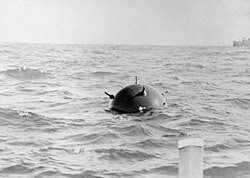
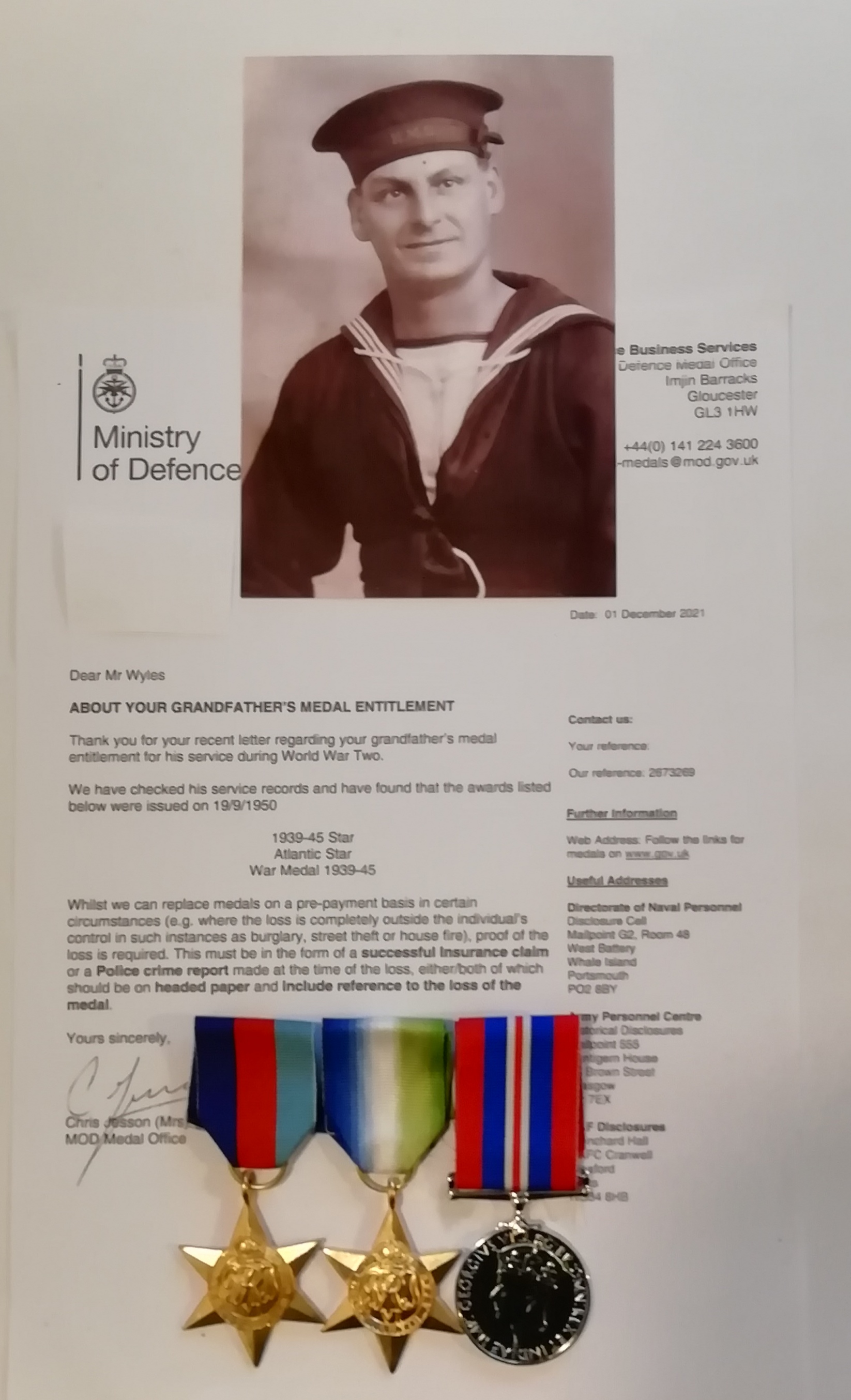
My maternal grandfather – Arthur Gibson – served in the Royal Navy Patrol Service (RNPS) in the North Atlantic Theatre during WWII (1942-1946) – aboard the HMS Beaumaris Castle – a converted trawler (FY 992). This was originally a sturdy fishing boat (not to confused with a purpose-built Royal Navy ship operating at the same time) and the Royal Navy commissioned a great many in 1939 as an emergency measure to quickly create a fleet of vessels that could patrol and protect the British coastline. These trawlers had all their fishing gear removed – and all the equipment installed needed to minesweep, and depth-charge Nazi German U-Boats. Each boat was armed with heavy machine guns, with the sailors being taught how to shoot rifles. One method of destroying the mines was to shoot at their detonators from a distance. The chosen marksmen could often maintain a stead aim despite the boat and the mine moving up and down in the water – being a certain distance a part. The boat could not be too close – as there was a danger of the resulting explosion damaging the vessel and wounding the men. Another early method involved a crew-member machine-gunning the mine – but the UK government decided this approach was wasteful of much needed ammunition – and so mine snippering was developed. What I found surprising was just how far-away a trwler had to be to maintain safety whilst destroying these mines – usually over 120 yards! Trawlers, being constructed of wood – had an advantage over the metal-hull Royal Navy ships when it came to avoiding – and neutralising the magnetic mines.
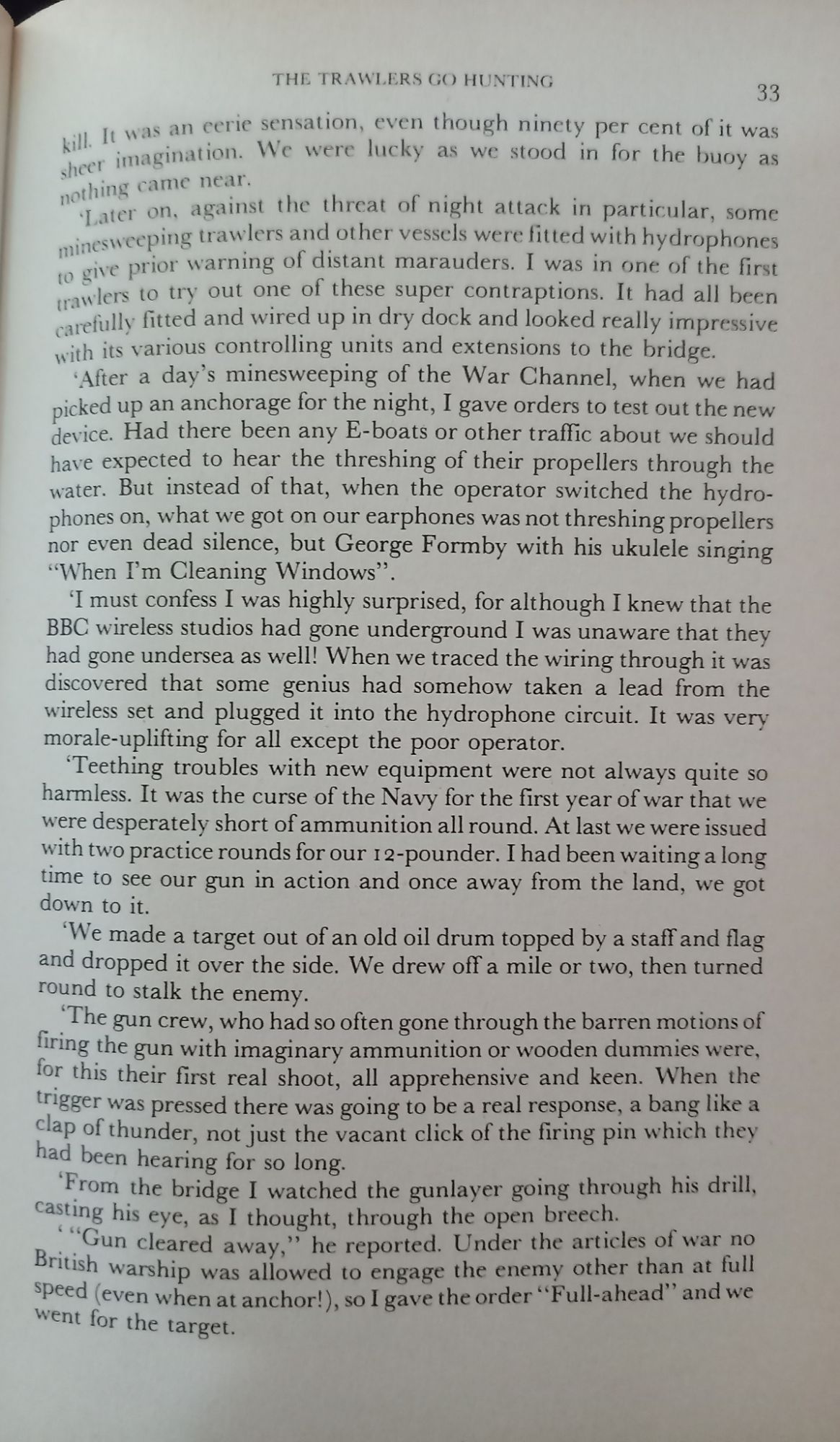
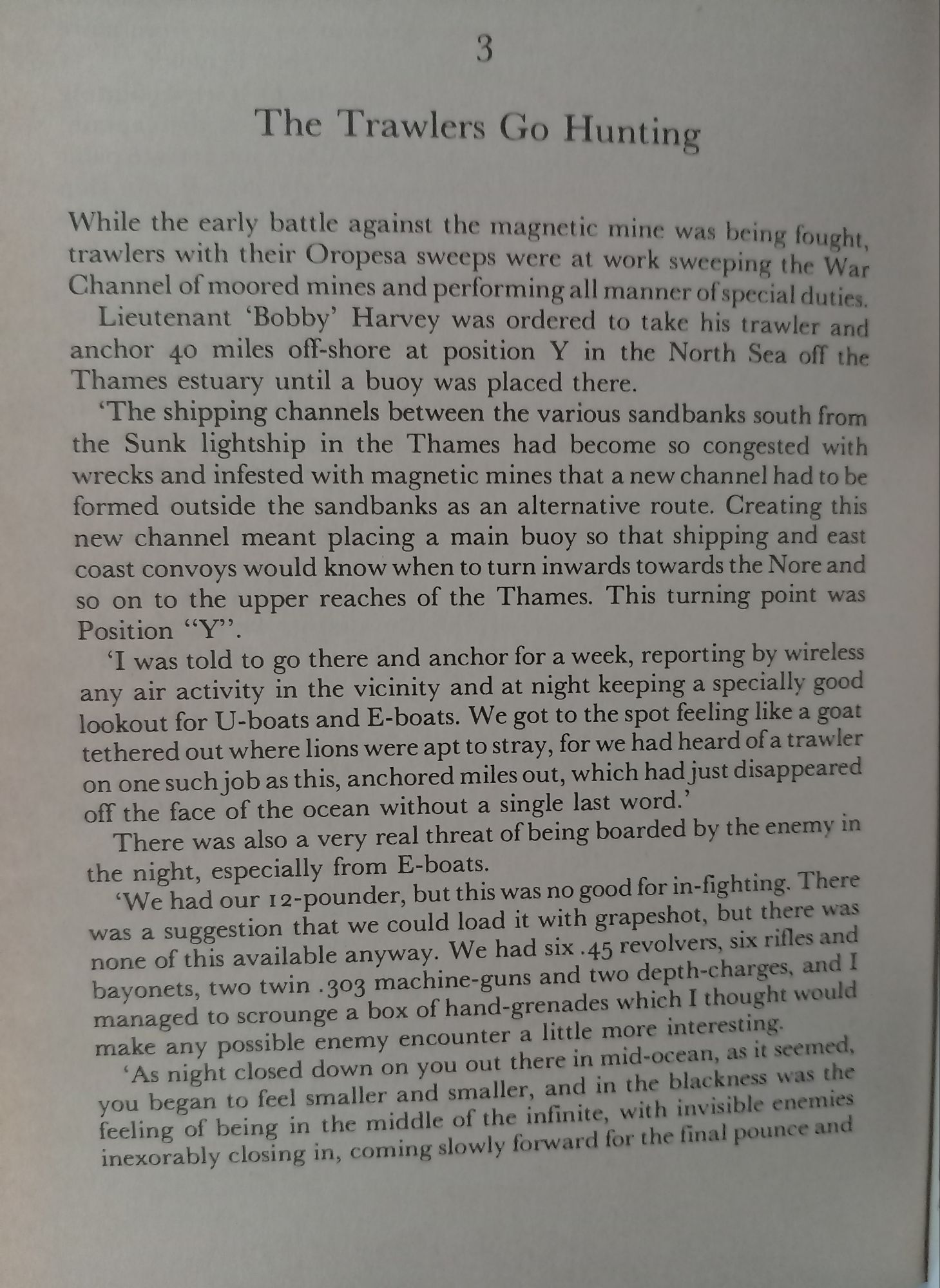
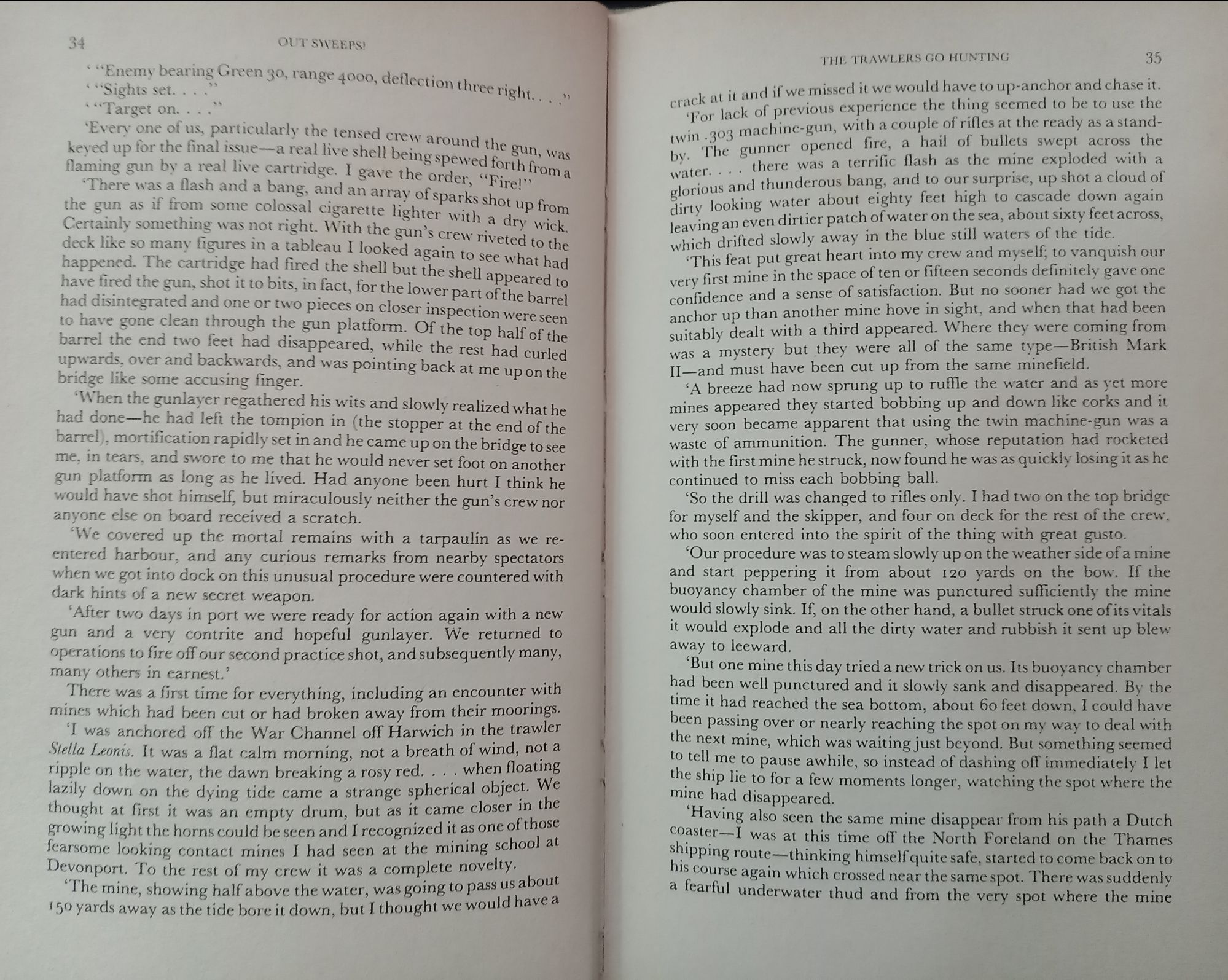
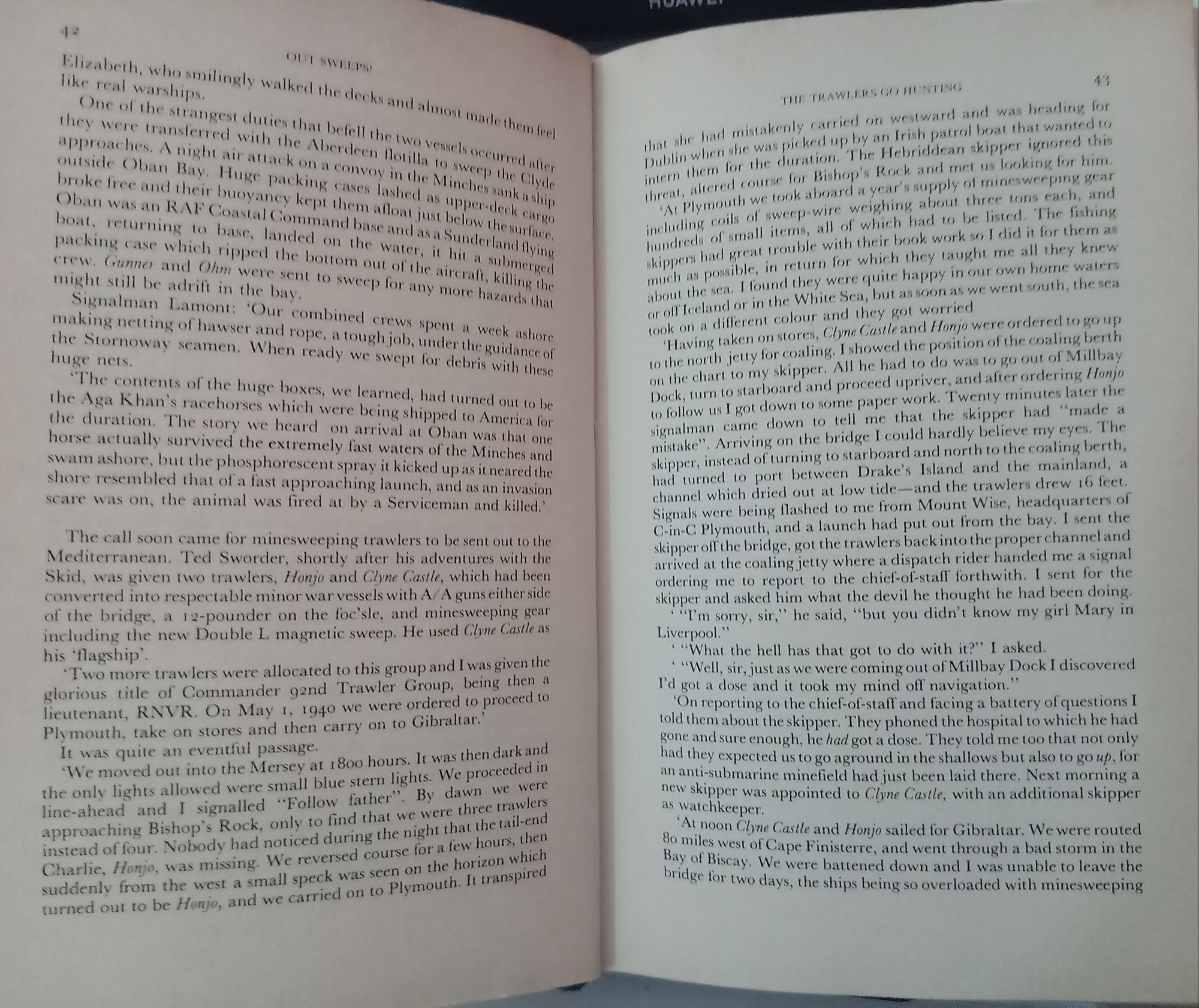
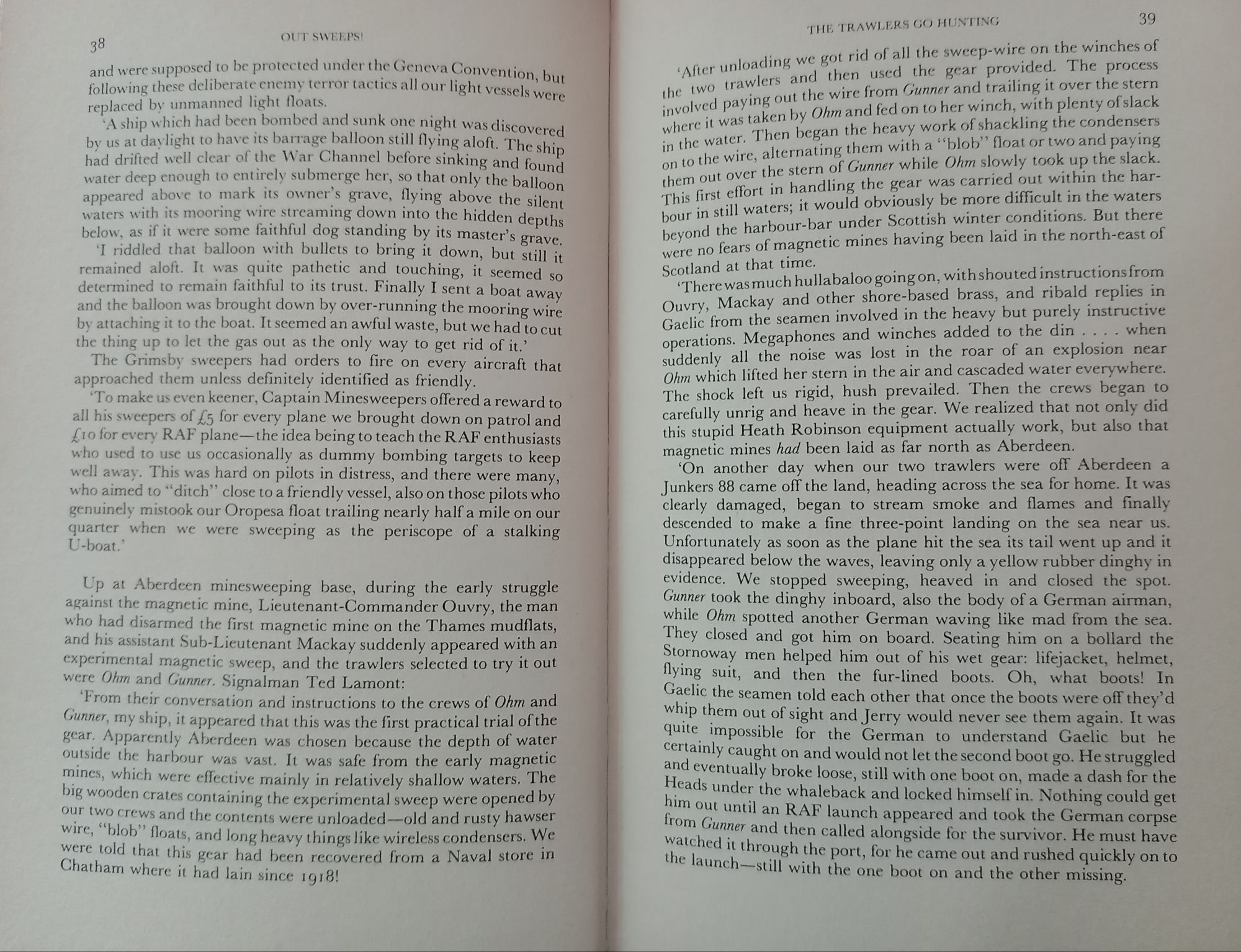
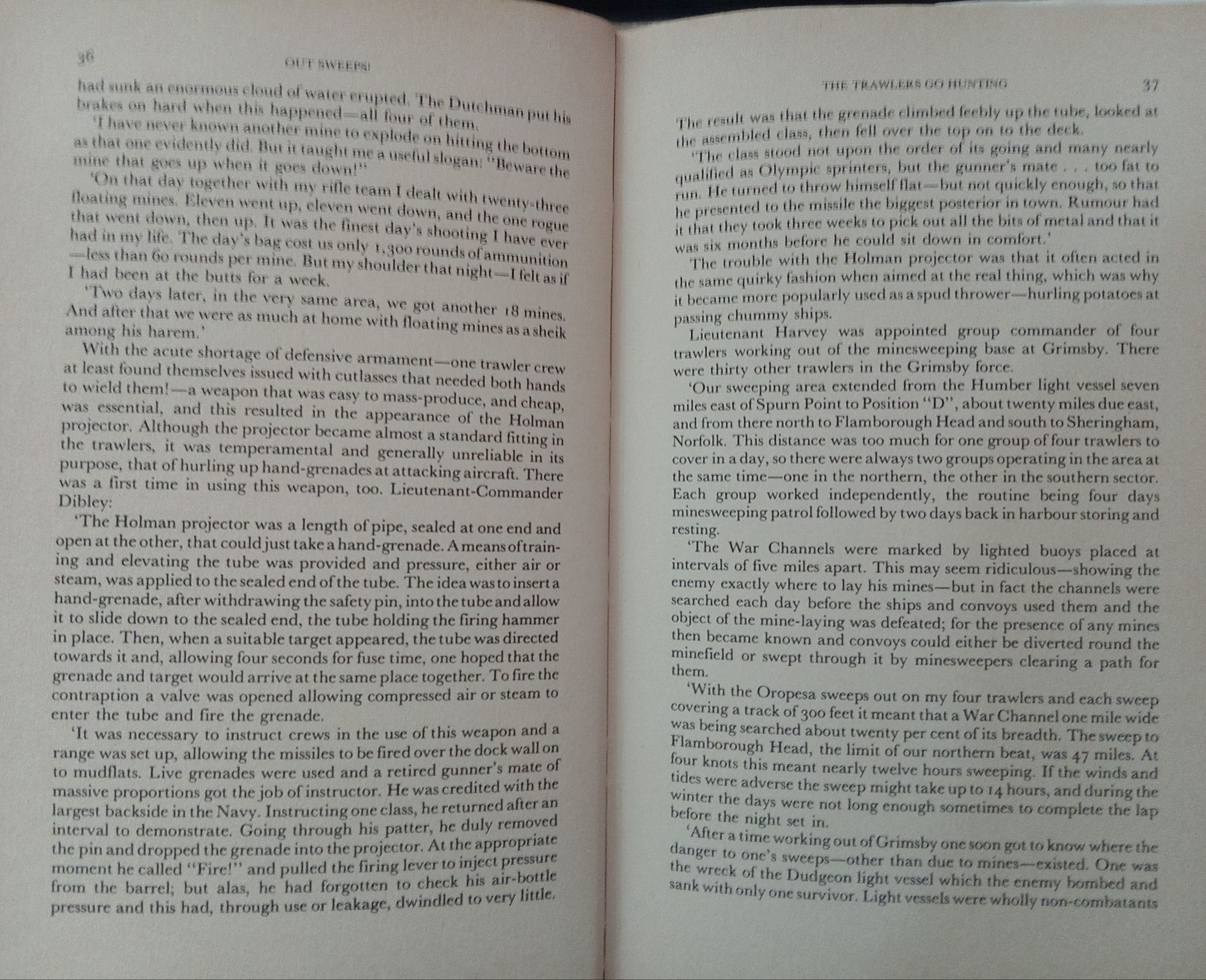
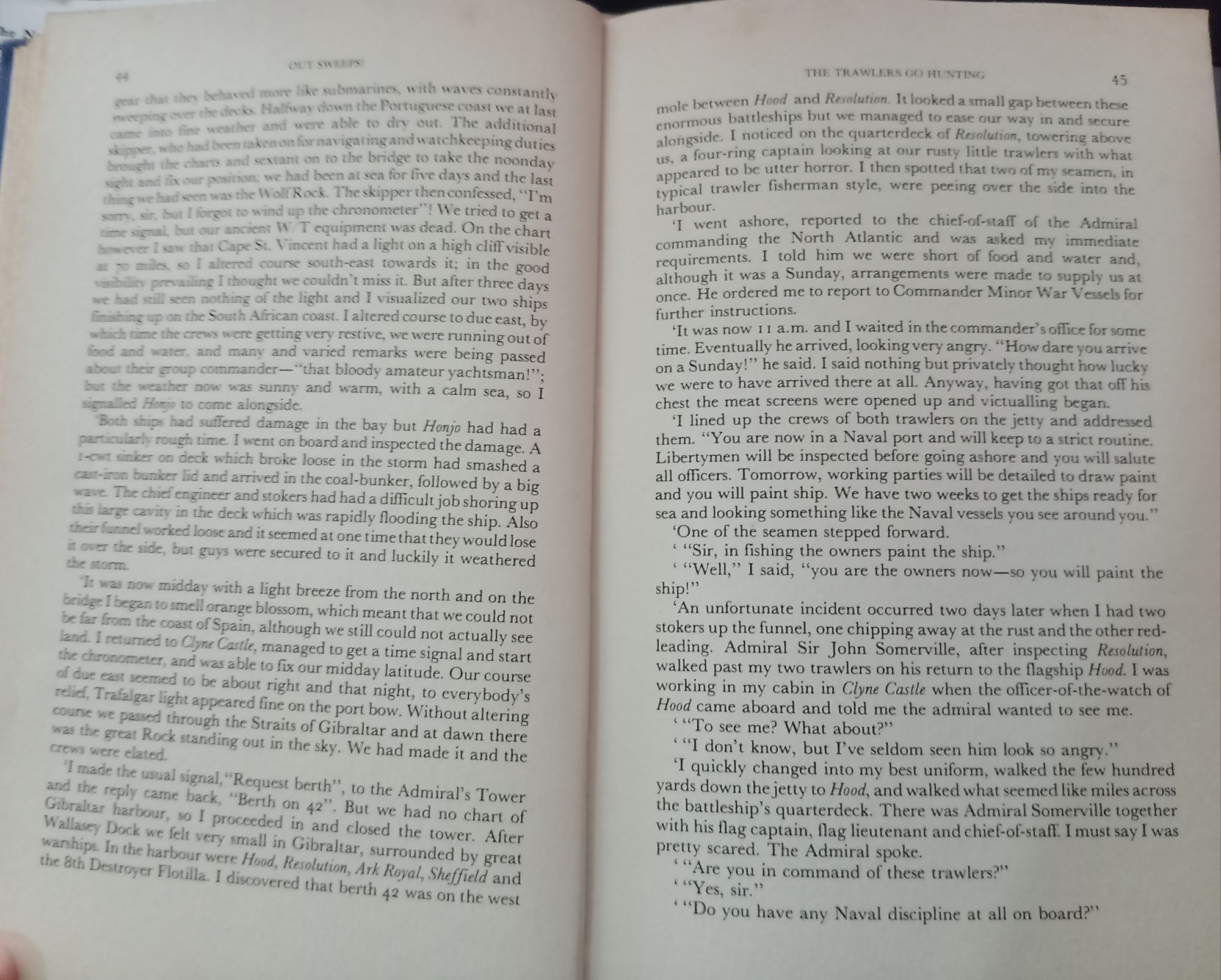
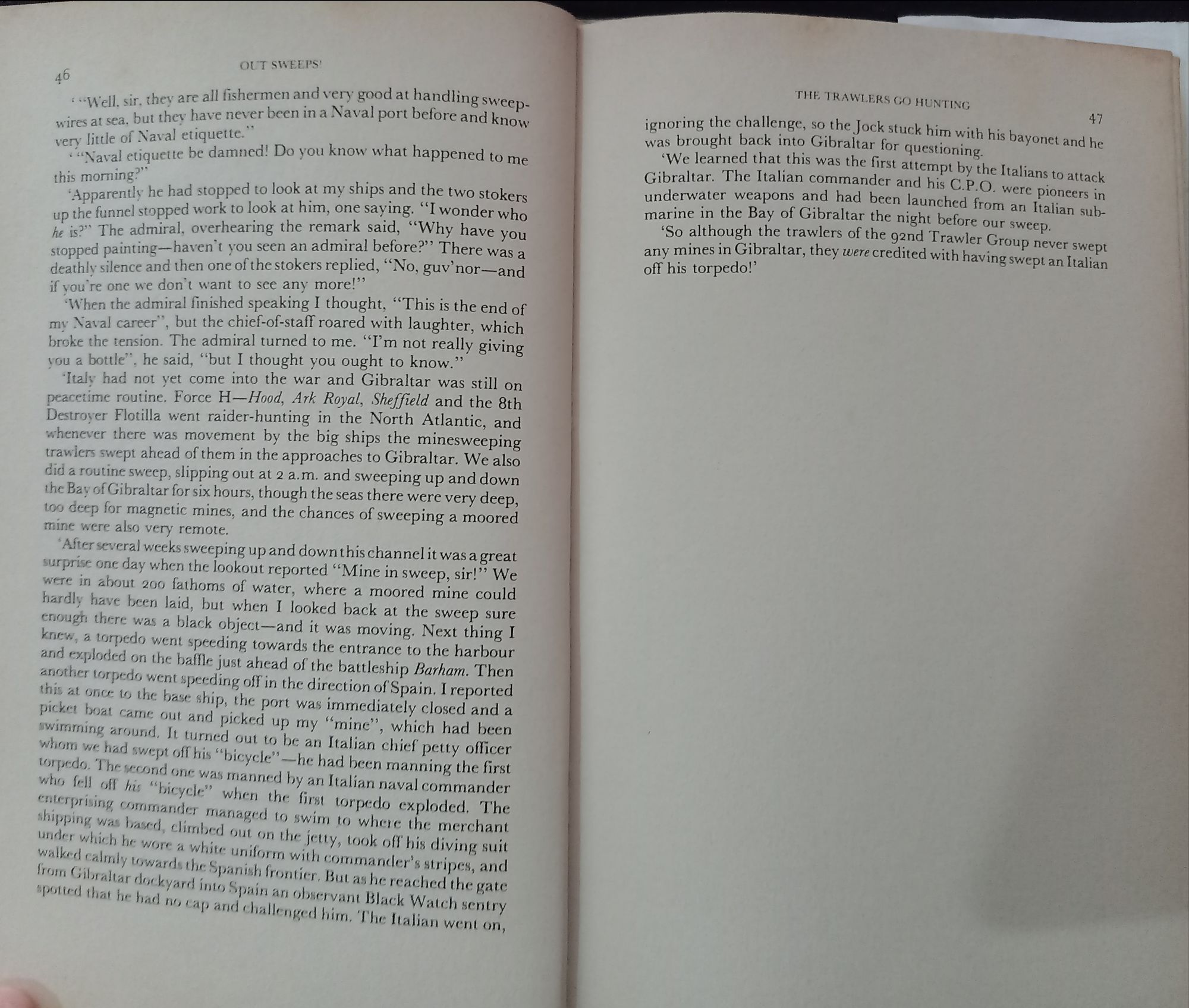
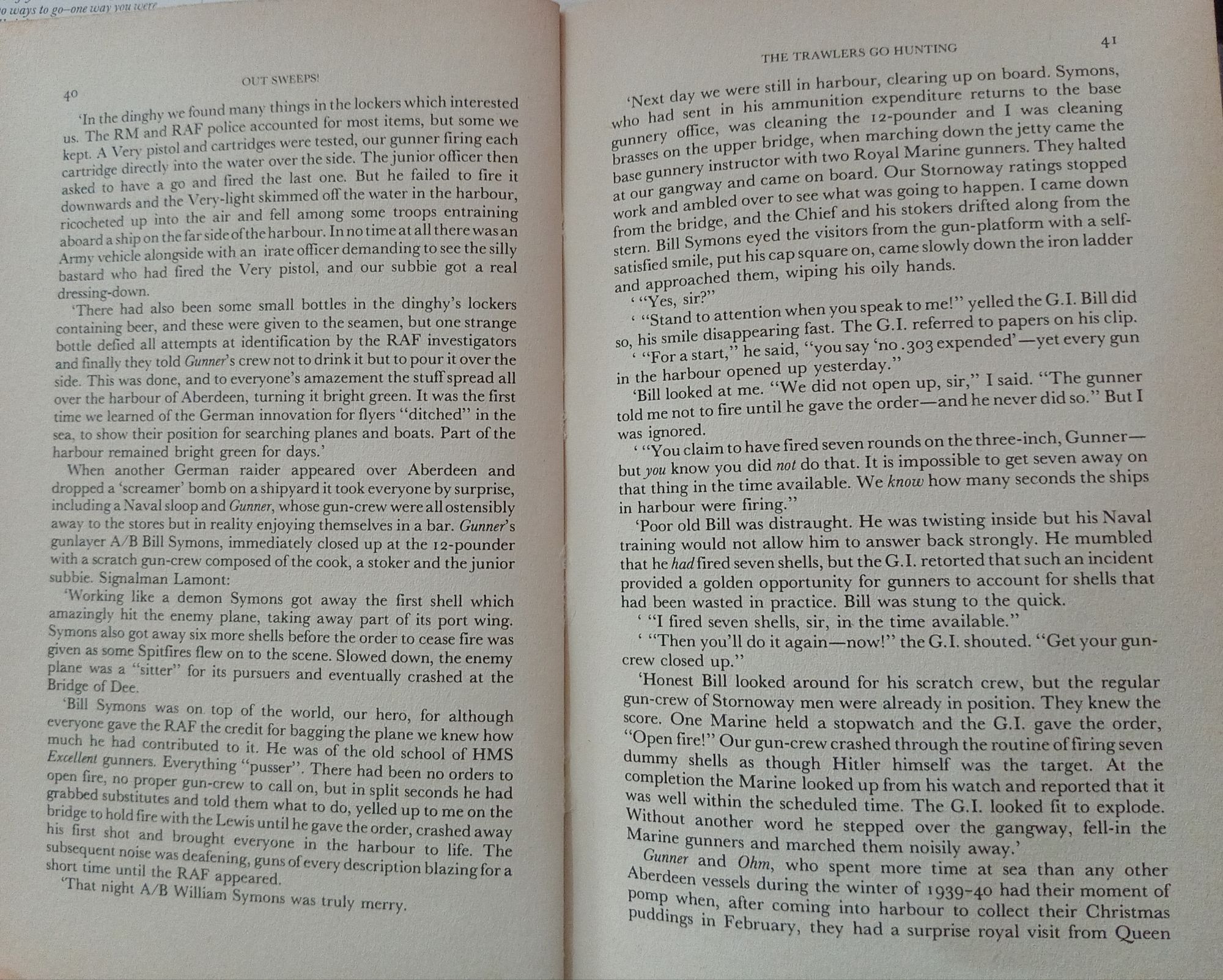
The above extract – taken from the 1978 book by P Lund & H Ludlam entitled “Out Sweeps! The Story of the Minesweeper in World War II” – a more complete description is given about how the RNPS trawlers operated and the type of military equipment they carried. Indeed, these ships appear to be a type of “floating infantry”. As most of these former fishing boats were constucted from durable wood and cork, etc, they were not as susceptible to the Nazi German “magnetic” mine which was designed to be attracted to the iron and steel hulls of regular or purpose built Royal Navy ships – the magnetic fields of which set-off “magnetic” mines (Royal Navy ships with metal structures had a wire mechanism fitted that carried an electric current which “de-magnetised” the hull – a process which prevented “magnetic” mines from being detonated at a short distance away – but close enough to cause substantial damage). A “moored” mine (or “Naval” mine) is a single mine anchored to the seabed by a length of metal chain or rope – operating at a depth decided by the length of mooring tether. These mines were deadly as they often hid below the waterline and the line of sight – waiting for the hull of a ship to strike it in passing. A “drifting” sea mine was a device (sometimes “magnetic” but also “non-magnetic” or “contact” detonated) that floated about on the surface of the sea according to the tide. These mines could travel hundreds of miles and bob and weave their way up estuaries and into harbours. From what I gather according to the stories I was told, it was these “drifting” mines my grandfather was responsible for destroying. Obviously, a “U-Boat” was a Nazi German “Unterseeboot” or “Under Water Boat” – whilst an E-Boat referred to a Nazi German fast-attack “Enemy Boat” – usually carrying torpedoes.
 SANGHA KOMMUNE (SSR)