
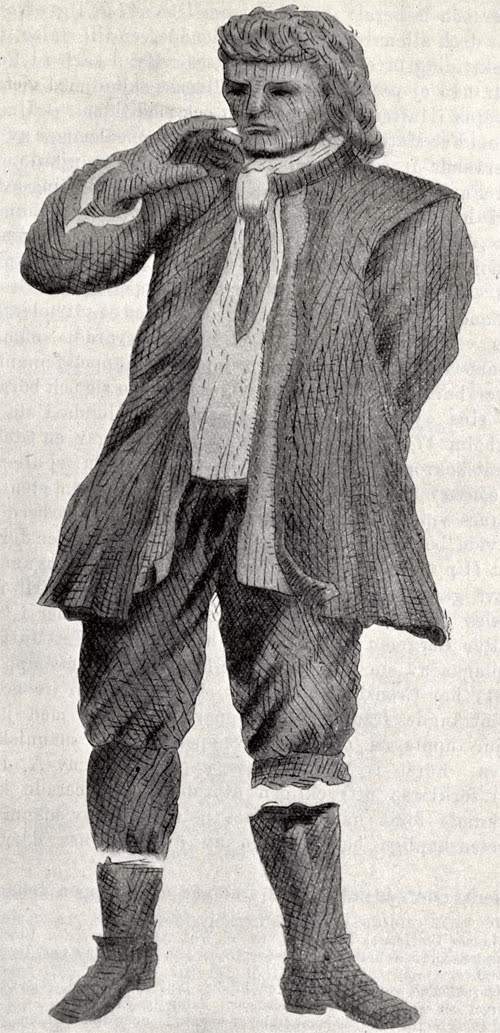
Translator’s Note: When this interesting case is referenced within English-language sources – the deficiencies of the fabled “Wikipedia” orbit the Western world – much like the predictability of how Haley’s Comet orbits our Solar System! Facts are misconstrued, missing, fabricated, misunderstood, and transmitted in the true traditions of US anti-intellectualism. Non-English language sources are rarely, if ever, consulted for verification. As an alternative, I have accessed (and read) a number of Swedish-language texts regarding this matter and have translated one of these texts – referenced below. Swedish people know their own history and the discerning amongst you will appreciate this ‘breakout’ from the yoke of deficient research and cultural arrogance that informs much of what passes as Western European culture. English accounts talk of Fet-Mats being lowered into the Mine ‘in’ or ‘on’ a barrel – sometimes even on the ‘edge’ of a barrel – but the only mention of a ‘barrel’ I can find in Swedish-languages sources is the barrel his mummified body was exhibited in – when held in the Mining Museum. Due to his broken legs – his mummified body was inserted into a barrel so that his legs and waist were suspended in sand and/or dirt – so that his upper-body was free for everybody to see. As there was NO record of his accident – there is NO record of the events leading up to his accident. Was he really lowered into the Mine in or on a barrel – or simply ‘stored’ in a barrel post-mortem?
If a Miner (a working-class man) and his family – could afford a silver coin worth thousands of Kroner – then why would such an individual work as a Miner? Not only this, but according to the narrative in Sweden – entire mining communities would finance their men in acquiring such coins – merely for the idea that they might convey a protective ‘luck’. This being the case, the sheer economic power of these working-class communities would be such that there would be NO requirement for their men to risk their lives working as Miners! Perhaps the copper coin mentioned datng to 1677 CE (a far more humbler coin) possesses a greater likelihood to be the modest talisman provided by a caring (but impoverished) working-class community. On the other hand, as this Mine was a ‘Royal Mine’ (apparently comprised of a crashed meteorite millions of years ago) perhaps the workers were somewhat privileged by the government of Sweden. As Sweden is not my area of expertise, I do not know.
When Fet-Mats entered the Mine during 1677 CE, presumably there were other workers operating the lowering mechanism. This being the case, when Fet-Mats fell – the accompanying workers should have a) reported the accident, and b) the Mining Authorities should have made a verifiable (written) record of the accident and the fact that Fet-Mats was missing. A record that could have been referenced forty-two years later – when his body was found. This did not happen. Instead, two witnesses provided evidence during the 1719 CE hearing – giving two contradictory dates six-months apart – spanning (the Autumn and Spring) of 1676-1677 CE. The dates are close enough to be suggestive of being correct – but why was there no official record of Fet-Mats going missing at the time the event occurred?
The reason the dead body of Fet-Mats was so well preserved is not a mystery – despite no evidence existing that confirms the story is true as told. The science behind the story lies in the fact the water in the Mine is high in a preserving substance termed “Vitriol”. Vitriol contains sulphate hydrates (that is salts of sulfuric acid) – which are naturally found in the bedrock of the Mine. When the Mine flooded – the water became imbued with this substance. As the body of Fet-Mats was fully immersed in this water – it is assumed that it was preserved through a type of pickling. Even so, what happened to Fet-Mats? How did he fall into a disused branch of the Mine? Why was his body not discovered at the time of the accident? How were his lower legs severed? How could he fall but his body remain relatively intact? Did he die immediately without crying-out? Apparently, the ideas of ‘murder’ and ‘concealment’ was never considered in 1719 CE or thereafter.
The best English rendition of this story I have found is from the “Horrible Fates’ Podcast of the YouTube Channel entitled “Scary Interesting“. The research on this Podcast is excellent and can be cross-referenced with the Swedish-language research I have provided below. Is the story real? I think so – in as much as a preserved body was found in the Mine in 1719 CE. As to how the body got there – that is another matter. Although the body ‘hardened’ after it was brought up to the surface – within fifteen years of display – it did begin to decay. This demonstrates that the mummification process in this instance was NOT permanent and dependent upon continuous emersion. This happening was different to the numerous examples of holy people (or the innocent young) who die and with no preservation at all – and yet their bodies remain ‘immaculate’ and ‘uncorrupted’. Of course, a dead body is a dead body and natural preservation processes are observed all over the world (including the Celtic Peat-Bog Mummies). Weigh-up the evidence and think for yourself. My respect is extended to Fet-Mats and his family – which still exists today. ACW (26.2.2024)
Fet-Mats – the Miner Who Became a Tourist Attraction!
During December 1719 CE – labourers in the Falu Copper Mine made an unpleasant discovery – whilst working around 150 metres below ground. As water was drained away from a flooded mine shaft that had not been used for a long time – the dead body of a young man dressed in old-fashioned work clothes was discovered. The body was damaged below the knees (with each lower leg and foot detached), but above the knee was otherwise very well preserved. Indeed, so well preserved was this body that its owner appeared to have perished recently. Who was this deceased worker? It was a mystery as no one was known to be missing – and no one in the mine recognized him as a contemporary worker. After news of this discovery became known throughout the local area, this individual was eventually identified as one – Mats Israelsson – or “Fat-Mats” as he was known – as he was unusually large and strong. Fet-Mats had disappeared during a branch-mine collapse some 42 years earlier. Why was he so well preserved? In this article, you can read the story of Fat-Mat’s gruesome fate – from mine corpse to macabre tourist attraction.
A Mine with a Rich History
On the outskirts of Falun in Dalarna, there has been a famous mine for centuries, called the Falu Mine or Stora Kopparbergs Bergslags Mine. Occasionally, the name Falu Copper Mine is used. In addition to copper, zinc, lead, bismuth, and sulphide ores – silver and gold has also been discovered and mined.
The history of the mine in Falun began already during the Viking Age (ca. 800-1050 CE), but the oldest preserved written source in which the mine is mentioned is from the year 1288 CE.
The next written source of importance is a letter of privilege dated to 1347 CE – issued by King Magnus Eriksson . This Medieval letter is preserved and was written two days after the King had visited the mine. The text establishes, among other things, the importance of conditions regarding mining operations – such as miners’ wages and the right to rest breaks between work sessions.
Copper was Important to Sweden’s Economy
That the kings were interested in mining in Falun was not so strange. Mining was extensive and very profitable. Over time, the mine in Falun became the most profitable copper mine in all of Europe. More than half of all copper produced in Europe during the Middle Ages came from Falun.
In connection to the fact that small-arms and bronze cannons increasingly replaced the medieval weapons, the mine in Falun increased in importance for the Swedish military. Namely due to copper being the most important component of bronze.
When Sweden emerged as a major European power during the 17th century, this affected the mine in Falun. During the middle of the century enormous amounts of copper were mined at this site. At the time, the copper mine was the largest in the world. Mining in Falun continued even after the end of the Swedish superpower era, but on a much reduced scale.
Today, the Mine is a Popular Tourist Destination
Falu Copper Mine was in operation until 1992.
In December 2001 CE, the mine, together with Falun and the Kopparbergslagen, was added to the UNESCO World Heritage List.
Today, the mine is a popular tourist attraction and is visited annually by thousands of people who take the elevator far below ground to view what is hidden in the huge mine shafts.
As a visitor, one cannot avoid hearing the story of Fet-Mats, the young worker who died in a mine collapse in 1677 – and whose body was found 42 years later, in a very well-preserved condition.
A Life-Threatening Job
Working in mines, sometimes several hundred metres underground, has always incurred great risks and danger to the workers. Today, mining – at least in the industrialized countries – takes place with a high level of safety, and the miners always wear protective equipment and are at an appropriate distance when explosives are used down the mine. Despite all modern safety devices and occupational health and safety regulations, many serious mining accidents still occur every year around the world.
However, mining was much more dangerous work back in time, before electric lighting, ventilation fans and structured dynamite.
It is not difficult to imagine the claustrophobic atmosphere down in the dark and often cramped mine passages lit only by torches and oil lamps. The air was polluted and often low in oxygen – making it difficult to breathe. The work was also both physically and mentally demanding.
In order to “blast off” parts of the rock, a method called tilling was used until the end of the 17th century. This involved stacking wood against the bare rock-face – which was then ignited. The heat from the fires caused the rock to crack – after which the miners were able to hack pieces out of the split walls. To prevent the miners from dying from carbon monoxide poisoning or from the heat, the fires were lit at night so that they had burnt-out by the time workers of the morning shift went down into the mine.
In the late 17th century, gunpowder began to be used to blast off pieces of rock, but it would not be until the 19th century that dynamite was invented and used in mining (dynamite is a more efficient and reliable explosive than gunpowder).
The work down in the mine tunnels was both unhealthy and dangerous. Falling accidents, compression and crushing injuries were common. In addition, landslides, gas explosions and floods sometimes occurred.
It was therefore very dangerous to stay down in the mines and deaths among the miners were common. It was not unusual for a person to disappear down the mine tunnels. The mine was huge and some parts were also under water.
Therefore, it was not considered particularly strange when a young miner – such as Mats Israelsson -disappeared without a trace in the mine during 1677 CE.
An Unpleasant Find
In December 1719, a little more than a year after Charles XII’s death, a strange event took place in the Falu Copper Mine. Around 150 metres below ground – miners broke through the wall of a long-closed mine shaft called – Mårdskinnsgruvan – which was under water. When the water drained, a body of a dead man was seen lying some distance inside the shaft. Everyone immediately understood that it was a miner who had died. The head was damaged and the lower leg bones were missing, (probably due to falling boulders), but otherwise the dead man was well preserved. In fact, the body looked like death had occurred recently. His clothes were also intact and well-preserved – if a little old-fashioned.
After the body was taken out of the mine it was still pliable – but witnesses later said that when it dried it became hard – some thinking petrification had taken place. But who was he and how long had he been there? It was all a mystery because no one working in the mine was missing.
The Corpse in the Mine Became a Talking-Point
When the rumour spread throughout the area that the workers had found a well-preserved body down the mine, many curious people wanted to see the find. An elderly woman named – Margareta Olsdotter – was able to identify the dead person as her youthful lover from the 1670s. This lady explained that his name was – Mats Israelsson – who was also known as “Fat-Mats” due to his unusually strong and well-built stature.
Following account, the Mining Council was able to form a logical sequence of events surrounding Fet-Mat’s death. According to Margareta, her betrothed had volunteered to go down the mine as a last-moment replacement for a workmate who had become injured – but he never came back and despite searching – nobody could find him. According to Margareta, this event had taken place fourteen days before Good Friday during 1677 CE – that is 42 years earlier. Another witness (who was also called to the Court) was named – Måns Hansson. He had been familiar with the deceased. As far as Måns could remember, Mats had disappeared during the fall of 1676 CE. Regardless of who was right, through these two testimonies the Mining Court constructed a relatively good idea of when the deceased disappeared and whom the deceased (Mats) actually was.
Displayed in a Barrel at the Utility Office
The logical and decent approach would have been to let Fat-Mats rest in peace in the cemetery in Falun – but this did not happen. The discovery of Fet-Mats had quickly become a natural science sensation which aroused enormous wonder, not only within the scientific circles of the time, but also among the general public.
Already a few days after Fet-Mats had been found in the mine, a letter was written by the miner Anders Swab (1681-1731) – addressed to the Royal Bergskollegiet in Stockholm – within which he enquired what should be done with the preserved body of Fet-Mats. One of the proposals that Swab presented in the letter was that Fet-Mats could be stored in the Mine’s Ore Cabinet, which was a small museum situated in the Mill Office. In other words, Swab enquired as to whether it was permitted to exhibit the preserved body of Fet-Mats as a museum piece! The Royal Mining College in Stockholm had no objections to the proposal – and so the corpse was stored in the Mine’s Small Ore Cabinet. Fet-Mats thus became an ‘official’ part of the Mine’s collection – and could be displayed to the general public.
As Fat-Mats was missing both of his legs below the knee (and in order to conveniently display him to the public) he was placed in a barrel waist-down (obscuring most of his legs) – whilst his torso and arms were still clearly showing – giving the impression he was stood in the barrel. In this way, and through this presentation, the exhibition became a sensation. People came from far and wide to see Fet-Mats. Many famous people were also drawn to Falun to observe this strange phenomenon – the man who would not decay despite being dead for decades. One of those who took the opportunity to observe Fet-Mats during his stay in Falun was the Botanist and Naturalist – Carl von Linné (1707-1778). When Linné visited in 1734 CE (fifteen years after the body had been discovered), Fet-Mats had been moved into a (blue-painted) glass cabinet – probably because the body had begun to decay, fall apart and smell.
Fet-Mats is Buried and Rests in Peace…
Fet-Mats was displayed to the public until 1749 CE (thirty years after he had been found) – after which he was buried in in the graveyard of Stora Kopparberg’s Church. Those reading this story are probably thinking that the tale of Fat-Mats has come to an end and that he has been finally lsid to rest. You have to be patient as this story is not yet over. The journey of Fet-Mat’s body has one or more stages to go through before the end is in sight!
Fet-Mats Buried at Last!
Fet-Mats was given his final resting place in the Cemetery at Stora Kopparberg Church During November 1930 CE. Four years later, a Memorial Stone was erected over his grave – a justifiable compensation to say the least, considering how his remains have been treated throughout history. The Inscription reads, ‘In Memory of the Miner Mats Israelsson Who Died While Working in the Falu Mine in 1677.’
Around 1810 CE, it was decided that the graves inside Stora Kopparberg’s Church would be moved due to overcrowding and the smell of corpses. This was especially pungent during the hot summer months. The body of Fet-Mats was exhumed – like all the other bodies – and re-buried in the local Cemetery. However, even despite this change of circumstance, the respite was short-lived. Around 1860 CE, the Cemetery was re-structured with many of the remains from the older graves being removed and respectfully relocated. The remains of Fet-Mats – which at this point consisted mostly of disconnected bones with tufts of hair still attached to the skull – were placed in a box which was then kept in the Sacristy Attic. At the beginning of the 20th century, the box was found in the Attic and the remains of Fet-Mats had to move once again. This time to one of the Church Stands, the so-called Đäkneläktaren, where the remains were respectfully placed in a box with a glass lid. In this way, Fet-Mats once again became an exhibition object, although there was nothing more than disconnected bones and tufts of hair left to look at.
The Missing (Talisman) Coin
As the mine was a dangerous place to work – strong (protective) superstitions developed among the workers. There were many different ways used to overcome the fear of going down the mine. At the time when Fet-Mats worked in the mine, the workers often carried a coin – a riksdaler silver coin – as an amulet (or talisman) used for protection against danger. A riksdaler silver coin was a large silver coin of high economic value. Its purchasing power converted into today’s monetary value would correspond to thousands of kroner.
When the miners recovered Fet-Mat’s body in 1719 CE, they could not find such a protective coin. They did, however, find a brass box of tobacco that seemed fresh – despite having been in the mine for 42 years. Where has the protective coin? Was it stolen, or did Fet-Mats go down the mine without taking his protective charm? One explanation could be that he was in such a hurry to go down the mine – as he was not scheduled to work – that he simply forgot to take his coin. It could also be that the miners who found Fet-Mats did find the coin – but kept quiet about it. The theft hypothesis is unlikely because stealing another miner’s lucky charm, (as well as a coin belonging to someone who died in the mine), was considered the lowest of the low and guaranteed to invite disaster upon the individual (and family) involved.
There is a surviving relative of Fet-Mats who lives on the farm where Fet-Mats was born. He owns a coin from 1677 CE which, according to inherited tradition, is the coin that Fet-Mat’s forgot to take with him. The problem is that this coin is constructed of copper rather than the usual silver. As the imbibed luck was proportional to the monetary value of the coin – on the face of it – a copper coin of lower value would not have been as lucky as a silver coin of higher value. Therefore, this might not be Fet-Mat’s coin – but rather another coin from the same time (although it is curious to be dated to the year of his disappearance). Where is the genuine (silver) coin belonging to Fet-Mat? As matters stand, there is no way of knowing.
Fet-Mats in Literature and Music
Fet-Mats (as a dead person) became a celebrity a short-time after he was found. People made pilgrimages to Falun just to see his preserved body. The rumour about the found and well-preserved miner also spread outside Sweden’s borders. In Germany, the story of Fet-Mats was particularly appreciated and spread. A German philosopher named Gotthilf Heinrich von Schubert (1780-1860) wrote about Fet-Mats, and several other German writers and philosophers followed suit.
The story of Fet-Mats was also written within a broad literature. He was also immortalized in both music and theatre. The Austrian playwright – Hugo von Hofmannsthal (1874-1929) – made Fet-Mats part of the verse and drama of Das Bergerk zu Fahlun, which was performed in Vienna in 1901. Forty years earlier, the famous German composer – Wilhelm Richard Wagner (1813-1883) – had compiled an (unfinished) opera in which Fet-Mats played an important role. The story of Fet-Mats never ceases to amaze people – and even though it has now been more than 300 years since he was found, his legend is still very much alive. The mine in Falun is visited annually by many thousands of tourists from all over the world who want to hear more about Fet-Mats. The Visitor Centre at the Mine contains an accurate replica of the preserved body of Fet-Mats – drawn from many eye-witness accounts who saw it on display – or who were present when it was discovered.
Swedish Language text:
https://www.so-rummet.se/fakta-artiklar/fet-mats-gruvdrangen-som-blev-turistattraktion
Fet-Mats – gruvdrängen som blev turistattraktion
I december 1719 gjorde några arbetare i Falu koppargruva en obehaglig upptäckt 150 meter nere under marken. Då vattnet rann bort från ett gruvschakt som inte använts på länge, fann de liket av en ung man klädd i lite äldre arbetskläder. Kroppen var lemlästad och saknade ben, men var i övrig helt välbevarad. Han såg ut att ha omkommit nyligen. Vem var han? Det hela var ett mysterium eftersom ingen saknades och ingen i gruvan kände igen honom. Efter att ha blivit en snackis bland faluborna blev han till slut identifierad som Mats Israelsson eller ”Fet-Mats” som han kallades eftersom han var ovanligt stor och stark. Fet-Mats hade försvunnit i samband med ett mindre gruvras 42 år tidigare. Men varför var han så välbevarad? I den här artikeln kan du läsa historien om Fet-Mats gruvliga öde – från gruvlik till makaber turistattraktion.
En gruva med anrik historia
I utkanten av Falun i Dalarna finns sedan århundraden tillbaka en berömd gruva, kallad Falu gruva eller Stora Kopparbergs Bergslags gruva. Ibland hör man även namnet Falu koppargruva. Förutom koppar har det även brutits zink, bly, vismut, sulfidmalmer, men också silver och guld.
Historien om gruvan i Falun tog sin början redan under vikingatiden (ca 800-1050), men den äldsta bevarade skriftliga källan där gruvan omnämns är från år 1288.
Nästa skriftliga källa av betydelse är ett privilegiebrev från 1347 utfärdat av kung Magnus Eriksson. Även detta medeltida brev finns bevarat och skrevs två dagar efter att kungen hade besökt gruvan. I texten fastställs bland annat viktiga villkor för gruvverksamheten som gruvarbetarnas löner och rätt till vilopauser i arbetet…
Kopparn var viktig för Sveriges ekonomi
Att kungarna var intresserade av gruvdriften i Falun var inte så märkligt. Gruvdriften var omfattande och mycket inkomstbringande. Med tiden blev gruvan i Falun den mest lönsamma koppargruvan i hela Europa. Mer än hälften av all koppar som togs fram i Europa under medeltiden kom från Falun.
I samband med att handeldvapen och kanoner av brons alltmer ersatte de medeltida vapnen kom gruvan i Falun att öka i betydelse för den svenska krigsmakten. Koppar är nämligen den viktigaste beståndsdelen i brons.
Då Sverige under 1600-talet växte fram som en europeisk stormakt påverkade detta även gruvan i Falun, och under mitten av århundradet bröts enorma mängder koppar på platsen. Koppargruvan var vid den här tiden den största i världen. Gruvbrytningen i Falun fortsatte även efter den svenska stormaktstidens slut, men i minskad omfattning.
Idag är gruvan ett populärt turistmål
Falu koppargruva var i drift fram till 1992.
I december 2001 blev gruvan tillsammans med Falun och Kopparbergslagen, upptagen på Unescos världsarvslista.
Idag är gruvan ett populärt turistmål och besöks årligen av tusentals människor som tar hissen långt ner under marken för att beskåda vad som döljer sig i de väldiga gruvschakten.
Som besökare kan man inte undgå att höra historien om Fet-Mats, den unge gruvdrängen som omkom i ett gruvras 1677 och vars kropp hittades 42 år senare, i ett mycket välbevarat skick. Men låt oss inte gå händelserna i förväg, mer om det senare.
Ett livsfarligt arbete
Att arbeta i gruvor, ibland flera hundra meter under marken, har alltid inneburit stora risker och fara för arbetarna. Idag sker gruvdrift – åtminstone i industriländerna – med hög säkerhet, och gruvarbetarna bär alltid skyddsutrustning och befinner sig på behörigt avstånd då det sprängs nere i gruvan. Trots alla moderna säkerhetsanordningar och arbetsskyddsregler sker det ändå många allvarliga gruvolyckor varje år runt om i världen.
Det var dock ett betydligt farligare arbete längre tillbaka i tiden, innan det fanns elektrisk belysning, ventilationsfläktar och dynamit.
Det är inte svårt att föreställa sig den klaustrofobiska atmosfären nere i de dunkla och ofta trånga gruvgångarna som bara lystes upp av facklor och oljelampor. Luften var så förorenad och syrefattig att det var svårt att andas. Arbetet var dessutom både fysiskt och psykiskt krävande.
För att ”spränga loss” delar av berget användes fram till slutet av 1600-talet en metod som kallades tillmakning. Det hela gick ut på att stapla ved mot berget som sedan antändes. Hettan från eldarna gjorde att berget sprack varefter gruvarbetarna kunde hacka loss stycken ur bergväggarna. För att inte gruvarbetarna skulle dö av kolmonoxidförgiftning eller av hettan, så tändes eldarna på natten så att de var utbrunna då morgonpassets arbetare gick ner i gruvan.
I slutet av 1600-talet började krut användas till att spränga loss stycken av berget, men det skulle dröja fram till 1800-talet innan dynamiten uppfanns och kom till användning inom gruvdriften (dynamit är ett mer effektivt och pålitligt sprängämne än krut).
Arbetet nere i gruvgångarna var både ohälsosamt och farligt. Fallolyckor, kläm- och krosskador var vanligt. Därtill inträffade ibland ras, gasexplosioner och översvämningar.
Det var alltså mycket farligt att vistas nere i gruvorna och dödsfall bland gruvarbetarna hörde till vanligheterna. Att en människa försvann nere i gruvgångarna var inget ovanligt. Gruvan var enormt stor och vissa delar stod dessutom under vatten.
Därför ansågs det inte särskilt konstigt när den unge gruvdrängen Mats Israelsson försvann spårlöst i gruvan 1677.
Ett obehagligt fynd
I december 1719, lite mer än ett år efter Karl XII:s död, ägde en märklig händelse rum i Falu koppargruva. 150 meter under markytan hade några gruvarbetare precis brutit igenom väggen till ett sedan länge stängt gruvschakt som kallades Mårdskinnsgruvan som stod under vatten. När vattnet rann ut syntes en kropp av en död människa en bit in i schaktet. Alla förstod genast att det handlade om en gruvarbetare som hade omkommit. Koppen var lemlästad. Benen var borta, troligen på grund av nedfallande stenblock, men i övrigt var den döde mannen välbevarad. Faktum var att det såg ut som att han dött nyligen. Hans kläder var dessutom intakta och välbevarade om än lite ålderdomliga.
Efter att kroppen tagits upp ur gruvan var den fortfarande mjuk, men vittnen har senare berättat att då den torkat blev den hård, ja vissa tyckte till och med att den blev som förstenad.
Men vem var han och hur länge hade han legat där? Det hela var ett mysterium eftersom ingen som arbetade i gruvan saknades.
Liket i gruvan blev en snackis
När ryktet spreds i trakten om att gruvarbetarna funnit ett välbevarat lik nere i gruvan var det många nyfikna som ville komma och titta. Det visade sig att en äldre kvinna som hette Margareta Olsdotter kunde peka ut den döde som sin ungdomskärlek från 1670-talet. Hon berättade att hans namn var Mats Israelsson, även kallad Fet-Mats, eftersom han var ovanligt stor och stark.
Efter hennes redogörelse kunde gruvtinget skapa sig en bild över händelseförloppet och tidpunkten för Fet-Mats död. Enligt Margareta hade hennes trolovade begett sig ner i gruvan för att ersätta en arbetskamrat som fått förhinder. Men han kom aldrig tillbaka och ingen kunde hitta honom. Denna händelse hade enligt Margareta ägt rum fjorton dagar innan långfredagen 1677, alltså 42 år tidigare.
Ett annat vittne som kallades till tinget hette Måns Hansson och hade varit bekant med den döde. Vad Måns kunde minnas hade Mats försvunnit hösten 1676.
Oavsett vem som hade rätt så hade gruvtinget genom dessa vittnesmål fått en relativt god uppfattning om när Mats försvann och vem han var.
Utställd i en tunna på brukskontoret
Det mest naturliga hade varit att låta Fet-Mats vila i frid på kyrkogården i Falun. Men så blev det inte.
Upptäckten av Fet-Mats hade snabbt blivit en naturvetenskaplig sensation som väckte enorm förundran, inte bara inom dåtidens vetenskapliga kretsar, utan också bland allmänheten.
Redan några dagar efter att Fet-Mats hade hittats i gruvan författades ett brev av bergmästaren Anders Swab (1681-1731) adresserat till Kungliga Bergskollegiet i Stockholm i vilket han undrade vad de skulle göra med Fet-Mats. Ett av förslagen som Swab presenterade i brevet gick ut på att Fet-Mats kunde förvaras i gruvans malmkabinett, vilket var ett litet museum på brukskontoret. Med andra ord ställde Swab frågan om det gick bra att ställa ut Fet-Mats som ett museiföremål! Kungliga Bergskollegiet i Stockholm hade inga invändningar mot förslaget att förvara honom i gruvans lilla malmkabinett. Fet-Mats blev därmed en del av samlingen och kunde nu visas upp för allmänheten.
Som nämnts tidigare saknade Fet-Mats båda sina ben, och för att kunna visa upp honom för allmänheten placerades överkroppen i en tunna med armarna utanför.
Utställningen blev en sensation. Människor kom från när och fjärran för att se Fet-Mats. Även många berömda personer begav sig till Falun för att observera fenomenet.
En av dem som passade på att ta en titt på Fet-Mats under sin vistelse i Falun var botanikern och naturvetaren Carl von Linné (1707-1778). Då Linné gjorde sitt besök 1734 hade Fet-Mats flyttats in i ett blåmålat glasskåp, med största sannolikhet på grund av att kroppen börjat lukta och falla isär.
Fet-Mats begravs och får vila i frid…
Fet-Mats visades upp för allmänheten fram till 1749 då han begravdes inne i Stora Kopparbergs kyrka. Nu tänker du som läser detta att historien om Fet-Mats har nått sitt slut och att han äntligen kunde få vila i frid. Men du måste ha tålamod! Historien om Fet-Mats resa efter sin död är inte slut än.
Under 1810-talet beslutades att alla gravarna inne i Stora Kopparbergs kyrka skulle flyttas på grund av att det luktade lik, särskilt under de varma sommarmånaderna. Fet-Mats begravdes då, liksom de andra kropparna, istället på kyrkogården.
Men det blev en kortvarig vila, för under 1860-talet grävdes graven upp då kyrkogården omreglerades. Resterna efter Fet-Mats – som vid det här laget mestadels bestod av ett skelett med hårtestar kvar på sitt kranium – lades i en låda som sedan förvarades uppe på sakristians vind.
I början av 1900-talet återfanns lådan på vinden och Fet-Mats fick återigen flytta. Denna gång till en av kyrkans läktare, den så kallade Djäkneläktaren, och kvarlevorna placerades i en låda med glaslock. På så vis blev Fet-Mats än en gång ett utställningsobjekt, även om det inte fanns mer än skelett och hårtussar kvar att titta på.
…till slut
Fet-Mats fick (förhoppningsvis) sin sista viloplats på kyrkogården vid Stora Kopparbergs kyrka i november 1930. Och fyra år senare restes en minnessten vid hans grav – en minst sagt berättigad kompensation med tanke på hur resterna efter honom har behandlats genom historien.
Myntet saknades
Eftersom gruvan var en farlig plats att arbeta i så utvecklades en stark vidskepelse bland arbetarna. Det fanns dock olika sätt att övervinna rädslan för att gå ner i gruvan. Vid tiden då Fet-Mats arbetade i gruvan bar gruvarbetarna med sig ett mynt, en riksdaler silvermynt, som en amulett till skydd mot faror. En riksdaler silvermynt var ett stort silvermynt med högt ekonomiskt värde. Dess köpkraft omsatt i dagens penningvärde skulle motsvara tusentals kronor.
När gruvarbetarna återfann Fet-Mats kropp 1719 kunde de inte hitta myntet. Däremot fann de en mässingsdosa med tobak som verkade färsk, trots att den legat i gruvan i 42 år.
Frågan är vart myntet har tagit vägen eller varför Fet-Mats aldrig tog det med sig ner i gruvan? En förklaring kan vara att han hade så bråttom ner i gruvan – eftersom det inte var inplanerat att han skulle arbeta just den kvällen – att han helt enkelt glömde sitt mynt hemma. Det kan ju också vara så att gruvarbetarna som hittade Fet-Mats lade beslag på myntet. Det är dock mindre troligt eftersom det med största sannolikhet uppfattades som en olycksbådande handling att stjäla en annan gruvarbetares lyckoamulett, dessutom ett mynt som tillhört en som dött nere i gruvan.
Det finns en efterlevande släkting till Fet-Mats som bor på den gård där Fet-Mats föddes. Han äger ett mynt från 1677 som enligt uppgifter långt tillbaka i tiden skulle ha varit Fet-Mats glömda mynt. Problemet med detta mynt är att det är inte är ett silvermynt utan ett kopparmynt av betydligt lägre värde. Med största sannolikhet är det inte Fet-Mats mynt utan ett annat mynt från samma tid. Vart Fet-Mats riktiga mynt tog vägen är ett mysterium som vi troligtvis aldrig kommer kunna lösa.
Fet-Mats i litteratur och musik
Fet-Mats blev en kändis redan en kort tid efter att han hittats. Folk vallfärdade till Falun för att få se honom. Ryktet om den upphittade och välbevarade gruvdrängen spreds även utanför Sveriges gränser. I Tyskland blev berättelsen om Fet-Mats särskilt uppskattad och spridd. En tysk filosof vid namn Gotthilf Heinrich von Schubert (1780-1860) skrev om Fet-Mats, och flera andra tyska författare och filosofer följde efter.
Inte nog med att Fet-Mats blev omskriven i litteraturen. Han kom också att förevigas inom musik- och teaterhistorien. Den österrikiske dramatikern Hugo von Hofmannsthal (1874-1929) lät Fet-Mats bli en del av versdramat Das Bergerk zu Fahlun, vilket spelades upp i Wien 1901. Fyrtio år tidigare hade den berömde tyske tonsättaren Wilhelm Richard Wagner (1813-1883) skrivit på en opera där Fet-Mats spelade en viktig roll. Denna opera blev dock aldrig färdigställd.
Historien om Fet-Mats slutar aldrig att förundra och trots att det nu gått mer än 300 år sedan han hittades är legenden alltjämt levande. Gruvan i Falun besöks årligen av många turister som vill höra mer om Fet-Mats, och i besökscentret vid gruvan finns en replika av hur man tror att Fet-Mats såg ut då han blev återfunnen.
LÄS MER: Falu koppargruva – den svenska stormaktens hjärta
LÄS MER: Svensk koppar under stormaktstiden
LÄS MER: Sverige under stormaktstiden
Uppgifter och frågor
 SANGHA KOMMUNE (SSR)