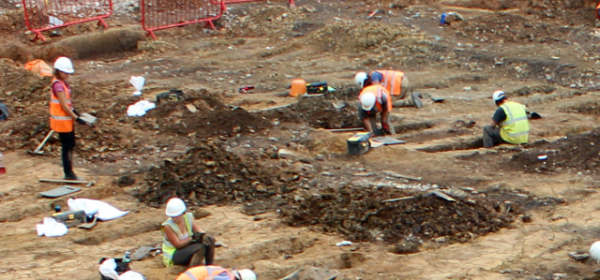
During that period, foreign fighters, largely sailors captured during conflicts with France, Spain, Holland and the early United States were held there and, it would appear, often died there.
Significantly the site’s use for this pre dates the creation of the Norman Cross camp in Huntingdonshire, which is sometimes described as the world’s first purpose built prisoner of war camp.
In the 19th century it was then used as a hospital, including in 1832 when Bristol was hit by a cholera outbreak and in 1837 it was turned into a Victorian Workhouse, which were kind of like homeless shelters but notoriously brutal, providing people with food and shelter in exchange for manual labour.
It’s thought the remains are likely to date from each of these three periods.
A statement sent to Greatest Hits Radio by housing developer Vistry, says research on the remains will “contribute to understanding of Bristol’s social and economic history”.

 SANGHA KOMMUNE (SSR)