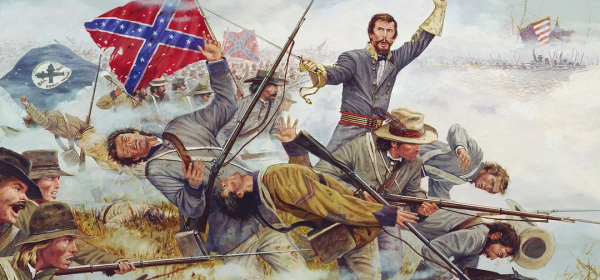
Major General Patrick R. Cleburne leading his men against Federal breastworks, Battle of Franklin, 30 November 1864!

CSA: The Magnificent Confederate Army of Tennessee Attack [30.11.1864] at the Battle of Franklin! (21.10.2025)

The Confederate Army had deployed in an almost Parade Ground formation… As far as the eye could see, the ranks of butternut and grey extended across the gently undulating farm-land. The men were gaunt, many looked like they had been starved – wrote a soldier – and they stood in tattered ranks with their bayonets already fixed on their imported Enfields, Austrians, and captured Springfield rifle-muskets. Their uniforms were threadbare and worn, with many wearing captured Federal clothing. Some had no coats or shoes, and in their haversack, they carried mostly sugarcane and hickory nuts. Nearly all were ragged and dirty. They looked more like a band of robbers than soldiers thought one Federal Private – who saw some captured prisoners. Another Union soldier noted that the Rebels ‘rob our dead because they have nothing to wear – especially for our shoes and coats. They still retained their droopy-felt hats – which gives them a hasty look.’  They are all that the Confederacy could muster – what was left of the hardened spirit of the middle-South. Yet their ragged appearance belied their ultimate worth.
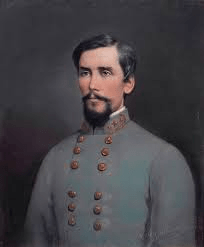
Major-General Patrick Cleburne - CSA

CSA: Patrick Cleburne – the Irish Private that Rose to Major-General – and Called for the Freeing of the Slaves in the South! (17.7.2025)

As a “British” citizen, Patrick Cleburne joined the 41st Infantry Regiment of Foot of the British Army (serving between 1846-1849) rising to the rank of “Corporal” (and NCO signified by two-chevron stripes worn on the upper-shoulder – pointing-down). He served in the Garrison of Spike Island, situated in Cork Harbour. Here, the British Authorities brutally “processed” ethnic Irish prisoners – and Cleburne got to learn first-hand what anti-Irish racism was really like. Due to this experience, he eventually emigrated with his family to the United States, and was accepted with open arms by the people of Arkansas. He was not interested in preserving slavery and certainly did not own any slaves himself. As he appreciated the kindness of the Southern people – he decided to enlist as a “Private” soldier in the “Yell Rifles” – a local Militia in Arkansas. As these local grass-roots Confederate Units were entirely democratic in nature, all NCOs and Officers were elected by popular vote. This is how Cleburne was elected to the rank of “Captain”. Quite extraordinarily, when the Local Militias and Guards Unit were reformed with many being integrated into Infantry Regiments proper that constituted the Confederate States Army – Patrick Cleburne rose through the ranks to Major-General (CSA).

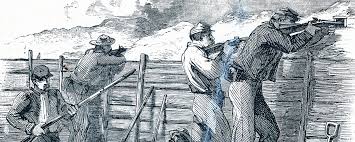
Confederate Soldiers Defend - Battle of the Crater

CSA: A Western Theatre Southern “Private” and “General” Discuss Slavery and the Negro Soldiers of the North! (3.6.2025)

Many American Civil War historical narratives give the (false) impression that the Confederacy lost at Gettysburg in 1863 – staggered on with a futile resistance for two-more years – and then surrendered at Appomattox. Nothing could be further from the truth. Tens of thousands of men bravely fought, died and were wounded on both sides between 1863-1865 – with the Confederacy  winning a number of notable victories after Gettysburg. Private Daniel Kelly quoted above, fought in the Confederate Army in the Western Theatre of the Confederacy – as opposed to the far more famous Eastern Theatre (where Gettysburg was situated). Furthermore, Black, Chinese and Native American men fought in the Confederate Army – but their presence is more or less “erased” from history because such a presence tends to lead to inconvenient and even embarrassing questions.