Nuclear Water Discharge: IAEA Denies Endorsement of Japan “Fukushima” Discharge Plan! (5.7.2023)

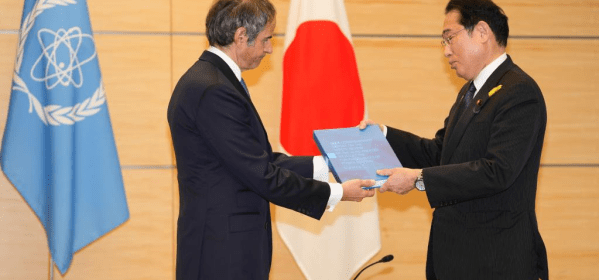
The IAEA will have a continued presence at the Fukushima Daiichi plant site to review, monitor and assess the discharge activities for decades to come, Grossi said, adding that whether to allow other countries to participate in the supervision is a decision to be made by the Japanese government.

During Grossi’s press conference, a group of protestors gathered outside the Japan National Press Club to voice opposition to Japan’s ocean discharge plan, shouting “The sea belongs to mankind. Don’t dump polluted water into the sea,” and “No discharge without consent. Keep your promise to the fishermen!”

At the invitation of Japan’s foreign ministry, Grossi started his four-day visit to Japan on Tuesday, including a trip to the Fukushima Daiichi nuclear power plant.

China Focus: Mars Rover Zhurong Finds Evidence of Water at Red Planet’s Low Latitudes! (1.5.2023)

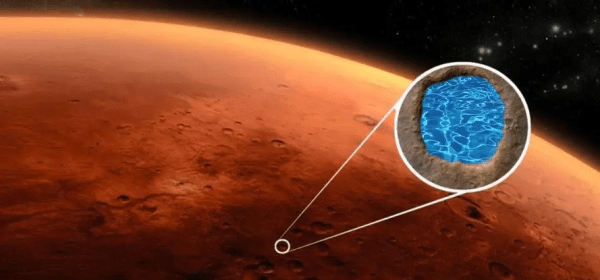
In the study, researchers estimated the dunes Zhurong found were formed about 400,000 to 1.4 million years ago. The exchange of water vapor between the higher and lower latitudes during this period led to repeated humid environments at low Martian latitudes, followed by the frequent occurrence of salty water when temperatures dropped in the region.

Qin said the discovery provides key proof of liquid water at Martian low latitudes, where surface temperatures are relatively warm and more suitable for life than high latitudes.

It also provides information for the design of future exploration strategies for Mars rovers. As saline water once existed at various latitudes on the surface of Mars, priority should be given to salt-tolerant microbes in future missions searching for extant life on Mars, researchers said in the study.

Fukushima: Discharge of Tritium Harms Human Body – South Korean Scientists Confirm! (28.4.2023)

“Those discharges could begin as early as July, possibly later, and continue for many decades, not just the 30 years but maybe 50, 60, 70, 80 years. Next century is really possible,” said Burnie.

“This is water that’s radioactive in tanks, so it’s the deliberate decision to pollute and contaminate the environment, which doesn’t need to take place because actually there is sufficient storage space in the two districts next to the Fukushima nuclear power plant,” he noted.

Burnie was also skeptical of Japan’s claim that the contaminated water could be diluted through an advanced liquid processing system (ALPS).

“This is water that has come in direct contact with a reactor, a nuclear fuel that suffered a severe melt, which means fission products within the nuclear fuel became in direct contact with water,” the specialist said.

“It’s unclear how successfully the ALPS system processes the water. Around 70 percent of the water in the tanks still needs to undergo further processing. So, we still don’t know how effective it’s going to be. It can’t be discharged as it is at the moment,” he added.

China: Socialist Science to 3D Print Structures on Moon! (24.4.2023)

After Chang’e 6, the Chang’e 7 robotic probe will be sent to land on the moon’s South Pole to perform “high-precision investigations”, Wu said.

“The Chang’e 7 mission is meant to look for traces of water on the South Pole, investigate the environment and weather there, and survey the landform. The probe will carry a ‘flyby craft’ tasked with flying into pits on the lunar surface to look for ice,” the scientist said.

“Chang’e 7 will also be tasked with detecting the natural resources beneath the lunar South Pole’s surface. Mission planners are trying to assess if we can use the probe to dig into the surface and study underground structures and their composition,” he said.

In the long run, scientists will use components of the three upcoming missions — the orbiters, landers, rovers and sensors — to form the prototype of a robotic scientific outpost, which will act as a platform for international collaboration on lunar exploration, he added.

US: Cover-Up Fears of 400,000 Gallons of Radioactive (Tritium) Water Leaked from US Nuclear Power Plant! (19.3.2023)

Tritium is a naturally occurring radioactive form of hydrogen that is produced in the atmosphere. It is a byproduct of the production of electricity by nuclear power plants.

Xcel Energy said the leak came from a water pipe running between two buildings at its Monticello facility and was stopped.

The company also said it is monitoring the groundwater plume through two dozen wells while pumping contaminated groundwater through extraction wells.

“We are working to ensure this cleanup is concluded as thoroughly as possible with minimal or no risk to drinking water supplies,” said Kirk Koudelka, MPCA assistant commissioner for land and strategic initiatives.

Xcel Energy is said to be exploring building aboveground storage tanks or installing a retention pond to store water containing tritium that has been collected during ongoing recovery activities.

China Releases First Batch of Research from Mars Exploration! (19.9.2022)

Scientists have also found that the Martian soil has high bearing strength and low friction parameters, revealing the site where the rover landed must have experienced wind and possibly water erosion.

These results revealed the impact of wind and water activities on Mars’ geological evolution and environmental changes, and provided support for the hypothesis that there was once an ocean in the Utopian Planitia, according to the CNSA.

In addition, Chinese scientists have obtained a number of scientific results on the relationship between the density of rocks on the Martian surface and the degree of surface erosion, the distribution of ions and neutral particles in the near-Mars space environment, and the gravity field of Mars.

1 5 6 7 8