Nagarjuna – who read virtually all the known Buddhist sutras of his time, deduced that the Buddha was teaching from this philosophical position – which by necessity – has no position.
Tag: void
Buddhist Dialectics, Logic and Emptiness
Enlightenment appears to be the realisation of the exact mid-point between these four positions of logic, but is not limited to any of the propositions. Things are ‘empty’ because they are not ‘full’, but it can equally be said that things are ‘full’ because they are not ‘empty’ – but these statements are relative positions for the interpretation of ‘truth’.
The Implications of Ch’an Meditation
‘The sutras lead the aspirant toward enlightenment at their own pace, whilst Ch’an, in its more direct method demands that the obvious is realised here and now, and its nature not endlessly talked around. The Ch’an masters use the language of the ‘uncreate’. This is the use of ordinary conditioned human language, in a manner that does not allow for the usual conditioning to operate, and thus deprives the intellectual mind of the fuel needed to create more delusive thought. This language manifests the ‘real’ in an non-dualistic and absolute manner and can not be understood with a mere shallow cleverness. Its impact is often decisive and is designed to take the practitioner through the three gates of entry into nirvana; namely ‘voidness’, ‘formlessness’, and ‘inactivity’. Voidness empties the mind of the idea of self and others; formlessness wipes out the notion of externals, and inactivity puts a stop to all worldly activities, whilst appearing in the world – in numerous and diverse circumstances – to act as a bodhisattva and deliver all living beings from suffering.’
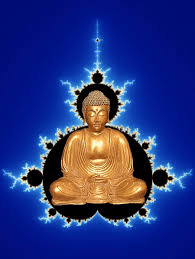
Sunyata: The Beautiful Emptiness! (9.2.2012)
‘To understand this developmental process, an assessment of ‘emptiness’ (sunyata) must be undertaken. It is clear that in early Buddhism emptiness refers to the lack of the presence of greed, hatred and delusion, as well the abandonment of the notion of a permanent self. It is an emptiness that marks the absence of delusion. Delusion is no longer present in the mind or perceived in the environment (in relation to the mind). The mind does not create the conditions that lead to the desire of external entities or attachment to those entities. It is true that no further karma is produced but that the karma relating to the world and the physical body continues until it is fully burnt off (at the point of death), and there is no more re-birth. The nirvanic state has present within it certain powers of the mind, and perfected knowledge. This concept of nirvana exists as an escape from the physical world of samsara. It is viewed very much as an antidote to the suffering experienced within ordinary life.’
 SANGHA KOMMUNE (SSR)