China: Who is Covering-Up the Unit 731 War Crimes of Japan? (4.9.2023)

“What Japan waged during WWII was an aggressive war, and Unit 731’s deeds were the most horrifying. But Japan has never truly reflected on this, which has resulted in a vague understanding of this history and even influenced local governments,” said Kubota.

“This is the fundamental reason behind the Iida City Board of Education’s refusal to display Unit 731 panels!” he said.

A survey conducted by Japanese newspaper Asahi Shimbun revealed that only 30 percent of the 85 WWII-related museums across Japan have long-term exhibits regarding the nation’s history of aggression. None of them has exhibits dedicated to Unit 731.

“Cover it up, then forget it without realizing it… The nation’s attitude of making true history vanish is fully evident in the acts of the Iida City Board of Education,” said Kubota, expressing profound sorrow amid the Japanese government’s attempts to conceal the truth of its wartime aggression.

“We must not let the true history disappear,” said the gray-haired man, leaning on his cane.

China: Japanese War Crimes [1931-1945] – Activities of Notorious “Unit 731” Kept HIDDEN from Public! (3.9.2023)

WHO IS HIDING WAR CRIMES?

Ignoring the overwhelming evidence, the Iida City Board of Education still holds its ban on exhibiting Unit 731 panels at the peace memorial museum.

Yoshizawa told Xinhua that the board had presented a 2003 “National Diet response record” and referred to it as the so-called “national standpoint, ” which stated that “although the Japanese government acknowledges the existence of Unit 731, it does not acknowledge the fact that the unit engaged in bacteriological warfare.”

This so-called “national standpoint” has been refuted by Japanese experts, including Fumio Hara, former president of the Research Society for 15 years War and Japanese Medical Science and Service.

Well-versed in the Unit 731 crimes, Hara wrote a letter to the board, criticizing their so-called “national standpoint” as fundamentally untenable.

“In a judgment in August 2002, the Tokyo District Court recognized that Unit 731 had used bacteriological weapons on the Chinese battlefield. While the judgment rejected the plaintiff’s demands for an apology and compensation, it unequivocally recognized the fact that the Japanese military had engaged in bacteriological warfare. This is an official judgment of the Japanese government,” said Hara.

“This is concealing and hiding history, depriving citizens of the opportunity to understand historical truths!” said Nobuharu Goi, a representative of Japan’s civic group 731 Alliance, condemning in a letter sent to the board its decision to ban the exhibition of Unit 731 crimes.

In another letter sent to the board, another citizens group questioned: “The testimonies and evidence of Unit 731 witnesses are extremely valuable. Isn’t it our generation’s responsibility to display the testimony of the perpetrators and prevent the horrors of war from happening again?”

After several dialogues with the board failed, the Iida City Peace Material Collection Committee in January 2023 established a committee for reflecting on the Iida City Peace Memorial Museum.

During its inaugural meeting, Kubota took the stage, wearing a hearing aid, and stated, “The memorial museum must display panels related to Unit 731. We must fight for this! The core issue here is how we address the war, both as perpetrators and victims.”

“The current Japanese government no longer allows any mention of war atrocities,” lamented 93-year-old Hideo, who reiterated his personal experiences within Unit 731 at the gathering.

Under huge pressure, the Iida City Board of Education in February 2023 organized a meeting to discuss the Unit 731 panels. However, the conclusion was that “the content on the exhibition panels is too cruel and goes beyond the scope of Japanese school textbooks.”

When asked to comment on the issue, Hara noted that Japan’s school curriculum scarcely addresses the negative aspects of its wartime aggression, making it exceedingly difficult to present the historical truth of Japan’s wartime atrocities in society and educational institutions.

Incidents similar to the suppression of historical truths through exhibition panels are not confined to Iida City, he said, noting that the practice of concealing Japan’s wartime crimes has gradually spread throughout the country.

The expert, citing the “Peace Osaka” event for example, told Xinhua that due to pressure from right-wing forces, its panels related to crimes like the Nanjing Massacre and Unit 731 were removed. Similarly, the Statue of a Girl of Peace symbolizing “comfort women” victims was removed from an international art exhibition in Aichi Prefecture in 2019.

Across China: New Evidence of Japanese Germ Warfare Unit Made Public! (8.8.2023)

“According to the data, the hospital was an extension of the medical crime of Unit 731. It was closely related to Japanese germ warfare since the beginning of its preparation, and was an important participant and associate of such warfare,” Jin said.

“The study found that human experiments and germ warfare carried out by Unit 731 were assisted by Japanese wartime medical institutions,” said Jin Chengmin, curator of the exhibition hall.

“This once again proves that the Japanese invasion of China was a top-down, organized and planned group crime carried out by Japanese militarism,” he added.

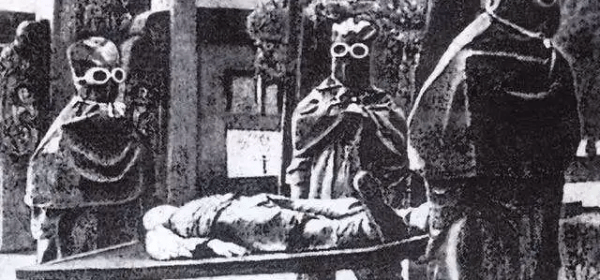
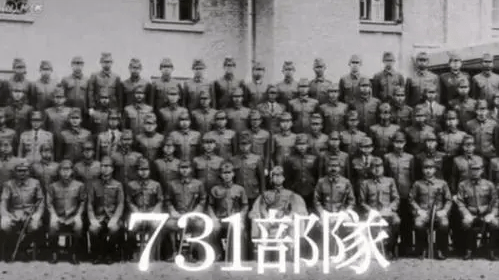
Unit 731 was a top-secret biological and chemical warfare research base established in Harbin as the nerve centre for Japanese biological warfare in China and Southeast Asia during World War II.

China: Anti-Japanese War of Resistance Commemorated! (8.7.2023)

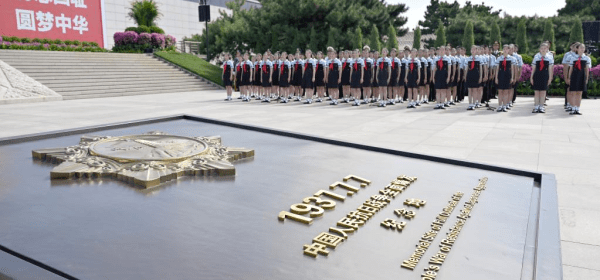
Students attend a ceremony to mark the 86th anniversary of the beginning of China’s whole-nation resistance war against Japanese aggression in Beijing, capital of China, July 7, 2023.

China on Friday commemorated the 86th anniversary of the beginning of China’s whole-nation resistance war against Japanese aggression.

On July 7, 1937, Japanese soldiers attacked Chinese forces at the Lugou Bridge in Beijing. The incident is recognized as the start of Japan’s full-scale invasion of China and China’s whole-nation resistance against the Japanese invaders.

A commemorative ceremony was held on Friday morning at the Museum of the War of Chinese People’s Resistance Against Japanese Aggression, which is located near the Lugou Bridge. (Xinhua/Yue Yuewei)

China: New Evidence of Japanese Germ Warfare Unit 731 on Display! (14.12.2022)

“The new display further shapes up an evidence chain of the germ research and human experiments conducted by Unit 731,” said Jin.

Among them is a roster of the unit affiliated with the Japanese Kwantung Army, showing Unit 731 had a total of 3,497 members.

At least 3,000 people died at the unit’s base in Harbin alone between 1939 and 1945, mostly in experiments for the development of biological weapons.

In more than 30 years of archaeological excavations and research, the museum has collected nearly 100,000 pieces of artifacts and historical documents in seven categories.

“By presenting the evidence and disclosing the crimes, we enhance the international influence of the museum to remind the public of the past and safeguard peace. It’s not only important for Chinese but also meaningful for all humanity,” said the curator.

1 2 3