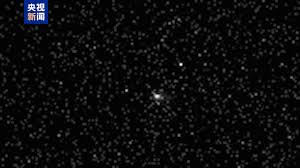
Tianwen-1's high-resolution camera,

China: Tianwen-1 Mars Orbiter Captures Interstellar Object 3I/ATLAS! (7.11.2025)

It is thought to have formed around ancient stars near the centre of the Milky Way and may be older than the solar system itself, offering rare insight into the composition and evolution of exoplanetary material.

The Tianwen-1 team began preparing for the observation in early September this year. With ATLAS moving at about 58 kilometres per second and appearing 10,000 to 100,000 times dimmer than the Martian surface, the mission faced an extreme technical challenge in image targeting and stability.

Originally designed for Mars surface observation, Tianwen-1 has been orbiting the planet since February 2021.

The successful observation of ATLAS marks an extension of the probe’s mission, serving as a test for China’s upcoming Tianwen-2 asteroid mission.
China Focus: Mars Rover Zhurong Finds Evidence of Water at Red Planet’s Low Latitudes! (1.5.2023)

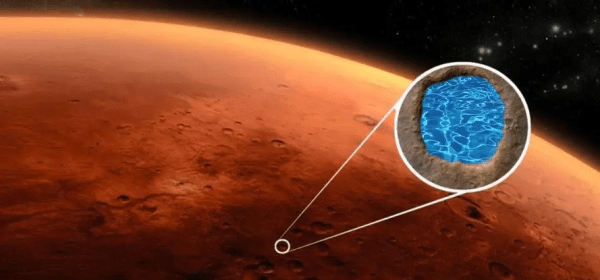
In the study, researchers estimated the dunes Zhurong found were formed about 400,000 to 1.4 million years ago. The exchange of water vapor between the higher and lower latitudes during this period led to repeated humid environments at low Martian latitudes, followed by the frequent occurrence of salty water when temperatures dropped in the region.

Qin said the discovery provides key proof of liquid water at Martian low latitudes, where surface temperatures are relatively warm and more suitable for life than high latitudes.

It also provides information for the design of future exploration strategies for Mars rovers. As saline water once existed at various latitudes on the surface of Mars, priority should be given to salt-tolerant microbes in future missions searching for extant life on Mars, researchers said in the study.

China Releases First Batch of Research from Mars Exploration! (19.9.2022)

Scientists have also found that the Martian soil has high bearing strength and low friction parameters, revealing the site where the rover landed must have experienced wind and possibly water erosion.

These results revealed the impact of wind and water activities on Mars’ geological evolution and environmental changes, and provided support for the hypothesis that there was once an ocean in the Utopian Planitia, according to the CNSA.

In addition, Chinese scientists have obtained a number of scientific results on the relationship between the density of rocks on the Martian surface and the degree of surface erosion, the distribution of ions and neutral particles in the near-Mars space environment, and the gravity field of Mars.