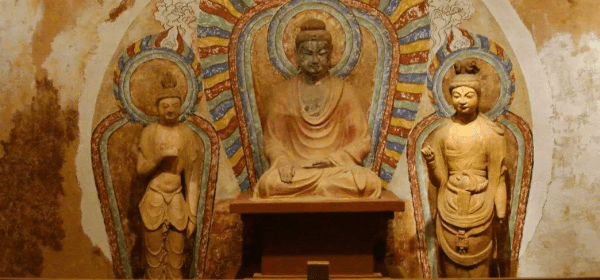
Buddhist Swastika

China: How to Read the Buddhist “卍” (Swastika) Symbol Currectly! (17.10.2024)

Empress Wu Zetian (武则天) of the Tang Dynasty was attracted to Buddhism very much and often invited Ch’an Masters to the palace to explain Buddhist Sutras to her. It was under the promotion of Wu Zetian that Huayan (华严) Sect became a major Buddhist school during the Tang Dynasty.

At that time, there was still no consensus on the pronunciation of “卍” within Buddhism. Some people insisted that it should be pronounced as “万” (Wan4) or “The Ten Thousand Thing” – but others opposed this interpretation – and believed it should be pronounced as “万”(mo2) or “Scorpion” – referring to an Oracle Bone Inscription which refers to a non-Chinese primitive tribe (during the Shang Dynasty) that worshipped the “Scorpion” whilst mimicking its movements in a ritualistic dance (perhaps implying the “foreignness” of India).
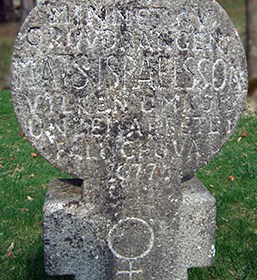
Fet-Mat's grave, the text reads: In memory of the miner Mats Israelsson who died while working in the Falu mine in 1677.

Sweden: My Tribute to “Fet-Mats” the Incorruptable Miner! (26.2.2024)

When Fet-Mats entered the Mine during 1677 CE, presumably there were other workers operating the lowering mechanism. This being the case, when Fet-Mats fell – the accompanying workers should have a) reported the accident, and b) the Mining Authorities should have made a verifiable (written) record of the accident and the fact that Fet-Mats was missing. A record that could have been referenced forty-two years later – when his body was found. This did not happen. Instead, two witnesses provided evidence during the 1719 CE hearing – giving two contradictory dates six-months apart – spanning (the Autumn and Spring) of 1676-1677 CE. The dates are close enough to be suggestive of being correct – but why was there no official record of Fet-Mats going missing at the time the event occurred?