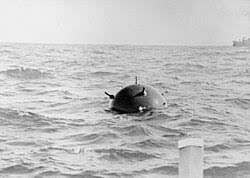
WWII "Drifting" Mine!

WWII: D-Day 81st Anniversary [1944-2025] – Remembering Arthur Gibson and the HMS Beaumaris Castle (FY 992) – of the “Royal Navy Patrol Service” [RNPS] ! (5.6.2025)

A “moored” mine (or “Naval” mine) is a single mine anchored to the seabed by a length of metal chain or rope – operating at a depth decided by the length of mooring tether. These mines were deadly as they often hid below the waterline and the line of sight – waiting for the hull of a ship to strike it in passing. A “drifting” sea mine was a device (sometimes “magnetic” but also “non-magnetic” or “contact” detonated) that floated about on the surface of the sea according to the tide. These mines could travel hundreds of miles and bob and weave their way up estuaries and into harbours. From what I gather according to the stories I was told, it was these “drifting” mines my grandfather was responsible for destroying. Obviously, a “U-Boat” was a Nazi German “Unterseeboot” or “Under Water Boat” – whilst an E-Boat referred to a Nazi German fast-attack “Enemy Boat” – usually carrying torpedoes. 
Arthur Gibson - RNPS

WWII: 1939 Founding of the Royal Navy Patrol Service [RNPS]! (26.5.2025)

I think the Royal Navy and RNPS acted in parallel around the UK – as I remember two Royal Navy ships working at exactly the same time during WWII – both holding exactly the same name of “HMS Beaumaris Castle” (but with different registration numbers). The point was that the war with Nazi Germany caught the UK government by surprise and there was not enough time (nor was there the resources) for the government to build proper military-grade mine-sweepers. Fishing vessels were acquired and thousands of volunteers called for to immediately defend the UK coastline. Those men who volunteered were permitted to “choose” to serve in the RNPS – rather than being placed wherever the government most needed men. The above extract sheds light on how the RNPS was first formed in 1939.