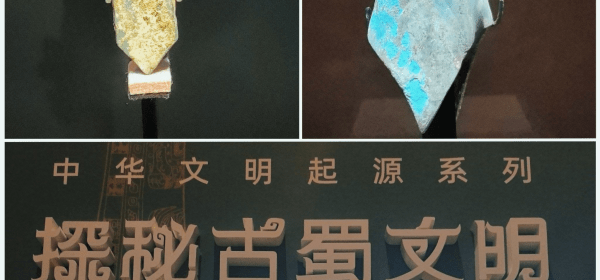
Ecns.cn 2025-09-28 (ECNS) — New archaeological findings at the Sanxingdui (Three Star Burial-Mound – or Three Star Tomb) Ruins in southwest China’s Sichuan Province have uncovered
Proletariat Blogging in the Heart of (UK) Predatory Capitalism! Exploring the Interface between Matter and Perception, Chinese Buddhism, Daoism, Hakka Ethnography, and All Aspects of Radical Politics, History, Psychology and Philosophy – 全世界无产者联合起来!
Ecns.cn 2025-09-28 (ECNS) — New archaeological findings at the Sanxingdui (Three Star Burial-Mound – or Three Star Tomb) Ruins in southwest China’s Sichuan Province have uncovered
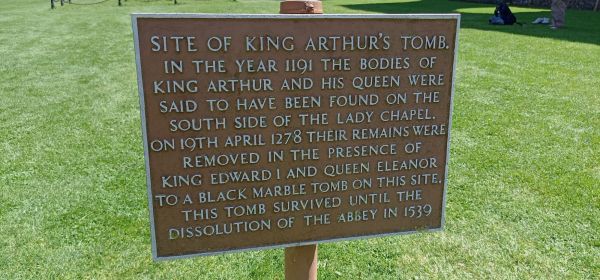
The Celtic Church (from Egypt) was probably in Britain from the 2nd century CE onwards – with it being destroyed by the incoming Roman Catholic Church by the 11th century CE. Its monastic nature encouraged not only cloistered monks who lived in draughty stone cells – but also Hermits who lived in natural caves or various other meditation cells. Celtic Christianity did not persecute – but encouraged and accommodated the Pagan beliefs of indigenous people. There was a mutual respect between both groups of believers and this explains why leaders like King Arthur would strive to protect the Church – and the Church to honour him in death. This type of Asiatic respect does not require a slavish attachment to belief to be functional. Freedom of belief equates to respect for difference. There are many theories dating King Arthur from the 6th, 7th and 8th centuries, etc, which include many geographical areas associated with his life and death. We favour Tintagel in Cornwall – a place we have visited many times. King Arthur was a wise man, a compassionate man, and a great warrior!
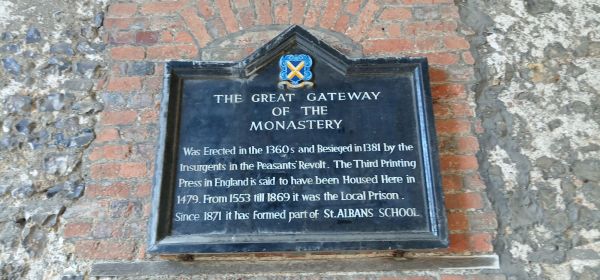
During 1381 – England came within a hair’s breadth of becoming a People’s Republic! This great effort led by Wat Tyler was eventually defeated through the duplicity of the ruling classes – but its example echoes down through history! The beginnings of this gate stem from the 11th century and the consolidation of the Norman Conquest. This was when Roman Catholicism landed in England as part of the ruling government structure. Prior to this, Celtic Christianity (probably from Egypt) held sway in England, Wales, Scotland and Ireland. What Catholic presence there was prior to 1066 CE was piece-meal and generally lacked any real political power or influence. The differwence between these two forms of Christianity is that although both possessed a monastic tradition – the Celtic version saw the monastery (not the Church) as the centre of society. Furthermore, the Celtic version possessed a tolerant attitude toward non-Christian beliefs – a position rejected by the Catholic variant. With the coming of the politically empowered Catholic Church – Celtic Christianity was all but wiped-out by the 12th century.
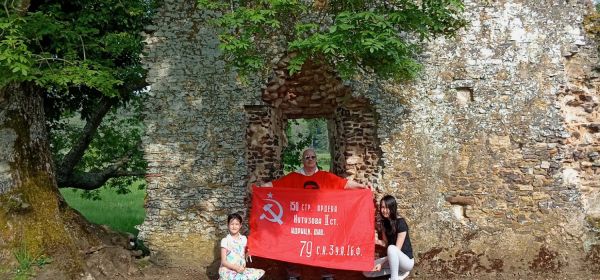
This was a place where a group of Cistercian monastics (following the Rule of St Benedict) – also known as “Trappist” monks – spent years in silent contemplation of the Bible and their inner minds. The lifestyle of such a monk is designed to “still” the mind and empty the interior of all desire. Only when the mind and body of the monk is “empty” might God grant “grace” and make himself known – but he might not. Either way, once the monk is empty of all desire – the love of Jesus Christ can shrine view. The monk possesses no opinion and so the cycle of each da peacefully unfolds.
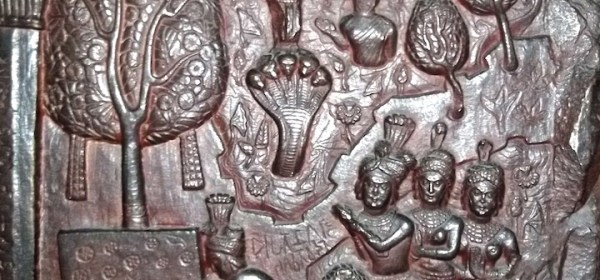
When the Buddha attained ‘Enlightenment’, the habitual karmic-power that continuously pulled together his physical and psychological existence fell away – leaving only the residual karmic-power of his present (final) bodily existence. Although the Buddha had broken the ridge-pole of continuous delusional habit – the physical body he occupied whilst attaining this position still had to be ‘lived through’ – until its biological functions naturally expired and its cohesive structure fell away. All of the material universe exists within empty space. Buddhist ‘Enlightenment’ seems to suggest a subjective appreciation of this external space and understands that all material expression exists within a continuous state of flux. As the Buddha broke-free of the human attachment to physical existence – his achievement was originally portrayed by his followers as ‘being not there’.
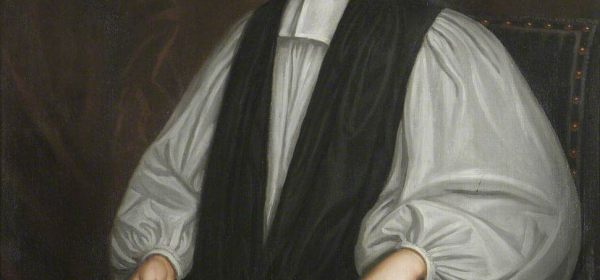
The point is that the external Revolutionary conditions of British society that led directly to the English Civil Wars (and the overthrow of absolute monarchy) – not only emerged from changing attitudes within – but served to further condition the human mind to think beyond the boundaries set by previous generations without! Changing times led to changing thoughts – and changing thoughts led to the eventual advancement of science and society. John Wilkins is to be applauded for his diplomatic skills and his scientific vigour! This very much encapsulates the spirit of the English Revolution!
 SANGHA KOMMUNE (SSR)