Dark Side Moon

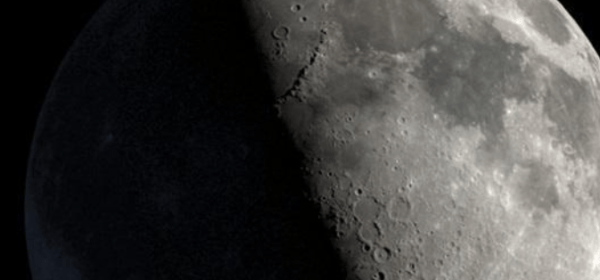
PRC: Lunar Samples Indicate Previous Magma Activity! (19.11.2024)

am lunar soils.

The study published on Science, conducted by a team led by Xu Yigang, an academician of the CAS and a researcher at the Guangzhou Institute of Geochemistry of the CAS, also confirmed magma activity on the lunar far side 2.8 billion years ago.

The study also indicates that the eruption of lunar mare basalt is influenced by the internal composition of the moon, explaining why the South Pole-Aitken Basin on the lunar far side lacks abundant volcanic activity.

“These samples are the first to be collected on the lunar far side so it provided a unique view to the moon’s global geological history. The results are novel and are deserving of publication in Science. They will be of interest to a broad readership,” Science reviewer Katherine Joy said.

Robot Beijing Marathon

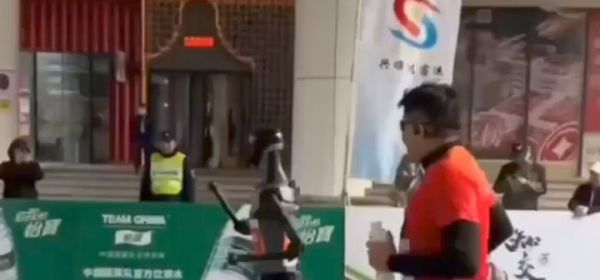
China: Android Runs Complete Half-Marathon! (16.11.2024)

Human performances varies across a considerable scale – whilst Socialist ideology emphasises “effort” whilst also recognising a natural “achievement” at the high-end of performance that does not leave the bulk of humanity behind. Human performance must exist on a scale that allows an “average” ability in real life that ensures the survival of the human race. Migratory humans used to “walk” thousands of miles whilst following the good weather and the shifting herds. All humans, men, women and children, as well as the young, old, and ill, would participate in these massive migrations – with the lower speed ensuring the greater survival rate over-all. Yes – those who could run fast over long or short distances had their place – but such abilities were considered peripheral to the needs of tribal survival.

PRC Reusable Space Shuttle!

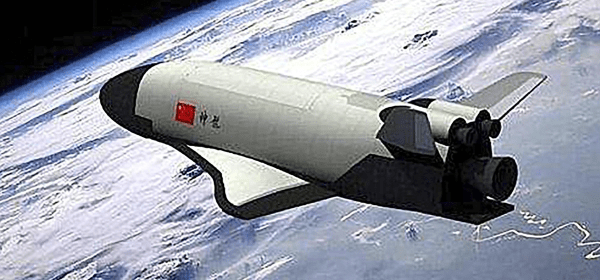
China: Greater Efficiency Space Shuttle! (13.11.2024)

A model of the spacecraft will be displayed at the 15th China International Aviation and Aerospace Exhibition, which opens on Tuesday in Zhuhai and runs through Sunday.

Currently, China has only one model of cargo spaceship, Tianzhou, which is a product of the China Academy of Space Technology in Beijing. So far, seven Tianzhou vessels have been launched and six of them were used to transport supplies to the Tiangong space station.

Orbiting Earth at a distance of about 400 kilometres, the Chinese space station has three permanent parts — a core module and two science capsules — and is regularly connected to several visiting crew and cargo spaceships.

It has been manned by eight Chinese crews, including the incumbent Shenzhou XIX team. All of the crews’ living and work necessities need to be transported by cargo vessels.

Lunar Rover Premised on Ancient Chariot!

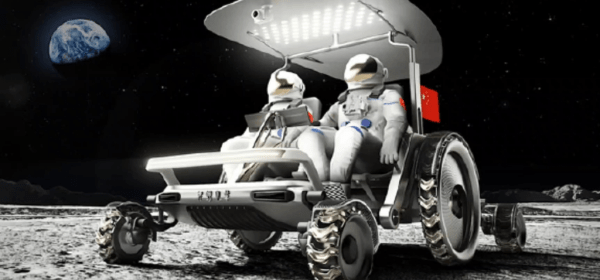
China: Crewed Lunar Rover Enters Initial Prototype Research & Development Stage! (7.11.2024)

Given that they will not only perform space station missions but also future manned lunar landing tasks, the training curriculum has been designed to focus on essential skills such as living and working in a weightless environment and maintaining health, as well as specialized skills like carrying out extravehicular activities, equipment maintenance and space science experiments. 

Furthermore, the training aims to enhance taikonauts’ capabilities for future manned lunar missions, including operating spacecraft, driving lunar rovers, identifying celestial bodies, conducting geological surveys and transitioning from weightlessness in space to walking under load on the lunar surface, the agency said.

The wide-field X-ray telescope on the EP satellite detected over 6,800 X-ray sources distributed across the celestial sphere (under Galactic coordinates). [Photo provided to chinadaily.com.cn]

China: Tian Guan [天关] “Einstein” Probe Detects Mysterious Celestial Object [EP240408a]! (1.11.2024)

In addition to detecting individual events, the EP has conducted repeated sky surveys, successfully generating China’s first all-sky X-ray map. Yuan said the satellite contributes data that represents over 30 percent of all information available on global platforms for the study of transient and eruptive phenomena.

The EP team annually solicits research proposals from Chinese scientists and provides data access to international researchers one year after acquisition.

China’s recorded interest in transient phenomena dates back to the Han Dynasty (202 BC-220 AD). In 1054, astronomers from the Song Dynasty (960-1279) documented the “Guest Star of Tian Guan,” later known as the Chinese Nova, a supernova explosion considered among the most significant astronomical observations in history.

Yuan said the Einstein Probe, known as Tian Guan in Chinese, honours this legacy and seeks to inspire future contributions to world astronomy.

PRC Landing on Moon!

China: Manned Lunar Landing Programme Fully Advanced! (29.10.2024)

The fourth batch of astronauts started training in August, and has so far concentrated on the fundamental theories of manned space engineering and targeted physical training, as well as on-site learning, symposiums and lectures. Subsequently, they will proceed to engage in training tasks of more than 200 specific subjects under eight categories.

The training will also cover a set of skills tailored for life and work on the country’s space station, as well as tasks of extravehicular activities, maintenance and repairs of equipment, and space science experiments, according to Lin.

Now, the two payload specialists from Hong Kong and Macao have become an integral part of the team, and they have exhibited a strong passion for training and maintained optimal physical and mental well-being, said Lin.

The pair of candidates have also received Mandarin courses, and a personalized meal plan has been created to accommodate their dietary preferences, according to Lin.

1 4 5 6 7 8 17