China: CPC Announces Manned Moon Landing! (12.7.2023)

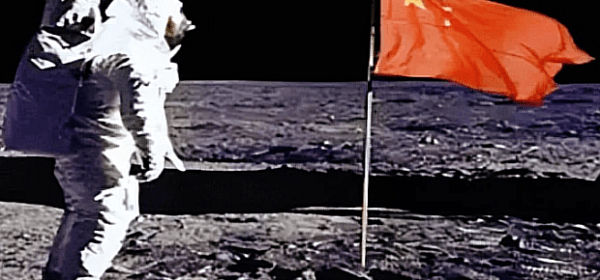
After completing the designated tasks, the astronauts will return to the lunar lander and ascend to the lunar orbit, where the lander will dock with the spacecraft. The astronauts will then transfer lunar samples and other items to the spacecraft before separating it from the lunar lander. Finally, the spacecraft will return to the Earth, Zhang added.

To accomplish this mission, Chinese researchers are currently developing the Long March 10 carrier rocket, a new generation of manned spacecraft, lunar lander, lunar surface suits, manned lunar rover, etc.

China: Seven-Seater Space Craft Being Designed! (10.6.2023)

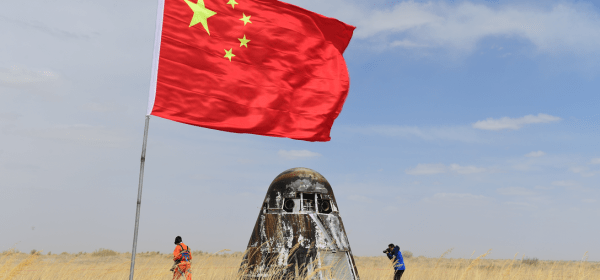
Roomier than the current three-seater spaceship, the new one will be able to carry more cargo supplies and more crew members, which will contribute to expanding the scale of manned spaceflights and opening up new areas, such as space tourism, said Zhou Jianping, the chief designer of China’s manned space program, in an interview.

A new launch vehicle is also under development. According to Zhou, the new manned rocket is designed to have greater liftoff thrusts, reusable components and a larger area for payloads, becoming more cost-efficient than the previous generations.

US Anti-Intelectualism: Washington’s Rules-Based World Order a Myth! (9.5.2023)

In fact, the U.S. government has a tradition of putting its domestic law above international law and selectively applies international rules as it sees fit. For example, Washington has enacted such domestic laws as the International Emergency Economic Powers Act, the Global Magnitsky Human Rights Accountability Act and the Countering America’s Adversaries Through Sanctions Act to target and sanction specific countries, entities or individuals.

The ambiguous rules contained in these acts and executive orders, such as the “minimum contacts” rule and the “effects doctrine,” are a willful expansion of the jurisdiction of America’s domestic laws.

And for more than six decades, despite dozens of UN General Assembly resolutions, the United States has pressed ahead with its comprehensive blockade against Cuba, the longest and cruelest systemic trade embargo and financial sanctions in modern history, based on its embargo policies and domestic laws such as the Torricelli Act and the Helms-Burton Act. The blockade has led to over 100 billion U.S. dollars of direct losses to Cuba’s economy.

China Focus: Mars Rover Zhurong Finds Evidence of Water at Red Planet’s Low Latitudes! (1.5.2023)

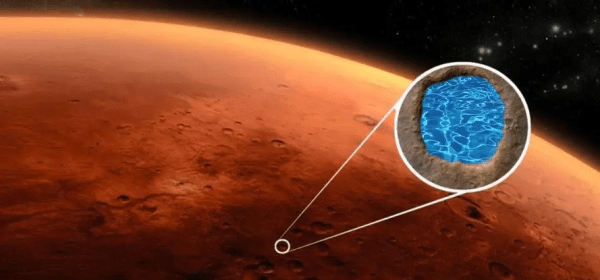
In the study, researchers estimated the dunes Zhurong found were formed about 400,000 to 1.4 million years ago. The exchange of water vapor between the higher and lower latitudes during this period led to repeated humid environments at low Martian latitudes, followed by the frequent occurrence of salty water when temperatures dropped in the region.

Qin said the discovery provides key proof of liquid water at Martian low latitudes, where surface temperatures are relatively warm and more suitable for life than high latitudes.

It also provides information for the design of future exploration strategies for Mars rovers. As saline water once existed at various latitudes on the surface of Mars, priority should be given to salt-tolerant microbes in future missions searching for extant life on Mars, researchers said in the study.

China: Socialist Science to 3D Print Structures on Moon! (24.4.2023)

After Chang’e 6, the Chang’e 7 robotic probe will be sent to land on the moon’s South Pole to perform “high-precision investigations”, Wu said.

“The Chang’e 7 mission is meant to look for traces of water on the South Pole, investigate the environment and weather there, and survey the landform. The probe will carry a ‘flyby craft’ tasked with flying into pits on the lunar surface to look for ice,” the scientist said.

“Chang’e 7 will also be tasked with detecting the natural resources beneath the lunar South Pole’s surface. Mission planners are trying to assess if we can use the probe to dig into the surface and study underground structures and their composition,” he said.

In the long run, scientists will use components of the three upcoming missions — the orbiters, landers, rovers and sensors — to form the prototype of a robotic scientific outpost, which will act as a platform for international collaboration on lunar exploration, he added.

1 8 9 10 11 12 17