My Revolutionary Clobber!

Cuba: My Study of Che Guevara’s Work! (27.2.2026)

Oddly, Audible, despite hosting some fairly right-wing and far-right tomes – to its credit – it also hosts Marx, Engels, Lenin, Mao Zedong, Ho Chi Minh, and Che Guevara (amongst others). Yes – some are bourgeois aberrations – but others are straight from the original ideological source material and convey clear Socialist and Communist thinking. So far – so good. Recently, whilst carrying-out my academic work of translating ancient Chinese texts into English – I play audio-books in the background – so I can continue to “learn” whilst working. This is how, over the last three-months, I made an effort to study the Cuban Revolutionary experience. This came about after I had a conversation (a few years ago) with a Spanish man now living in Sutton – who surprised me when he said he had no interest in China or the USSR – but rather the Central and South American experience. This got me thinking – as I used to generally integrate all these movements – assuming they were different aspects of the 1917 Russian Revolution (which of course they are). The point is that different ethno-centric experiences abound – even if we are political allies all heading in the same ideological direction.
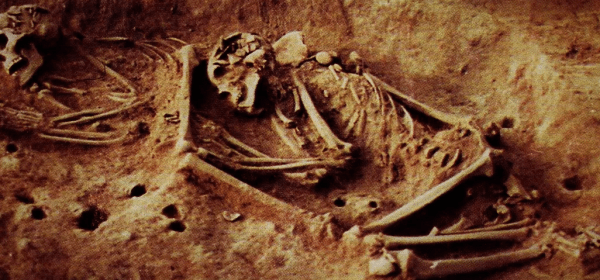
These skeletons of two hunter-gatherer individuals excavated at the Checua archaeological site north of Bogotá, Colombia, helped uncover the genetic details of a mysterious population. Ana María Groot / Universidad Nacional de Colombia

Colombia: Ancient Checua DNA Reveals “New Group of Humans” With No Genetic Ties to People Today! (4.1.2026)

Scientists have found genetic evidence of an ancient group of people in Colombia with no modern-day descendants. It’s as if they simply vanished from the face of the Earth. What’s more, they’re also not closely related to the ancient Native American populations that scientists had thought would be their ancestors.

“This is unexpected,” Andre Luiz Campelo dos Santos, an archaeologist from Florida Atlantic University who did not participate in the research, tells Adithi Ramakrishnan at the Associated Press. “Up to this point, we didn’t believe there was any other lineage that would appear in South America.”

An international team of researchers described the discovery in a study published in late May in the journal Science Advances. They analyzed DNA from the bones and teeth of 21 individuals found at five archaeological sites in the Altiplano—the high plains around Bogotá—dating to between 500 and 6,000 years ago. The analyses represent Colombia’s first ancient human genomes ever to be published.