Space Boulder "Not Gold" - According to Experts!

Australia: Penal Colony Descendent “Digs Himself in Deep Hole” – Korean War Gold Rock Revealed as Worthless Space Debris! (29.11.2025)

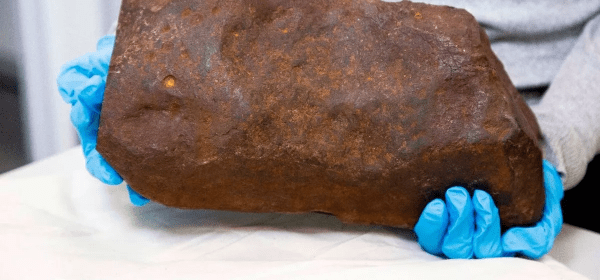
A rock the size of a stout Jack Russell (a breed of dog in the UK – small, fierce, brave, loyal, and strong) – but weighing more or less the same as a Great Dane (another – but huge – breed of dog) – was mistaken by an Aussie as a “gold nugget”. Perhaps it’s not the rock that needs testing! Still, all he has been left with is a piece of worthless space debris that landed on Earth during 1951 (in June – the time of the Aussie Winter) – which turns-out to be the same age as the Earth is old – namely “4.6 million” years old!. I am reliably told by a medical colleague that Aussies are only “technically sober” during the first three months of their lives – when the motor-skills have not yet developed to lift the hand to the mouth. Gold is a lightweight and malleable mettle, which is rare, soft, and highly pliable. This meteorite, by way of comparison, is heavy, hard, and requires a Ford Cortina just to move it any significant distance.
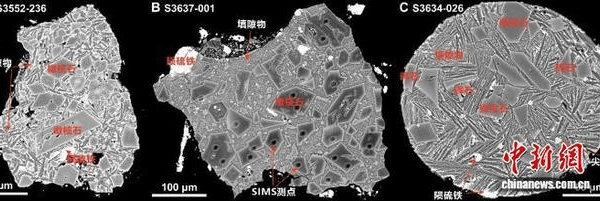
Fragments of impactor residues identified in the lunar soil of Chang'e-6 in this study. Photo courtesy of the scientific research team of the Guangzhou Institute of Geochemistry, Chinese Academy of Sciences

China: Scientists Discover Rare Meteorite Relics in Chang’e-6 Far-Side Lunar Samples! (21.10.2025)

Using advanced techniques to examine mineral composition and oxygen isotopes, the researchers scrutinized lunar soil and confirmed that the fragments came from CI-like chondrites — a type of meteorite rich in water and organic materials that typically originates in the outer Solar System.

The study implies that the Earth-Moon system may have experienced more collisions from carbonaceous chondrites than scientists had previously estimated.

This discovery not only indicates that material from the outer Solar System can migrate to the inner Solar System, but also has important implications for explaining the origin of water on the lunar surface, said Lin Mang, a researcher at GIG.

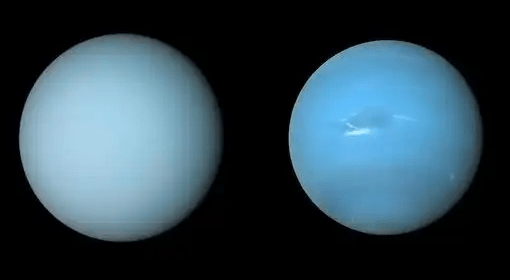
Uranus and Neptune Photographed by Voyager 2

China: Socialist Science Plans to Venture Farther into Deep Space by Exploring Mars, Jupiter, Uranus & Neptune! (24.7.2025)

“Ice giants preserve pristine gaseous materials that record the evolutionary history of protostellar clouds and crucial information about planetary formation. These planets serve as vital subjects for studying the solar system’s origins and exoplanets,” Yang Mengfei, a senior scientist at the China Academy of Space Technology in Beijing and chief designer of the Chang’e 5 lunar mission, told China Daily in an exclusive interview. An ice giant is a colossal planet composed mainly of elements heavier than hydrogen and helium, including oxygen, nitrogen, carbon and sulphur. Two planets in the solar system, Uranus and Neptune, are categorized as ice giants. According to Yang, Uranus has the coldest atmospheric temperature in the solar system, with a minimum of about minus 224 C, and the most tilted rotation axis among all planets in the solar system. Meanwhile, Neptune, the farthest planet from the sun, has the strongest surface winds, reaching speeds of up to 2,100 kilometres per hour. Moreover, Triton, Neptune’s largest moon, is considered “the most likely extra-terrestrial body in the solar system to host microbial activity”, and may provide key clues to life’s origins.

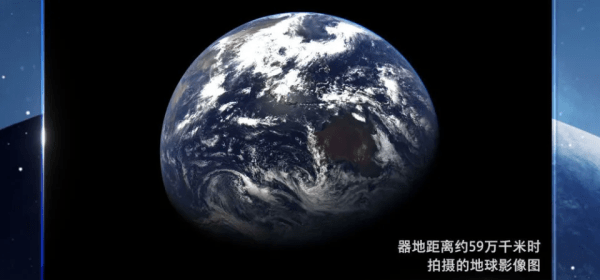
Images of Earth and the moon captured by the Tianwen 2 robotic probe are released on Tuesday by the China National Space Administration.

China: Tianwen 2 Sends Back Images of Earth & Moon! (2.7.2025)

The samples will be distributed among scientists, who will examine their physical properties, chemical and mineralogical content and isotopic composition, contributing to studies on the formation and evolution of asteroids and the early solar system.

Delivering the samples to Earth will not be the end of the mission. The Tianwen 2 spacecraft will then enter the second phase of its journey, flying toward a main-belt comet called 311P to conduct a remote-sensing survey and transmit the data back to Earth for scientific research, according to the CNSA.

The whole mission is expected to yield ground-breaking discoveries and expand the understanding of Earth and small celestial bodies inside the solar system, scientists said.

Pluto is a Collection of Planitudes!

Space: I Remember When “Pluto” Used to be the “9th” Planet! (16.3.2024)

Things were simple when I was at school in the 1970s and early 1980s – in fact they were simple until NASA’s Voyager Probes (I & II) finally made it to the outer reaches of our Solar System – and proved that “Pluto” was NOT a single (and tidy) planet existing on the fringes of outer space! Overnight, what we had been taught as a child collapsed in upon itself and the number of “true” planets dropped to “8” – with Pluto being relegated to a mere “Dwarf” planet – whatever that meant. I do remember various Astronomers stating that when looked at through a telescope – Pluto seemed to “shimmer” – as if there might be another planet hiding behind it (a fabled “10” planet called “Nibiru” as things stood).