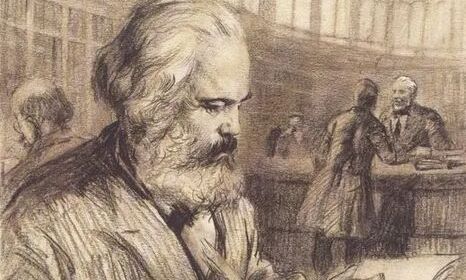
Marx encountered Buddhism through the work of his close friend Karl Koppen – an early European expert upon Early Buddhism and Tibetan Buddhism.
Proletariat Blogging in the Heart of (UK) Predatory Capitalism! Exploring the Interface between Matter and Perception, Chinese Buddhism, Daoism, Hakka Ethnography, and All Aspects of Radical Politics, History, Psychology and Philosophy – 全世界无产者联合起来!
Marx encountered Buddhism through the work of his close friend Karl Koppen – an early European expert upon Early Buddhism and Tibetan Buddhism.
The interface between Ch’an Buddhist practice and Christian practice is that of contemplative prayer. Contemplative prayer is preferably ‘silent’, and comprised of a single, meaningful, one-syllable word.
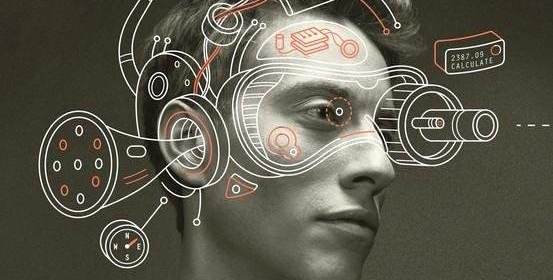
Generally speaking, when I have been involved in debates, discussions and research projects involving the concept of human consciousness over the years, the general consensus
Around 2,500 years ago, the ancient Greek philosopher Hippocrates put forward the idea that the brain might be the centre of the mind (disagreeing with
Inner science is a non-religious investigation of the science of perception. It has to be ‘non-religious’ because it follows the ‘no hypothesis’ methodology associated with
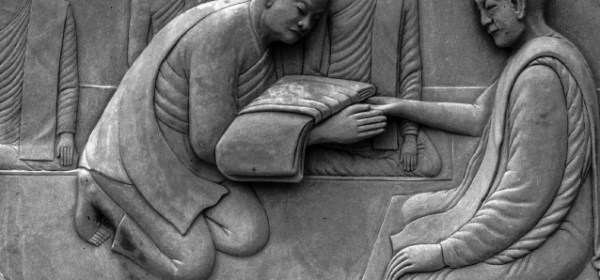
Chinese transliterations and translations are useful as the early Chinese scholars had to understand the Indian Pali and Sanskrit terms before they could be rendered effectively into the Chinese language. Obviously, some of the early transliteration of Indian Buddhist terms are purely ‘phonetic’ in nature and in themselves do not convey much meaning as ideograms. This represents an initial process of a slow, careful and gradual building-up of knowledge in China about a thoroughly ‘foreign’ Indian philosophy that had to develop an ‘interface’ with existing Chinese culture.
 SANGHA KOMMUNE (SSR)