Science Starts with the People!

China: Country Set to Advance Sci-Tech Popularization! (5.11.2024)

The proportion of Chinese citizens with scientific literacy increased from 1.98 percent in 2003 to 14.14 percent last year, according to results of a survey released in April by the China Association for Science and Technology.

For the first time, the gap in scientific literacy levels of citizens in the eastern, central and western regions has narrowed, while gender disparities have also been further reduced, the data showed.

Meanwhile, China’s rank in the global innovation index has climbed from 34 in 2012 to 11 this year, making it the only middle-income economy among the top 30, according to the Global Innovation Index 2024, which was published in September by the World Intellectual Property Organization.

The wide-field X-ray telescope on the EP satellite detected over 6,800 X-ray sources distributed across the celestial sphere (under Galactic coordinates). [Photo provided to chinadaily.com.cn]

China: Tian Guan [天关] “Einstein” Probe Detects Mysterious Celestial Object [EP240408a]! (1.11.2024)

In addition to detecting individual events, the EP has conducted repeated sky surveys, successfully generating China’s first all-sky X-ray map. Yuan said the satellite contributes data that represents over 30 percent of all information available on global platforms for the study of transient and eruptive phenomena.

The EP team annually solicits research proposals from Chinese scientists and provides data access to international researchers one year after acquisition.

China’s recorded interest in transient phenomena dates back to the Han Dynasty (202 BC-220 AD). In 1054, astronomers from the Song Dynasty (960-1279) documented the “Guest Star of Tian Guan,” later known as the Chinese Nova, a supernova explosion considered among the most significant astronomical observations in history.

Yuan said the Einstein Probe, known as Tian Guan in Chinese, honours this legacy and seeks to inspire future contributions to world astronomy.

Taklimakan Desert Evolution

China: Scientists Discover Age of Mid-Latitude Asian Deserts! (30.10.2024)

The research, titled “Spatial heterogeneity in the formation of large deserts in midlatitude Asia revealed by drill core evidence”, was published in the Science Bulletin this month.

“The climatic and environmental effects of dust aerosols significantly impact the global climate, biogeochemical cycles, marine ecosystems and even the global carbon cycle,” Wang said. He added that the research contributes to a better understanding of the long-term environmental changes in the deserts, a crucial source of dust for the Northern Hemisphere.

“Unravelling the history of the desert and its climate impacts will provide insights into how desert systems may respond to future climate changes,” Wang said, adding that the team will continue studying the drill cores to gain further insights into the formation and evolution of these deserts.

PRC Landing on Moon!

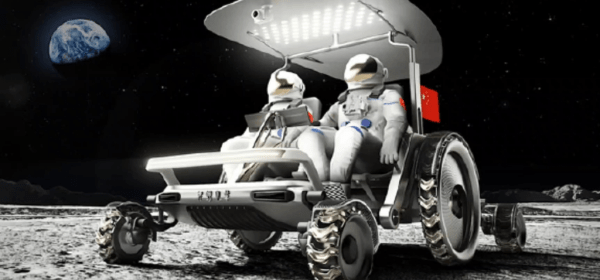
China: Manned Lunar Landing Programme Fully Advanced! (29.10.2024)

The fourth batch of astronauts started training in August, and has so far concentrated on the fundamental theories of manned space engineering and targeted physical training, as well as on-site learning, symposiums and lectures. Subsequently, they will proceed to engage in training tasks of more than 200 specific subjects under eight categories.

The training will also cover a set of skills tailored for life and work on the country’s space station, as well as tasks of extravehicular activities, maintenance and repairs of equipment, and space science experiments, according to Lin.

Now, the two payload specialists from Hong Kong and Macao have become an integral part of the team, and they have exhibited a strong passion for training and maintained optimal physical and mental well-being, said Lin.

The pair of candidates have also received Mandarin courses, and a personalized meal plan has been created to accommodate their dietary preferences, according to Lin.

Shrub Ox Evolved Outside North America!

China: North American Shrub Ox Fossils Discovered in Eurasia! (24.10.2024)

Phylogenetic studies show that shrub oxen formed a sister group with musk oxen, indicating a closer evolutionary relationship between the two compared to other bovidae. 

“Building on previous research, we expanded our study to include Quaternary musk oxen and concluded that their evolution can indeed be divided into two groups: high-horned and low-horned species. These two groups migrated from Eurasia to North America during the Late Early Pleistocene to Early Middle Pleistocene, and the Late Middle Pleistocene, respectively,” Bai stated.

This research provides new material on the diversity and evolution of musk oxen and is significant for understanding faunal exchanges between Eurasia and North America during the Quaternary period.

3-D Printer Brick - Luna Base!

China: 3-D Printer “Bricks” Developed for Future Moon-Base Construction! (21.10.2024)

According to China Central Television, the lunar bricks will be sent to China’s space station aboard the Tianzhou-8 cargo spacecraft to verify their mechanical and thermal performance, as well as their ability to withstand cosmic radiation. The first lunar brick is expected to return to Earth by the end of 2025.

China unveiled a national mid-term to long-term development program for space science on Tuesday, outlining a roadmap for the development of space science in China through 2050. The international lunar research station, which was initiated by China, will be constructed during the program’s second phase from 2028 to 2035.

1 17 18 19 20 21 61