Drone Instruction - DPRK

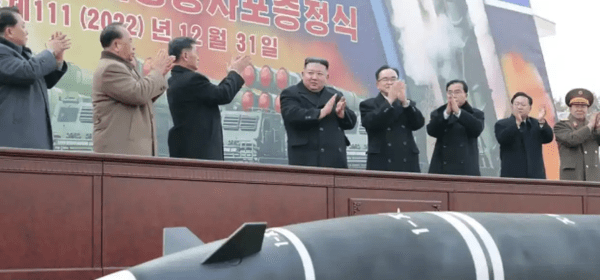
DPRK: Comrade Kim Jong Un Guides Test-Firing of Suicide Attack Drones! (15.11.2024)

His on-site guidance at the work of the Unmanned Aerial Technology Complex serves as a landmark occasion that gave fresh vitality to the struggle for firmly defending the sovereignty and security of our Republic by dynamically promoting the qualitative development of the unmanned military hardware systems that are practical and essential in bolstering up the national defence capabilities and actively deterring and controlling potential challenges and threats in all aspects with their absolute superiority.

PRC Reusable Space Shuttle!

China: Greater Efficiency Space Shuttle! (13.11.2024)

A model of the spacecraft will be displayed at the 15th China International Aviation and Aerospace Exhibition, which opens on Tuesday in Zhuhai and runs through Sunday.

Currently, China has only one model of cargo spaceship, Tianzhou, which is a product of the China Academy of Space Technology in Beijing. So far, seven Tianzhou vessels have been launched and six of them were used to transport supplies to the Tiangong space station.

Orbiting Earth at a distance of about 400 kilometres, the Chinese space station has three permanent parts — a core module and two science capsules — and is regularly connected to several visiting crew and cargo spaceships.

It has been manned by eight Chinese crews, including the incumbent Shenzhou XIX team. All of the crews’ living and work necessities need to be transported by cargo vessels.

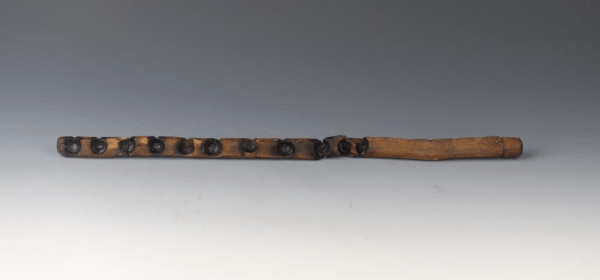
Lunar Rover Premised on Ancient Chariot!

China: Crewed Lunar Rover Enters Initial Prototype Research & Development Stage! (7.11.2024)

Given that they will not only perform space station missions but also future manned lunar landing tasks, the training curriculum has been designed to focus on essential skills such as living and working in a weightless environment and maintaining health, as well as specialized skills like carrying out extravehicular activities, equipment maintenance and space science experiments. 

Furthermore, the training aims to enhance taikonauts’ capabilities for future manned lunar missions, including operating spacecraft, driving lunar rovers, identifying celestial bodies, conducting geological surveys and transitioning from weightlessness in space to walking under load on the lunar surface, the agency said.

Science Starts with the People!

China: Country Set to Advance Sci-Tech Popularization! (5.11.2024)

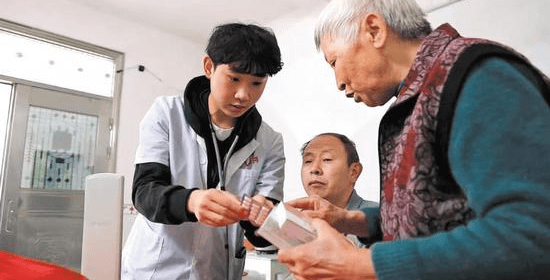
The proportion of Chinese citizens with scientific literacy increased from 1.98 percent in 2003 to 14.14 percent last year, according to results of a survey released in April by the China Association for Science and Technology.

For the first time, the gap in scientific literacy levels of citizens in the eastern, central and western regions has narrowed, while gender disparities have also been further reduced, the data showed.

Meanwhile, China’s rank in the global innovation index has climbed from 34 in 2012 to 11 this year, making it the only middle-income economy among the top 30, according to the Global Innovation Index 2024, which was published in September by the World Intellectual Property Organization.

The wide-field X-ray telescope on the EP satellite detected over 6,800 X-ray sources distributed across the celestial sphere (under Galactic coordinates). [Photo provided to chinadaily.com.cn]

China: Tian Guan [天关] “Einstein” Probe Detects Mysterious Celestial Object [EP240408a]! (1.11.2024)

In addition to detecting individual events, the EP has conducted repeated sky surveys, successfully generating China’s first all-sky X-ray map. Yuan said the satellite contributes data that represents over 30 percent of all information available on global platforms for the study of transient and eruptive phenomena.

The EP team annually solicits research proposals from Chinese scientists and provides data access to international researchers one year after acquisition.

China’s recorded interest in transient phenomena dates back to the Han Dynasty (202 BC-220 AD). In 1054, astronomers from the Song Dynasty (960-1279) documented the “Guest Star of Tian Guan,” later known as the Chinese Nova, a supernova explosion considered among the most significant astronomical observations in history.

Yuan said the Einstein Probe, known as Tian Guan in Chinese, honours this legacy and seeks to inspire future contributions to world astronomy.

Taklimakan Desert Evolution

China: Scientists Discover Age of Mid-Latitude Asian Deserts! (30.10.2024)

The research, titled “Spatial heterogeneity in the formation of large deserts in midlatitude Asia revealed by drill core evidence”, was published in the Science Bulletin this month.

“The climatic and environmental effects of dust aerosols significantly impact the global climate, biogeochemical cycles, marine ecosystems and even the global carbon cycle,” Wang said. He added that the research contributes to a better understanding of the long-term environmental changes in the deserts, a crucial source of dust for the Northern Hemisphere.

“Unravelling the history of the desert and its climate impacts will provide insights into how desert systems may respond to future climate changes,” Wang said, adding that the team will continue studying the drill cores to gain further insights into the formation and evolution of these deserts.

1 13 14 15 16 17 57