Socialist China Plans New Space Adventure!

China: Plans for Satellite Launch to Search for “New Earth”! (26.11.2025)

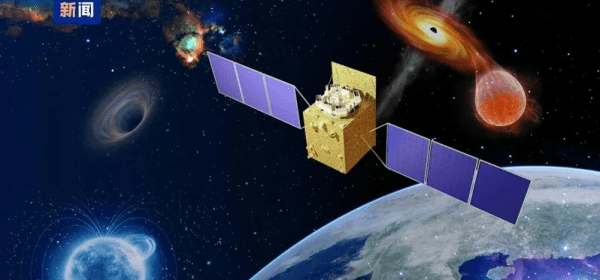
The Hongmeng Programme, designed to detect the universe’s “infant cries,” consists of 10 satellites forming a low-frequency radio telescope array. The satellites will travel to the far side of the Moon, a naturally quiet “radio sanctuary” shielded from Earth and solar interference, allowing the system to capture extremely faint signals from deep space. The project aims to shed light on the turbulent epoch hundreds of millions of years after the Big Bang, before the first stars formed.
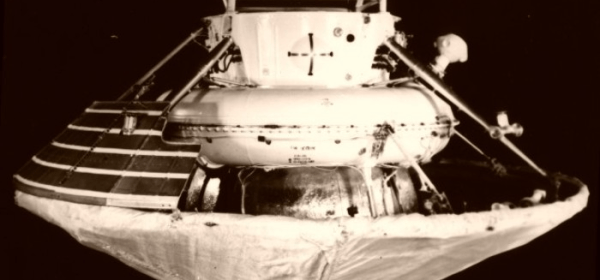
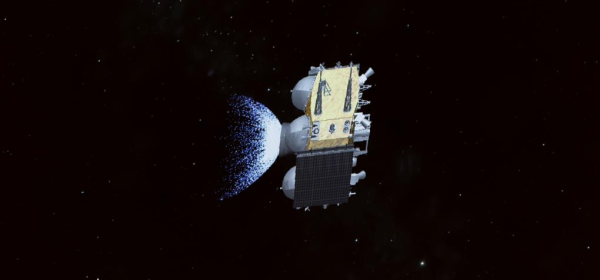
Descent module with aerodynamic screen

USSR: Mars Space Explorers – PROJECT M-73! (22.11.2025)

Marxist-Leninism uses dialectical materialism (logic and reason) to discern the truth of a matter. Recently, I was asked about the odd idea of the US and Soviets collaborating to land a joint Astronaut-Cosmonaut mission on Mars during 1973. This obviously fake story circles around the Western internet (like Haley’s Comet). The long and the short of it is that neither country possessed then – nor possess now – the technology to achieve this. Only China is edging ever-closer. Below, I translate a Russian language article explaining exactly what the USSR was able to produce in 1973. As impressive as it is, this technology is nowhere near the level required to land living beings a) on the surface of Mars, and b) successfully retrieve these beings and safely back to Earth. I am reliably informed that the US was in a similar position – with both sides investing heavily in unmanned probes. Ergo – “NO” – the US and USSR did not pool resources and land on Mars in 1973. Finally, Joseph Stalin beat the Nazi Germans in 1945 and laid the foundation for the success of the later Soviet Space Programme. Just 12-years after suffering 41 million casualties at the hands of the Nazis – the USSR re-built and took-on the greed and self-serving delusion of the capitalist West.

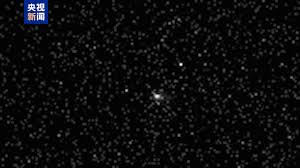
Tianwen-1's high-resolution camera,

China: Tianwen-1 Mars Orbiter Captures Interstellar Object 3I/ATLAS! (7.11.2025)

It is thought to have formed around ancient stars near the centre of the Milky Way and may be older than the solar system itself, offering rare insight into the composition and evolution of exoplanetary material.

The Tianwen-1 team began preparing for the observation in early September this year. With ATLAS moving at about 58 kilometres per second and appearing 10,000 to 100,000 times dimmer than the Martian surface, the mission faced an extreme technical challenge in image targeting and stability.

Originally designed for Mars surface observation, Tianwen-1 has been orbiting the planet since February 2021.

The successful observation of ATLAS marks an extension of the probe’s mission, serving as a test for China’s upcoming Tianwen-2 asteroid mission.

Socialist Science Triumphs!

China: Socialist Light Shone on “Big Bang”! (26.1.2025)

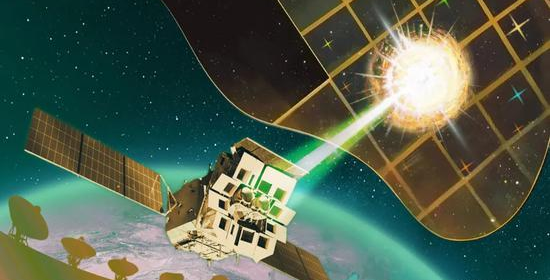
Many experts at home and abroad said that the observation results of EP240315a by the EP satellite have deepened humanity’s understanding of early universe gamma-ray bursts, offer fresh insights into the origins and evolution of the universe, Xinhua reported.

The EP mission is one of a series of space science missions led by CAS. This is an international collaboration effort, featuring contributions from the European Space Agency (ESA), the Max Planck Institute for Extra-terrestrial Physics (MPE) in Germany, and the French space agency CNES.

Launched into space in January 2024, the satellite has achieved several initial discoveries, such as an uncommon transient phenomenon, advancing understanding of the universe and extreme physical phenomena, Xinhua reported.

The wide-field X-ray telescope on the EP satellite detected over 6,800 X-ray sources distributed across the celestial sphere (under Galactic coordinates). [Photo provided to chinadaily.com.cn]

China: Tian Guan [天关] “Einstein” Probe Detects Mysterious Celestial Object [EP240408a]! (1.11.2024)

In addition to detecting individual events, the EP has conducted repeated sky surveys, successfully generating China’s first all-sky X-ray map. Yuan said the satellite contributes data that represents over 30 percent of all information available on global platforms for the study of transient and eruptive phenomena.

The EP team annually solicits research proposals from Chinese scientists and provides data access to international researchers one year after acquisition.

China’s recorded interest in transient phenomena dates back to the Han Dynasty (202 BC-220 AD). In 1054, astronomers from the Song Dynasty (960-1279) documented the “Guest Star of Tian Guan,” later known as the Chinese Nova, a supernova explosion considered among the most significant astronomical observations in history.

Yuan said the Einstein Probe, known as Tian Guan in Chinese, honours this legacy and seeks to inspire future contributions to world astronomy.

Samples from Dark-Side Returns!

China: Spacecraft Returns with first Samples from Lunar Far-Side! (4.6.2024)

The control system of Chang’e-6 has also been enhanced to improve its autonomy, enabling it to complete lunar take-off and ascent with reduced reliance on the Queqiao-2 relay satellite and ground support, said Huang Hao, another space expert from the CASC.

The ascender is expected to carry out unmanned rendezvous and docking with the orbiter-returner combination in lunar orbit, and the samples will be transferred to the returner.

The orbiter-returner combination will orbit the moon, awaiting the optimal time to transfer back to Earth. When it approaches Earth, the returner carrying the lunar samples will re-enter the atmosphere, aiming for a touchdown at Siziwang Banner in north China’s Inner Mongolia Autonomous Region, the CNSA said.

1 2