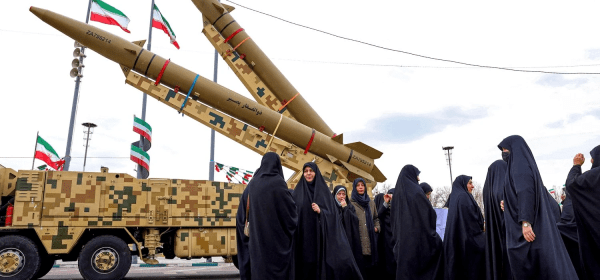
Russia undertakes 'comprehensive effort' to help Iran target US assets in West Asia

The Cradle: Russia Undertakes ‘Comprehensive Effort’ to Help Iran Target US Assets in West Asia! (7.3.2026)

In contrast, recent reports indicate that China has provided Iran with new technology in an effort to prevent infiltration by US and Israeli intelligence, and to help Tehran defend itself from advanced US and Israeli warplanes.

This includes supplying Iran with advanced Chinese sensor systems and radars, such as the YLC-8B, capable of tracking stealth aircraft and conducting electronic surveillance.

US-based analysts speaking with theWashington Post sought to attribute Iran’s success in targeting US assets to Russian assistance.

Iran is “making very precise hits on early warning radars or over-the-horizon radars,” said Dara Massicot, an expert on the Russian military at the Carnegie Endowment for International Peace. “They’re doing this in a very targeted way. They’re going after command and control,” she added.

Nicole Grajewski of the Harvard Kennedy School of Government said there was a high level of “sophistication” in the Iranian retaliatory strikes.
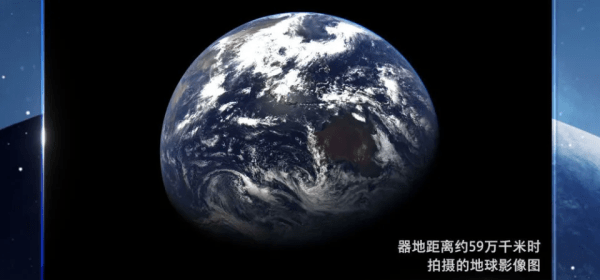
Images of Earth and the moon captured by the Tianwen 2 robotic probe are released on Tuesday by the China National Space Administration.

China: Tianwen 2 Sends Back Images of Earth & Moon! (2.7.2025)

The samples will be distributed among scientists, who will examine their physical properties, chemical and mineralogical content and isotopic composition, contributing to studies on the formation and evolution of asteroids and the early solar system.

Delivering the samples to Earth will not be the end of the mission. The Tianwen 2 spacecraft will then enter the second phase of its journey, flying toward a main-belt comet called 311P to conduct a remote-sensing survey and transmit the data back to Earth for scientific research, according to the CNSA.

The whole mission is expected to yield ground-breaking discoveries and expand the understanding of Earth and small celestial bodies inside the solar system, scientists said.