Critique The Diplomat - 2025

Critical Assessment of “Tibet Is Paying the Cost for China’s Green Energy Transition”! (18.11.2025)

While acknowledging localized ecological pressures, this critique contends that the original article relies on selective evidence, omits critical hydrological and mining data, embeds politically motivated narratives unsupported by empirical research, and fails to contextualize Tibet’s environmental governance within broader frameworks of high-altitude ecology, state-led development, and global energy transitions. Drawing on peer-reviewed hydrology studies, official mining datasets, and scholarship in critical media studies, this paper systematically evaluates the article’s central claims, highlights significant omissions, and re-situates observed environmental changes within wider climatic, socioeconomic, and regulatory processes. Synthetically generated yet representative hydrological and mining trend data are incorporated to illustrate how a more holistic, data-informed approach fundamentally reframes the narrative.
Stone Tracing of Inscription

China: Highest-Altitude Qin Dynasty “Engraved Stone” Found on Qinghai-Tibet Plateau! (15.9.2025)

He became the Emperor of a unified China in 221 BCE – the presumed date of this inscription – which counts his rule as being in its “26th year” since his crowning as the King of the State of Qin [247 BCE] (rather than the 1st year as the Qin Empire [221 BCE]). There is an ongoing debate within China’s academic community as to whether the inscription is a) authentic, and b) the above interpretation is correct (the text appears to say “37” – some think this is a weathered inscription that should read “26”*. I have followed with the “26” narrative as this equals 221 BCE – whereas “37” would equal 209 BCE. As the Emperor Qin died in 210 BCE – this latter dating would not make sense. Furthermore, line 8 states the branch and stem year is “己卯” [Ji Mao] – which implies the year in question is “221 BCE”). A local Tibetan herdsman said he knew about the inscription as early as 1986 – and all his older relatives said it had always been present.

China: Body of Korean War Veteran – Li Zhonghua (李中华) – [Missing Since 1958] Found in 2016! (24.9.2023)

The Police deduce that Li Zhonghua (and his fellow soldiers) set-off from Luoyang – with Li Zhonghua struggling to keep-up due to the after-effects of his leg wound (which slowed him down). As the country was in need, however, Li Zhonghua ‘Volunteered’ yet again and was given ‘Special Tasks’. Before setting-off from Luoyang that day – Li Zhonghua bought a copy of a local Newspaper – a datable object found on his body in 2016. Due to the harsh environment (and Li Zhonghua’s injured leg) – he soon fall behind as the troops advanced. In such an environment, a person alone, without food, clothing and water would not be able to retrace their steps or go onwards with any certainty. Li Zhonghua marched on until his strength gave-out – and a grateful country rediscovered his remains!

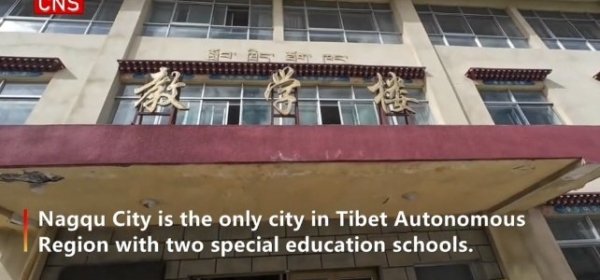
Tibet: Special Education Provides Love for Disabled Children!

Founded in 2013, Nagqu Special Education School is the first comprehensive special education school in Nagqu City for children and teenagers with various types of disabilities — visually impaired, deaf, dumb and mental disabilities. In May 2022, a second special education school was established in Nagqu. It focuses on hearing, speaking and visually impaired students, while the first one has become a school for students with mental disabilities.  

Qinghai Prohibits Illegal Crossing Uninhabited Areas for Exploration Following Fatalities! (23.8.2023)

Furthermore, the statement particularly underscores that without proper authorization or reporting to relevant authorities, no individual or organization shall organize tourist groups under the pretext of exploration, crossing, or scientific research to venture deep into natural conservation areas. In the event of getting stranded, the full cost of rescue operations will be borne entirely by the involved individuals and groups.

Travelers should carefully assess their routes, and pay attention to weather forecasts, geological hazards, and traffic conditions while also maintaining ample reserves of supplies and ensuring vehicle maintenance, which is essential to ensure the safety of the journey, said the statement.

1 2