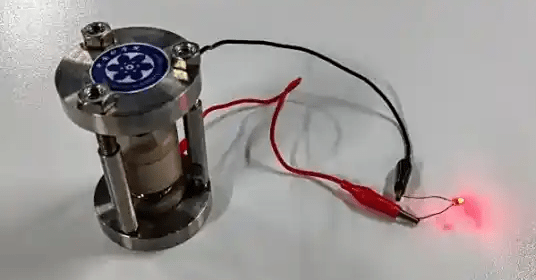
Prototype hydrogen ion battery

China: Scientists Unveil World’s First Hydrogen Anion Battery Prototype! (19.9.2025)

Hydrogen anions are highly reactive and polarizable, offering unique energy storage potential. But until now, no electrolyte had combined the high conductivity, thermal stability, and electrode compatibility needed for a functioning battery.

In tests, the prototype used sodium alanate as the cathode and cerium dihydride as the anode. It reached an initial discharge capacity of 984 mAh per gram and maintained 402 mAh per gram after 20 cycles. A stacked version delivered 1.9 volts and successfully powered an LED light, proving its feasibility beyond the lab.
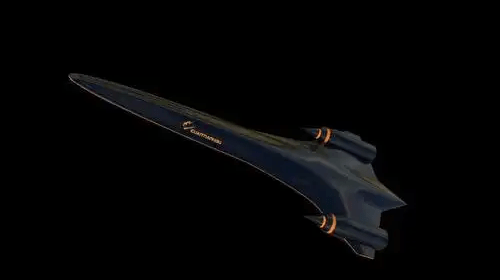
Supersonic Aeroplane!

China: Socialist Technology Develops “Super-Sonic” Aeroplane”! (21.1.2025)

Concorde, the first supersonic passenger-carrying commercial airplane, was built jointly by aircraft manufacturers in the United Kingdom and France. It was first flown in 1969 and was put into commercial operation in 1976. However, the epochal jetliner did not fit well in the civil aviation industry due to its loud noise, high fares, stringent requirements for airports and environmental impact.

If everything goes according to plan, the prototype for a commercial-use supersonic airliner named Dasheng — or Monkey King, a legendary hero in Chinese mythology — is expected to conduct its maiden flight in 2030. If that becomes reality, Dasheng will revolutionize the global air transportation sector, he added.

“Just imagine making an intercontinental flight within just two to three hours that you would now spend 10 hours or longer on,” Deng said.

Internationally, enterprises in the United States and Europe have been racing to design and construct a new generation of supersonic airliners to meet the potential demand of fast intercontinental travel.

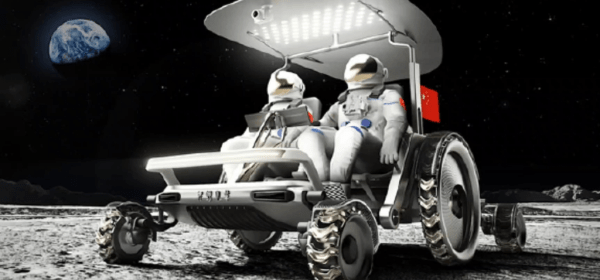
Lunar Rover Premised on Ancient Chariot!

China: Crewed Lunar Rover Enters Initial Prototype Research & Development Stage! (7.11.2024)

Given that they will not only perform space station missions but also future manned lunar landing tasks, the training curriculum has been designed to focus on essential skills such as living and working in a weightless environment and maintaining health, as well as specialized skills like carrying out extravehicular activities, equipment maintenance and space science experiments. 

Furthermore, the training aims to enhance taikonauts’ capabilities for future manned lunar missions, including operating spacecraft, driving lunar rovers, identifying celestial bodies, conducting geological surveys and transitioning from weightlessness in space to walking under load on the lunar surface, the agency said.