Mark Hehir, 62, was driving the 206 bus between Wembley and Maida Vale in north-west London in June 2024 when the incident unfolded.

UK: The Mark Hehir Story – How the BBC Manipulates the News Toward Right-Wing Popularism – By Suppressing Narrative-Altering Details! (3.2.3026)

Onething that we can gleam from the operation of Judeo-Christian societies is that “lying” to the masses has its rules (just look at Israel to prove this). Below is three examples of exactly the same story involving a “have a go” bus-driver in London who knocked-out a thief during one of his shifts. This story is legally and regulatory complex – and he was suspended – and then sacked following his loss at two tribunals. As the story gained traction in the mainstream and right-wing press, this “White” bus-driver became something of a celebrity to the far-right (although he is careful not to virtue-signal any personal connection with it himself). Furthermore, as the mainstream media communicates in “code” (whilst attempting not to racially inflame issues) – there is no mention of the ethnicity of the thief – which usually implies he may not be White (hitting a non-White suspect might have influenced the decision to sack the driver). The BBC narrative presented first is the latest version containing much less details (presenting the driver as a misundestood hero) – whilst the second BBC narrative is around five-days old and contains far-more details (explaning that although the self-defence aspect was lawful [just] and legal [within a very narrow context] – the many other contributory aspects definitely were not). This process of “removing” details inverts the usual trajectory of gaining ever-more details and correctly reporting a story in greater detail. The third narrative is from a different news outlet and contains the “full” story from an impartial (non-BBC) news source.
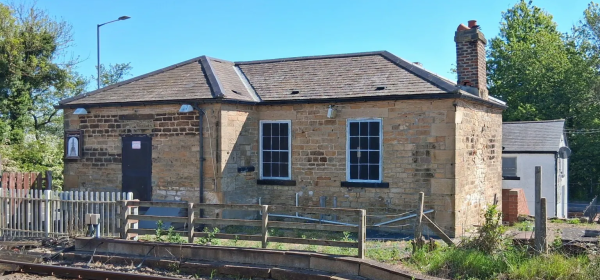
The charity plans to make the site accessible to the public

UK: Heighington Station [1827] – First Train Platform in World! (19.1.2026)

Last year Heighington Station, which dates to back to 1827 and was part of the first passenger railway to use steam trains in the world, was bought by the charity Friends of the Stockton and Darlington Railway.

The group’s chair Niall Hammond said the excavation of a small train platform located near the site was planned.

He said it was presumed it was the “original for the building” because it looked the right size and shape.

He said plans were still in the early stages, but that the group hoped to attract lots of volunteers to the dig over the summer.

Hammond said the platform, which is next to the station, was “tiny” and had cobbles.

He said ideally the team would find a “Georgian penny” at the bottom of the platform during the dig which would confirm its age.

Supersonic Aeroplane!

China: Socialist Technology Develops “Super-Sonic” Aeroplane”! (21.1.2025)

Concorde, the first supersonic passenger-carrying commercial airplane, was built jointly by aircraft manufacturers in the United Kingdom and France. It was first flown in 1969 and was put into commercial operation in 1976. However, the epochal jetliner did not fit well in the civil aviation industry due to its loud noise, high fares, stringent requirements for airports and environmental impact.

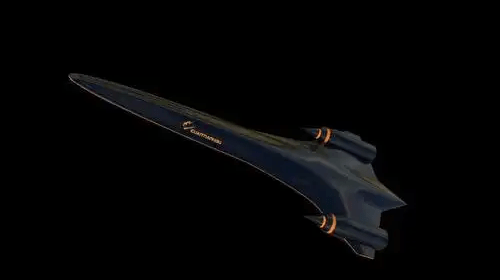
If everything goes according to plan, the prototype for a commercial-use supersonic airliner named Dasheng — or Monkey King, a legendary hero in Chinese mythology — is expected to conduct its maiden flight in 2030. If that becomes reality, Dasheng will revolutionize the global air transportation sector, he added.

“Just imagine making an intercontinental flight within just two to three hours that you would now spend 10 hours or longer on,” Deng said.

Internationally, enterprises in the United States and Europe have been racing to design and construct a new generation of supersonic airliners to meet the potential demand of fast intercontinental travel.