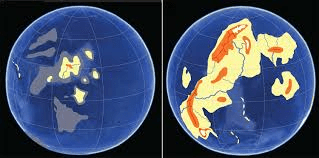
The study, led by China’s Chengdu University of Technology in collaboration with the UWA and published in Nature, showed that following the Neoproterozoic oxygen rise, Earth’s largely oxygen-poor oceans experienced periodic oxidation pulses.
The events resulted in synchronized carbon, sulphur and oxygen isotope shifts over hundreds of millions of years, which suggests that increasing atmospheric oxygen repeatedly triggered transient ocean oxidation.
“The findings provide an environmental framework for understanding the origin and evolution of life on Earth, as well as the formation of mineral deposits and petroleum resources,” Dodd said.
 SANGHA KOMMUNE (SSR)