17th Century Safe - Old Wooden Safe - Built In2o Bedroom Wall!

Market Overton: 17th Century Wooden Safe – Built into Bedroom Wall! (26.10.2025)

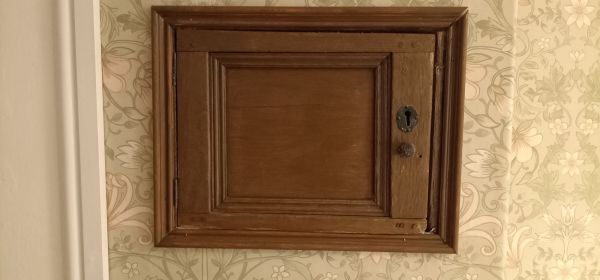
Anyway, I digress. This morning, and for the first-time in decades, I heard a local Parish Church ring the church-bells – summoning the faithful to worship on this crisp Sunday-morning! I am literally sat in the epicentre of history! Probably far more so than usual. As you can see above – in the bedroom I am frequenting – there is a wooden safe built into the wall. The wood does not seem that secure to me – and I know I could easily place my fist through the door – it seems that thin (not that I would do such a thing). Years ago (in Hong Kong) when I had to punch objects whilst holding an egg in the palm (which had to remain “unbroken”) – the objects I had to hit were far more “stout” than this structure. I cannot not discern any writing on the casing of the safe – but such a craftsman’s signature might be immediately adjacent to the inner wall structure.
Charlie was Pro-Gun Ownership and was Socially Conservative!

UK: Charlie’s Neck Wound was Fatal – But the Kirk Reassured Him – Despite the Discrepancy with the Date! (23.9.2025)

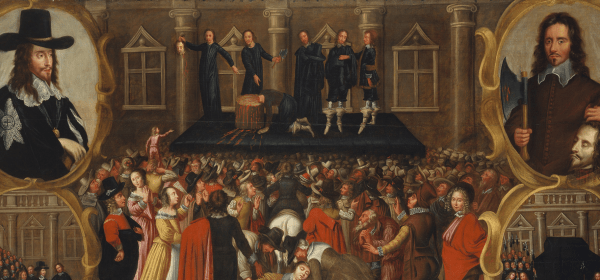
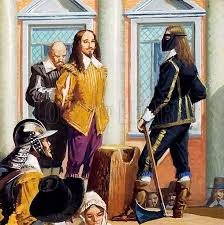
Although plundered, dismantled, and generally neglected, the stone slabs that constituted the centra aisle of the Chapel of St George were firm and intact. Although Henry VIII had only been dead for around 100-years – and given that much of his reforms had led directly to the Civil Wars – it is incredible to think that nobody remembered where he was buried. That is until the occupying Parliamentarians, having hit one of the slabs with a stick, noticed a hollow noise was returned. Having accidently re-discovered Henry’s tomb – it was decided that Charlie would be laid to rest with his fellow despots – even though he was a Stuart from Scotland and Henry was a Tudor from Wales. Although decisively hit in the neck by the executioner’s blow (using an axe) – there is some disagreement as to whether the head of Charles was sown back upon his neck – which was the usual practice. Some say “yes” – whilst others say “no”. Whatever the case, when Charlie gave the agreed signal – the executioner brought-down the axe and the bigoted rhetoric of Charlie suddenly came to an abrupt end. 

Execution of King Charles I - Charlie Hit in the Neck!

On Why Charlie Was Killed With a Blow to the Neck – I Cannot Remain Silent Any Longer! (12.9.2025)

This privileged section of the peasantry left the majority of its class behind as the aristocracy granted it ever greater levels of political influence and social dominance. Eventually, this new “Middle Class” was trusted with procuring weaponry and hiring fighting men for the nobility – a position the bourgeoisie eventually used for its own empowerment. This is why across Europe numerous Civil Wars broke-out between the bourgeoisie and the nobility – with each vying with the other to attract the peasantry to their respective banners. In the case of the English Civils Wars (three conflicts that occurred in the 1640s and 1650s) – Parliament had been slowly infiltrated by bourgeois Members of Parliament (MPs) over a long period of time. These individuals played-ball for decades before showing their true class colours and finally taking on the English State.

superb british army soldiers

Historical British Army “Ranks” & “Formations”! (30.8.2024)

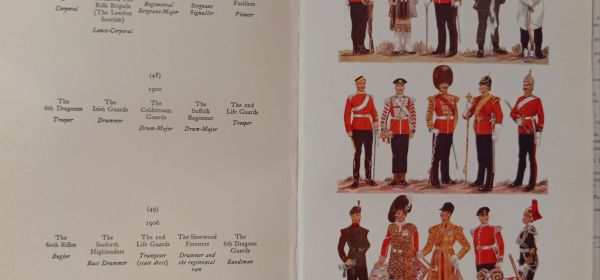
There are a number of exceptions to this observation. In 1571, for instance, Queen Elizabeth I raised the “Holland Regiment”. Monck’s Regiment of Foot served the Parliamentary Cause during the English Civil Wars and is today better known as the “Coldstream Guards”.  The “Royal Regiment of Guards” fought for King Charles I during the English Civil Wars and is today known as the “Grenadier Guards”. It seems that early examples of the use of the “Regiment” designation might have included newly formed units with no fighting history or direct links to a British geographical location. These attributes had to be earned through blood and honour. However, eventually very well-establish military units seem to have voluntarily taken on this designation – or been given it by the British government.

Main Street - Forest Hill (Oxford) - OX33 1EB

Oxford: John Milton’s “Mounting Stone” – Forest Hill! (29.8.2024)

As to “why” Oxford Council resorted to this tactic is a matter of conjecture considering how overgrown the bank and stone is – and how difficult it is to actually locate the stone (there is virtually no signage). Perhaps a flat stone was becoming easily obscured by dirt, leaves and over debris – and an upright position rendered it better protected. John Milton (1608-1674) was a literary genius and esteemed poet who lived across the road from this stone and was a supporter of Parliament (and Oliver Cromwell) during the English Republic (1649-1660). His thinking was both progressive and Revolutionary! He (and his wife) were wealthy landowners in the area of the stone – owning property either side of St Nicholas Church in Forest Hill.

Dr John Wilkins (1614-1672): Revolutionary Thinkimg & England’s 1640 CE Moon-Shot! (30.9.2023)

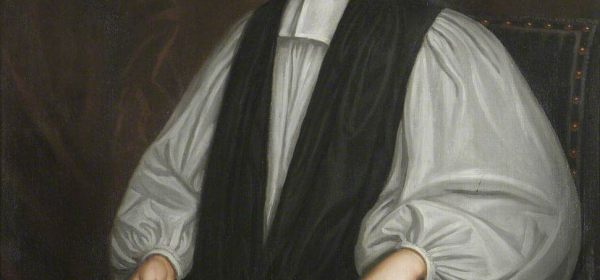
The point is that the external Revolutionary conditions of British society that led directly to the English Civil Wars (and the overthrow of absolute monarchy) – not only emerged from changing attitudes within – but served to further condition the human mind to think beyond the boundaries set by previous generations without! Changing times led to changing thoughts – and changing thoughts led to the eventual advancement of science and society. John Wilkins is to be applauded for his diplomatic skills and his scientific vigour! This very much encapsulates the spirit of the English Revolution!

1 2