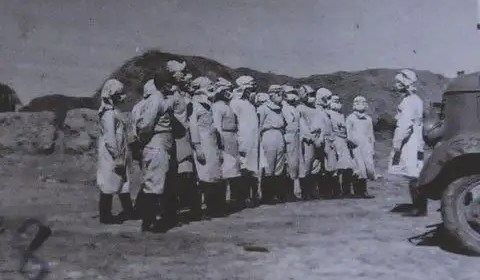
Imperial Japan Germ War-Fare Unit 1644

China: Memorial Hall of Victims Obtains “Roster” of Japanese Germ-Warfare Unit 1644! (14.6.2025)

“The roster reaffirms the ironclad evidence of Japanese militarism’s biological warfare crimes,” Zhou added. “We will deepen archival research and integrate these materials into exhibitions and historical education to speak with facts, uphold a correct perspective on WWII history, and defend justice and peace.”

Lyu Jing, associate professor of history at Nanjing University, noted that the roster enables “systematic research on the unit and uncovering the structure of Japan’s germ-warfare system,” adding that preserved Unit 1644 sites could “advance heritage protection and promote public memory reconstruction and peace education.”

The acquisition followed Japan’s National Archives’ first public display of the rosters of Unit 1644, Unit 8604, and Unit 8609 on May 14. During the invasion of China, the Japanese military established several biological warfare units to launch attacks, among which was the notorious Unit 731 in northeast China.
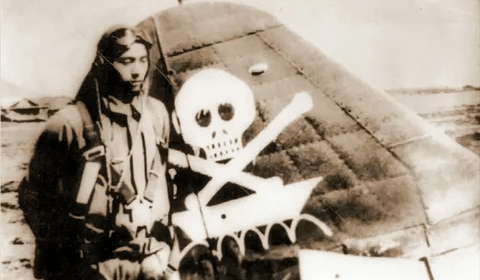

Brave Kamikaze Pilots Sacrificed Their Lives!

Manchuria [1945]:  Japanese Kamikaze Attacks Against Advancing Soviet Armour! (26.7.2024)

The Imperial Japanese Army – Kwantung Army – even formed an entire Motorized Mechanized Brigade of “Kamikaze” (Suicide) Tank Destroyers (comprised of 4,000 volunteers), who were supposed to stop the advance of the Soviet Red Army at the cost of their own lives. The technical side of the issue was simple: from a camouflaged pit, cave, or other hidden area, constructed in a tank-hazardous direction, an Imperial Japanese Army soldier would be expected to wait patiently until the Soviet tank was very close – and then he would run-out and use a mine attached to a long bamboo pole – which would be quickly inserted between or under the tracks of a passing Combat Vehicle. Another option: an Imperial Japanese Army soldier – carrying a backpack filled with explosives – would throw himself under an advancing Soviet tank – exploding the rucksack once in position.