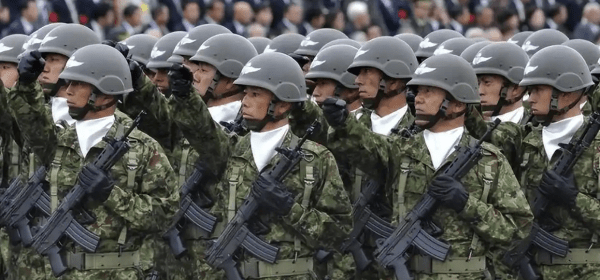
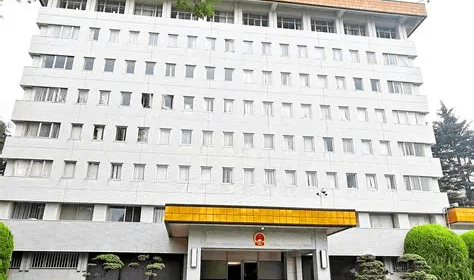
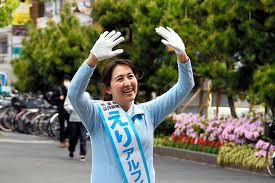
In 1879, Michiyuki Matsuda led the military and police to garrison Shuri Castle in Ryukyu Source: Global Times

Ryukyu: 1629 Ming Dynasty Edict Proves Okinawa Part of China! (17.12.2025)

The Okinawan King had instigated Chinese language as the official means of communication, Chinese Confucianism as State-creed, Chinese Buddhism as a spiritual practice, and Chinese Daoism as a health system. Okinawa militarily aligned itself with China’s policies and the Okinawan people practiced Chinese martial arts via the instruction of visiting Masters. Meanwhile, Okinawans were encouraged to visit Fujian province and learn the Chinese culture on offer – including martial arts (the origin of Goju Ryu Karate-Do). The Japanese invaded Okinawa in 1629 – but could only establish a limited Embassy. In 1879, the Imperial Japanese Empire invaded Okinawa and forcibly expelled any and all Chinese individuals and influences. Following a horrific experience during WWII – Japan today views the Okinawans as being both “sub-human” and “non-Japanese” – this is why US Military Bases are stationed on Okinawa (US soldiers often rape Okinawan school girls – and it is treated as a joke in Japan and the US). Okinawa should return to China.

Okinawans Pray to the Dead at the "Cornerstone of Peace!! No More Wars for Japanese Or Western Imperialism!

Russia: Japan “Warned” About Re-Arming Okinawa [Ryukyu] for US! (28.11.2025)

“Through diplomatic channels, including the delivery of a relevant note by the Ministry, we have issued a stern warning to Japan that the deployment of U.S.-made medium-range missiles on its relevant territory is unacceptable, regardless of the pretext, whether on a permanent, temporary, or other basis,” she noted.

Meanwhile, the spokesperson urged the Japanese government led by Prime Minister Sanae Takaichi to “return to the foundations on which Japan’s post-war peaceful development is built.”

“These foundations are enshrined in the outcomes of World War II — foundations that, unfortunately, as we are once again compelled to note, have not yet been fully acknowledged by Japan,” she said.

The Effect of Japanese Racism in 1946!

China: Increase in Japanese Sexual & Racial Crime Threat to Chinese Safety! (27.11.2025)

From 2021 to 2024, the number of criminal cases suspected of violating Japan’s penal code rose from 568,000 to 738,000. Serious violent crimes — including abduction, arson, homicide, robbery, rape and sexual assault — had increased from 8,821 cases to 14,614, marking a surge of about 65.7 percent, the embassy said in a notice published on its official WeChat account.

Since July, the number of requests for assistance received by Chinese diplomatic missions regarding discrimination-related incidents has risen significantly, with a notable spike reported in November. In recent days, multiple Chinese nationals living in Japan have reported being subjected to unprovoked verbal abuse or physical assault, resulting in injuries, according to the embassy.

Japan's Current Prime Minister - Sanae Takaichi - Wrote the Preface to the 1994 Neo-Nazi Book Entitled "Hitler's Election Strategy" - By Yoshio Ogai (1994)

China: Japanese Prime Minister’s Disturbing Link to Neo-Nazism! (19.11.2025)

One of the earliest and most frequently cited controversies involves the 1994 publication Hitler’s Election Strategy, written by LDP official Yoshio Ogai. The book drew heavy criticism at the time for its approving treatment of Adolf Hitler’s political tactics, relying heavily on Mein Kampf as a source. Human-rights groups condemned the work, and it was eventually withdrawn from sale.

Takaichi’s connection lies in the book’s preface she authored. In it, she reflected on her own experiences as a political candidate and invoked what she described as the “willpower” necessary to persevere—a theme critics say uncomfortably echoes the book’s overall tone.

The year 2025 marks the 80th anniversary of the victory of the Chinese People's War of Resistance Against Japanese Aggression, the Soviet Union's Great Patriotic War, and the World Anti-Fascist War. Russian WWII veteran Viktor Krivashov

How the Red Army Liberated China – a 100-Year Old Soviet Veteran – Viktor Krivashov – Remembers! (31.8.2025)

In Moscow, Harry Puyi learned to dress himself, hold his own penis when urinating, and clean himself whilst defecating. Puyi also learned to feed himself, and make his own bed – whilst helping others as an ordinary person. In his spare-time, Puyi studied Marxist-Leninism and Maoism. When he finally returned to his homeland – he could understand exactly what was happening – and why it had happened. He gave-up his four wives and endless concubines and settled-down with a businesswomen as a wife whilst he earned a living as a common gardener. Meanwhile, Stalin handed the entirety of Manchuria to Mao Zedong and the Communists – together with all the Japanese industrial machinery and captured munitions and weaponry. This boost gave the Chinese Communist the impetus they needed to finally defeat the US-backed Nationalists (who were just as fascistic as the Imperial Japanese) and liberate the whole of China. When the Trotskyite – Khrushchev – betrayed Stalin in 1956, the Sino-Soviet Split developed (Mao stayed loyal to Stalin) and the Soviet contribution to the Chinese Revolution was pushed into the background and discussed less openly in public. It is ironic that it is a capitalist Russia which has been pushed closer to a Socialist China – and that it has become expedient for both sides to brush-off elements of their shared history for mutual political benefit. Until recently, many young Chinese people were not taught that the Soviets had any part in their eventual liberation. As Marx said – history often repeats itself twice…

A square commemorating peace is pictured at a museum transformed from the Weihsien concentration camp in Weifang, east China's Shandong Province, on May 2, 2025. (Weihsien West Civilians Concentration Camp Site Museum/Handout via Xinhua)

China: Legacy of WWII Concentration Camp honours Friendship & Peace! (28.8.2025)

During the event, Stanley met Han Chongbin, an 80-year-old whose father once aided expatriates at the Weihsien concentration camp.

“At that time, out of pity for the internees, my father spent his own money to buy candy and brought eggs from home, managing to send them into the concentration camp. In return, the internees dismantled an iron bed and sent it out,” Han said. “He never expected that his help would be ‘rewarded.'”

In 2019, Han donated the iron bed to the museum. Now a museum volunteer, he shares stories about that period of history with visitors.

With the help of translators, he and Stanley shared a heartfelt conversation, holding hands like old friends. “Peace is our common aspiration,” Stanley said.

“Remembering suffering is not perpetuating hatred; it is igniting the beacon of hope for the future,” said Ayo Ayoola-Amale, vice chair of the governing council of International Cities of Peace.

“Weifang’s commitment to preserving this legacy — establishing the camp’s memorial museum, inviting descendants of survivors to return, and educating younger generations with truth — epitomizes the deepest practice of peace. Such courage deserves global recognition,” she said.

1 2 3 8