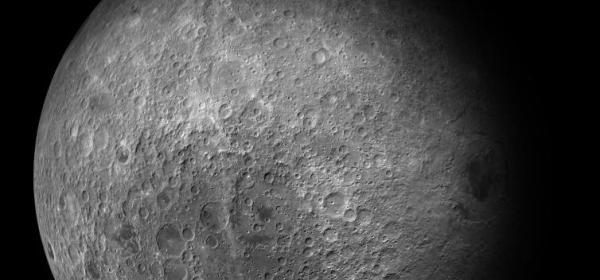
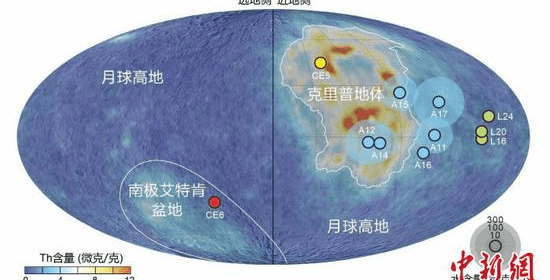
In 2024, Chang’e-6 made history by bringing 1,935.3 grams of lunar far-side samples back to Earth. These samples were collected from the South Pole-Aitken (SPA) Basin, the largest, deepest and oldest basin on the moon, which provided a rare opportunity to clarify the compositional differences between the near and far sides and to unravel the long-standing mystery of their asymmetry.
“The SPA Basin is one of the moon’s three major tectonic units, measuring approximately 2,500 kilometers in diameter. The energy from the impact that formed this crater is estimated to be 1 trillion times greater than that of an atomic bomb explosion. Yet, the exact influence of such a massive collision on the moon’s evolution has remained an unsolved mystery,” Wu Fuyuan, an academician of CAS and a leading researcher with the IGG, said at a CAS press conference on Wednesday.
The four papers published in Nature systematically reveal, for the first time, the effects of this colossal impact, which is the core highlight of these findings, said Wu.
 SANGHA KOMMUNE (SSR)