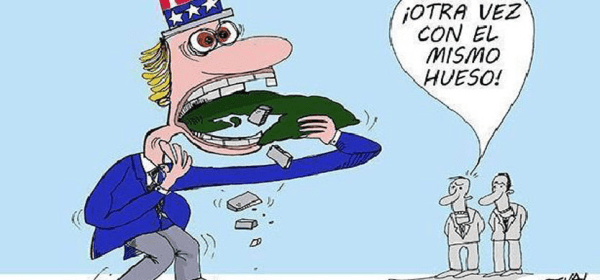
Cynicism is coldly displayed in each statement, and he is making them daily: “What is happening with Cuba is incredible, and we believe that we want to fix it… finish this first (a reference to the war against Iran), but it will only be a matter of time before you and many incredible people return to Cuba, hopefully not to stay,” he said and looked at the little narco, I meant Marco Rubio, whom he likes for “doing a fantastic job in a place called Cuba.” and he emphasizes with a cutting threat “and the next one will be… we want to make that Cuba special.” And hoping that the total overwhelm will make “the ripe fruit” fall under its weight, he says that it will be a “friendly takeover”.
The scene of the perfidious manoeuvre was at the Trump National Doral Golf Club, his luxurious resort in Doral, Florida, a few steps from the Miami of the anti-Cuban mafia that he already celebrates.
Twelve “leaders” of the right were summoned and joyfully attended, as declared allies of the U.S. pretensions for the region, which are proclaimed: to end “criminal narco-terrorist gangs and cartels,” to counteract “illegal and massive migration, not only to the United States but to the Western Hemisphere.”
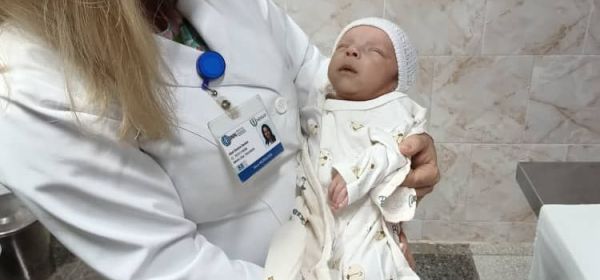
But the Cuban issue was muted, and there were previous reactions from the “adelantados”, as in those 60s: Ecuador has expelled Cuban diplomats, while Honduras and Jamaica left their peoples without the Cuban doctors who for years, in the collaboration brigades, treated them with professionalism and humanism.
 SANGHA KOMMUNE (SSR)