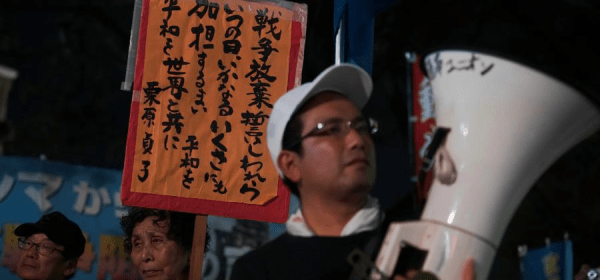
This photo taken on Aug. 5 shows protesters gathering at Hiroshima Atomic Bomb Dome, Hiroshima, Japan to criticize the Japanese government's ongoing military buildup policies. (Xinhua/Jia Haocheng)

Japan: 80 Years on – Reckoning with War Remains Unfinished! (7.8.2025)

The voices underscored a national memory shaped more by the narrative of victimhood than by a full reckoning with the causes and consequences of war, which offered a glimpse into how Japan remembers and forgets its wartime past.

While the physical scars of nuclear devastation are meticulously documented in museums and memorials, Japan’s aggressive wartime conduct is conspicuously muted in both public discourse and state education.

Outside the official ceremony, anti-militarist demonstrators gathered near the atomic bombing site. Their placards decried Japan’s growing defence budget and the possibility of nuclear “sharing” with the U.S.

They were kept outside the formal event by riot police, while right-wing activists tried to drown them out with loudspeakers.
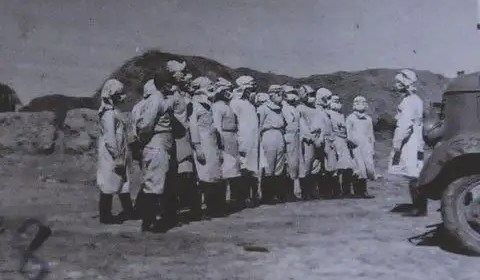
Imperial Japan Germ War-Fare Unit 1644

China: Memorial Hall of Victims Obtains “Roster” of Japanese Germ-Warfare Unit 1644! (14.6.2025)

“The roster reaffirms the ironclad evidence of Japanese militarism’s biological warfare crimes,” Zhou added. “We will deepen archival research and integrate these materials into exhibitions and historical education to speak with facts, uphold a correct perspective on WWII history, and defend justice and peace.”

Lyu Jing, associate professor of history at Nanjing University, noted that the roster enables “systematic research on the unit and uncovering the structure of Japan’s germ-warfare system,” adding that preserved Unit 1644 sites could “advance heritage protection and promote public memory reconstruction and peace education.”

The acquisition followed Japan’s National Archives’ first public display of the rosters of Unit 1644, Unit 8604, and Unit 8609 on May 14. During the invasion of China, the Japanese military established several biological warfare units to launch attacks, among which was the notorious Unit 731 in northeast China.

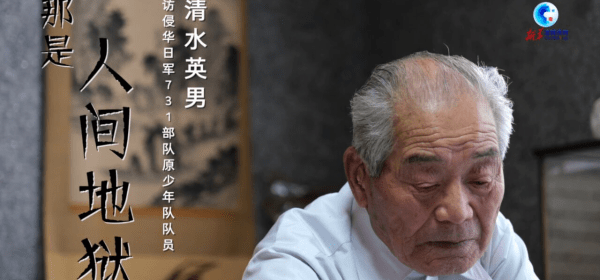
Shimizu Hideo (清水英男) Admits War Crimes!

China: 94-Year-Old Japanese Unit 731 War Criminal – Admits Guilt! (13.8.2024)

Shimizu Hideo offers apology in front of an apology and anti-war monument at the former site of Unit 731 in Harbin, northeast China’s Heilongjiang Province, Aug. 13, 2024. Shimizu, a former member of Unit 731, the notorious Japanese germ-warfare detachment during World War II, identified the crimes of the Japanese army on Tuesday at the site where he served 79 years ago in China. Shimizu, 94, was among the last batch of Unit 731 Youth Corps members sent by Japan to Harbin, China, where he spent more than four months witnessing the war crimes committed by the unit, including the cultivation of pathogens, human dissections and human experiments. He fled China with the retreating Japanese forces on August 14, 1945. This visit is Shimizu’s first return to Chinese soil in 79 years.

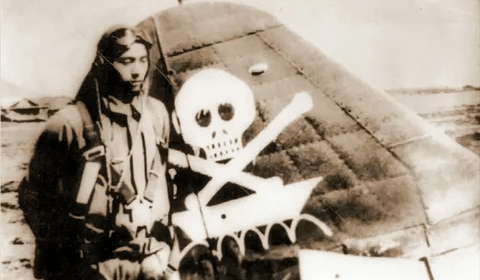
Brave Kamikaze Pilots Sacrificed Their Lives!

Manchuria [1945]:  Japanese Kamikaze Attacks Against Advancing Soviet Armour! (26.7.2024)

The Imperial Japanese Army – Kwantung Army – even formed an entire Motorized Mechanized Brigade of “Kamikaze” (Suicide) Tank Destroyers (comprised of 4,000 volunteers), who were supposed to stop the advance of the Soviet Red Army at the cost of their own lives. The technical side of the issue was simple: from a camouflaged pit, cave, or other hidden area, constructed in a tank-hazardous direction, an Imperial Japanese Army soldier would be expected to wait patiently until the Soviet tank was very close – and then he would run-out and use a mine attached to a long bamboo pole – which would be quickly inserted between or under the tracks of a passing Combat Vehicle. Another option: an Imperial Japanese Army soldier – carrying a backpack filled with explosives – would throw himself under an advancing Soviet tank – exploding the rucksack once in position.

Victory Parade - Harbin!

Tatyana Breus (Татьяна Бреус) – End of WW II: Soviet Red Army Enters China & Korea – Defeating Imperial Japan! (10.5.2024)

In May 1947, September 3rd became a working day, although no one formally cancelled the holiday. And on December 23rd, May 9th also became a working day (the day off was moved to January 1st). And until 1965, there were no big celebrations on the occasion of the two days of victory in the USSR: everything was limited to fireworks and unofficial celebrations. When in 1965 – the year of the 20th Anniversary of the Victory – the country celebrated this holiday on a nationwide scale for the first time after the Great Patriotic War, they no longer remembered the second day of the Victory (Over Japan). It found itself in the shadow of the Victory Over Germany, although formally on May 9th all Veterans were honoured: both those who fought in the West and those who fought in the Far East. And over time, May 9th began to personify the Soviet Victory in World War II in general, and almost no one remembered the September date. And if, nevertheless, there was talk about Victory Over Japan, then only September 2nd was mentioned – as the day of Japanese Surrender.

Marching Smartly!

Qing Dynasty: When the Last Chinese Imperial Ship Visited the West! (11.3.2024)

Afterwards, the U.S. Navy repeatedly invited the Qing Dynasty Fleet to visit the United States as a show of friendship. Therefore, on April 11th, 1911, Cheng Biguang (程璧光), the Commander of the “Hai Qi Hao” was ordered to weigh anchor in Shanghai on April 21st – and set sail to the United Kingdom, (thousands of miles away), to attend the Coronation of King George V – and then cross the Atlantic to visit New York, USA. The Baiyang Navy – at the end of the Qing Dynasty – was extremely modernized. The uniforms, Ceremonial Guards, and drill methods of the soldiers were all adopted from the West (specifically the UK). The Officers and soldiers of the “Hai Qi Hao” also cut off their Manchu braided poney-tails – officially integrating with the (modern) Western Navy.

1 2 3 4 6