Chislehurst Home Guard: “C” Company 54th Kent Battalion! (7.11.2023)

This did, in some areas, include women – with the purpose of forming a ‘mass’ volunteer force comprised of hundreds of thousands of eager individuals who were dedicated to the task of protecting their homes through the logical use of local knowledge. Foreign Paratroopers, by way of example, despite their fitness and daring, may drop both sides of a house (in an unfamiliar area) and have no idea where they are, giving time enough for the inhabitants of the house to open-fire (from the high ground) – thus removing the threat! The soldiers of “C” Company of the 54th Battalion of the Kent Home Guard wore a Khaki British Army-style uniform and possessed a number of very different (old and new) fire-arms (preserved in the Museum maintained at Chislehurst Cave).

St Mary's Church

WWII: Did Duddington Possess a Home Guard Platoon? (19.10.2023)

I keep a website dedicated to my paternal (‘Wyles’) family name – centred on the Northants village of Duddington – where my family lived for at least the last 500 years (and perhaps longer). Although my last direct relative left around 1906 – and that I live in South Greater London – we have visited Duddington around ten-times for research field trips since March 14th, 2009, and have amassed a large dossier of historical data! This can all be accessed at the above link. I am still researching whether Duddington possessed a Home Guard Platoon during WWII – and as of yet – this puzzle has NOT been solved!

London: Souvenir “Grenadier Guard” Lead Soldier! (26.9.2023)

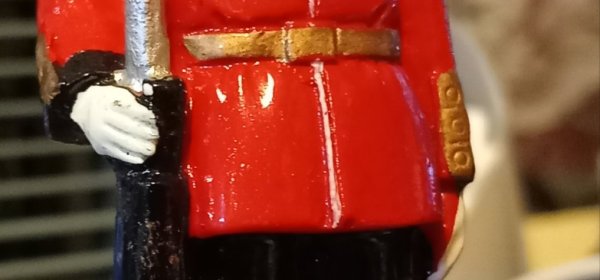
In this sense the ancient ritual of ‘guarding’ is a charade – or a piece of very interesting ‘theatre’ that constitutes a living history. These guards are professional soldiers trained to fight on the modern battlefield – but also ‘volunteer’ to learn all the required skills to ‘march’, ‘stand’ and ‘patrol’ just like a British Infantry Soldier did during the 17th, 18th and 19th centuries. Once upon a time – soldiers in the British Army used march into battle dressed in these uniforms and behaving in this manner – whilst advancing on the enemy standing in straight ranks and moving slowly but precisely forward with fixed bayonet! As the dead and wounded in the front-line fell to the ground – soldiers in the supporting ranks would move up and take their place without effecting the momentum of the attack!

Cheam: WWI & WWII War Memorial! (12.9.2023)

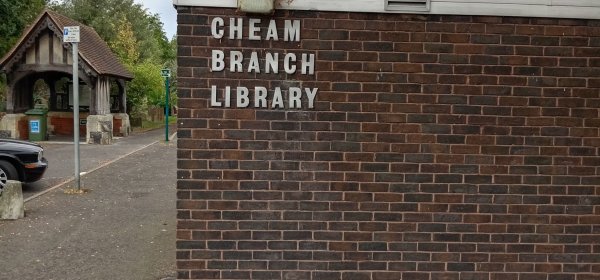
The memorial was unveiled on 16 March 1921 by Admiral Sir Arthur Henry Limpus KCMG, CB and dedicated by the Archdeacon of Kingston, Robert Charles Joynt.The carving and erection were carried out by a local mason Mr Snook of nearby Worcester Park. Among the dead commemorated on the memorial was Flight-Commander F A Brock (son of Brock of Brocks fireworks manufacturers) who invented the smoke screen. Following the Second World War, three names of those who lost their lives in that war were also added.

Sutton: St Nicholas Church – Interior and History! (10.9.2023)

Since around 1539 CE (and Henry VIII’s Dissolution of the Monasteries) this Church has been ‘Protestant’. This is a large Church built for a substantial Township and can probably hold at least 100 worshippers at any one time. Bear in mind that there used to be a greater number of Churches in the UK per small area than there are today – and that populations used to be far smaller despite virtually everyone professing a faith. Perhaps the ample and impressive size of the Church is linked to it serving a local population with a higher social status and wealth – requiring certain standards as being seen to be kept! As far as we are concerned, archaeological structures retain the data of the past, and by studying these structures we are able to glimpse into that past!

1 9 10 11 12 13 30