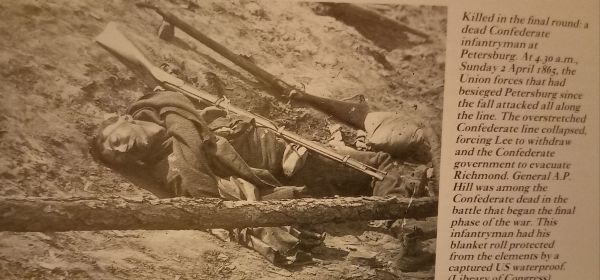
last csa casuality

CSA: On How President Jefferson Davis Changed His Opinion on Arming Southern Slaves! (15.11.2025)

Something of an oddity for a man who is often demonised in modern discourse as being the “defender of slavery”. Be that as it may, free Black men did exist in the South – and chose to join the Confederate Army – as free men. As the war wore-on – and the number of the White male population dwindled – it became ever apparent that the only resource the South possessed was its population of Black (male) slaves. General Pat Cleburne (the Irish-British volunteer killed at Franklin during late 1864) had suggested to Davis that the slaves be “freed” and conscripted into the Confederate Army. At the time, the conservative elements of the Confederate Congress refused to consider this idea. Following the Battle of Franklin (30.11.1864) and the huge casualties suffered by the Confederacy – Jefferson Davies decided to exercise his executive power and authorise 40,000 slaves to be co-opted into the Confederate Army to form Labour and Guarding Corps to free-up White soldiers for frontline duty. However, with the Confederate defeat at the Battle of Nashville (16.12.1864) – Davis stated that all slaves should now be freed and recruited into the Confederate Army – BEFORE the Union could get a chance to liberate them – and use these men against the South!
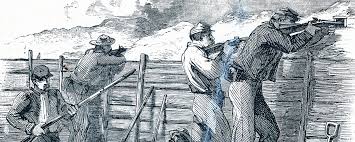
Major General Patrick R. Cleburne leading his men against Federal breastworks, Battle of Franklin, 30 November 1864!

CSA: The Magnificent Confederate Army of Tennessee Attack [30.11.1864] at the Battle of Franklin! (21.10.2025)

The Confederate Army had deployed in an almost Parade Ground formation… As far as the eye could see, the ranks of butternut and grey extended across the gently undulating farm-land. The men were gaunt, many looked like they had been starved – wrote a soldier – and they stood in tattered ranks with their bayonets already fixed on their imported Enfields, Austrians, and captured Springfield rifle-muskets. Their uniforms were threadbare and worn, with many wearing captured Federal clothing. Some had no coats or shoes, and in their haversack, they carried mostly sugarcane and hickory nuts. Nearly all were ragged and dirty. They looked more like a band of robbers than soldiers thought one Federal Private – who saw some captured prisoners. Another Union soldier noted that the Rebels ‘rob our dead because they have nothing to wear – especially for our shoes and coats. They still retained their droopy-felt hats – which gives them a hasty look.’  They are all that the Confederacy could muster – what was left of the hardened spirit of the middle-South. Yet their ragged appearance belied their ultimate worth.

Confederate Soldiers Defend - Battle of the Crater

CSA: A Western Theatre Southern “Private” and “General” Discuss Slavery and the Negro Soldiers of the North! (3.6.2025)

Many American Civil War historical narratives give the (false) impression that the Confederacy lost at Gettysburg in 1863 – staggered on with a futile resistance for two-more years – and then surrendered at Appomattox. Nothing could be further from the truth. Tens of thousands of men bravely fought, died and were wounded on both sides between 1863-1865 – with the Confederacy  winning a number of notable victories after Gettysburg. Private Daniel Kelly quoted above, fought in the Confederate Army in the Western Theatre of the Confederacy – as opposed to the far more famous Eastern Theatre (where Gettysburg was situated). Furthermore, Black, Chinese and Native American men fought in the Confederate Army – but their presence is more or less “erased” from history because such a presence tends to lead to inconvenient and even embarrassing questions.

Stephen Spencer West Co. I “the Granville Stars” 23rd NC Infantry CSA. He was born in Oxford, Granville County, North Carolina in 1837. He was killed in action during the Battle of Chancellorsville on May 2, 1863

CSA: Remembering the [1863] Bravery of the 23rd North Carolina Infantry Regiment [and Other Carolina Men] – at Gettysburg! (27.3.2025)

Jefferson had to draw from a limited pool of men (compared to the North – which possessed an endless supply of recruits – as every newly arrived migrant was enrolled into the US Army) – Jefferson managed to assemble around 80,000 (aged 12-60) – gave every man a uniform, hat and pair of boots, and ensured all were armed and fed. The idea was to Punish the Lincoln Administration that had tried on numerous occasions to militarily invade and subjugate the South. It was General Lee who suggested to Jefferson Davis that an invasion into the North – and a decisive military victory near Washington – might force Lincoln to sue for peace. Lincoln, however, had other ideas, and refused any such compromise, stating that he strove for the utter destruction of the South.

Battle of Chancellorsville

CSA: Would a Confederate Victory Have Led to a Socialist Revolution? (28.2.2025)

However, the Southern ideas of honour and their so-called aristocratic thinking were overblown and these ideas actually sometimes played to the South’s benefit, as the men in the South followed natural leaders and often times appointed them on their own (via popular vote). All too often, in the North, Officers were often political appointees – desk-bound Officers who hadn’t seen a battlefield in years – or ever. Or men who simply bought their way into a General’s uniform. One of the more stereotypical views of the South was the aforementioned backward, backwoodsman. Think about that for a moment. Yes – a significant portion of the Confederate Army was poor, uneducated, and illiterate. Some left-leaning historians have said  – with some accuracy – that the poor Whites of the South had more in common with the slaves – than they did with the leading families who owned most of the land and the fabulous estates like the fictional “Tara” in Gone With the Wind.

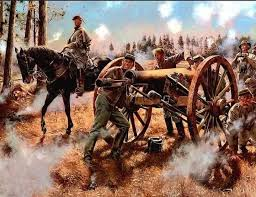
Confederate Artillary

CSA: The Bravery of John Pelham’s “Creole” Cannoniers at the [1862] Battle of Fredericksburg! (17.2.2025)

Despite using good terrain to the maximum advantage, Pelham’s single cannon was still far in advance of the Confederate frontline. Firing at the Union flank meant each cannon-ball smashed through multiple ranks of soldiers – hitting side-on. It was a dangerous gamble – but one which paid-off because Pelham was a competent Officer and his “Creole” crew superb when under fire. A Union Pennsylvanian Infantry Regiment started to take ridiculous numbers of casualties as Pelham’s cannon balls smashed there way through life and limb. However, Pelham only managed to fire three rounds before Union return fire stated coming in. At one-point, as Union rounds were landing, the Louisiana “Creole” crew began to sing the French “La Marseillaise” in defiance. Within minutes, hundreds of Union cannons, both near and far, were returning fire into the general direction, even though the lay of the land often prevented a clear line of sight. The reality was that the Union forces only had to land just one well-placed shot to destroy the single Confederate cannon and neutralise most of its crew. Pelham had chosen his position so well that despite the weight of return fire – the Union artillery found it very difficult to score a direct hit.

1 2