
China Manned Space Agency (CMSA): Names Sought for Manned Lunar Exploration Vehicles! (1.9.2023)

According to an earlier report, China plans to land its taikonauts on the moon before 2030 to carry out scientific exploration. The plan is to launch two carrier rockets to send a lunar lander and a manned spacecraft, respectively, to a lunar orbit. The craft and lunar lander will rendezvous and dock with each other, and then taikonauts will enter the lander.

The names solicitation process is open to the public and will run until September 30. It is aimed at those who are enthusiastic about China’s manned space program, said the CMSA.

Also on Thursday, the CMSA began to solicit logos for four missions of China’s manned space program in 2024, including the launches of the cargo crafts Tianzhou-7 and Tianzhou-8, and the crewed spaceships Shenzhou-18 and Shenzhou-19.

China Releases First Batch of Research from Mars Exploration! (19.9.2022)

Scientists have also found that the Martian soil has high bearing strength and low friction parameters, revealing the site where the rover landed must have experienced wind and possibly water erosion.

These results revealed the impact of wind and water activities on Mars’ geological evolution and environmental changes, and provided support for the hypothesis that there was once an ocean in the Utopian Planitia, according to the CNSA.

In addition, Chinese scientists have obtained a number of scientific results on the relationship between the density of rocks on the Martian surface and the degree of surface erosion, the distribution of ions and neutral particles in the near-Mars space environment, and the gravity field of Mars.

USSR: Did the Soviets Find Life on Venus? (8.12.2017)

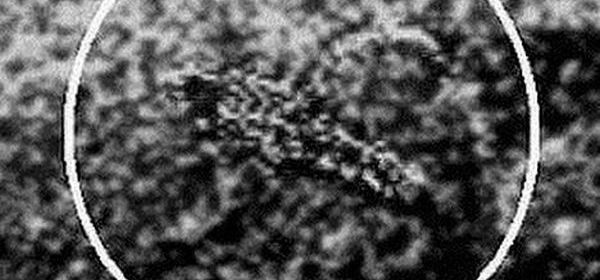
The authoritative Russian astronomer and Chief Researcher of the Space Research Institute of the Russian Academy of Sciences – Leonid Ksanfomality – has published an article in which he asserts that there may be life on Venus. The scientist analysed images transmitted from the surface of this planet by the Soviet space probe Venera-13 in 1982. On a series of successive frames (9 pictures), he discovered several objects that appear and disappear.

1 2