PRC Landing on Moon!

China: Manned Lunar Landing Programme Fully Advanced! (29.10.2024)

The fourth batch of astronauts started training in August, and has so far concentrated on the fundamental theories of manned space engineering and targeted physical training, as well as on-site learning, symposiums and lectures. Subsequently, they will proceed to engage in training tasks of more than 200 specific subjects under eight categories.

The training will also cover a set of skills tailored for life and work on the country’s space station, as well as tasks of extravehicular activities, maintenance and repairs of equipment, and space science experiments, according to Lin.

Now, the two payload specialists from Hong Kong and Macao have become an integral part of the team, and they have exhibited a strong passion for training and maintained optimal physical and mental well-being, said Lin.

The pair of candidates have also received Mandarin courses, and a personalized meal plan has been created to accommodate their dietary preferences, according to Lin.
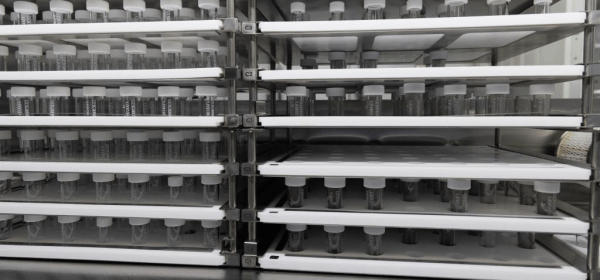
This photo shows lunar samples retrieved by the Chang'e-6 mission at the lunar sample laboratory in the National Astronomical Observatories of the Chinese Academy of Sciences (CAS) in Beijing, capital of China, Sept. 24, 2024. (Xinhua/Jin Liwang)

China: Research on Chang’e-6 [Dark-Side] Lunar Samples Underway! (11.10.2024)

A research paper published in September on the lunar samples brought back by the Chang’e-6 mission says that the Chang’e-6 samples exhibit “distinct characteristics” compared to previously obtained lunar samples.

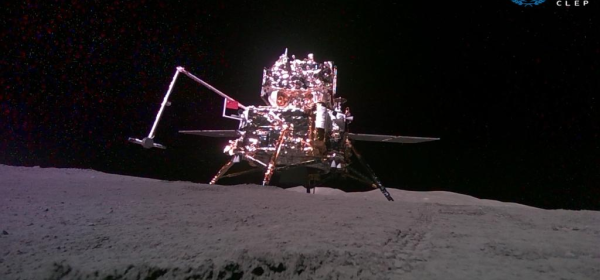
The Chang’e-6 probe was launched from China on May 3, 2024. On June 25, its returner made a landing in north China, bringing back 1,935.3 grams of samples from the far side of the moon. (Xinhua/Jin Liwang)

China's Socialist Technology Triumphs!

Socialist China: Humanity’s First Photographs of Moon’s Dark-Side! (4.6.2024)

Apollo 11, for instance, possessed a computer similar to that which operates most ordinary washing machines (the washing machine is believed to have positively altered human society to a far greater extent than the internet). The internet started as a US attempt to use telephone technology as a “spying” device in every room of the world. The idea was to develop a unifying computer technology which linked all telephones together so that they become, whether in use or not as an analogue communication device, a transmitter of all noise operating around or within the local vacinity (a function unknown to the owner) – broadcasting all this data to a Central Listening Headquarters in the US. A similar situation exists today – with all your emails, posts and other written sources of data uploaded onto the internet. All is observed, recorded and filed away by your National Governments – which report to the US.

Samples from Dark-Side Returns!

China: Spacecraft Returns with first Samples from Lunar Far-Side! (4.6.2024)

The control system of Chang’e-6 has also been enhanced to improve its autonomy, enabling it to complete lunar take-off and ascent with reduced reliance on the Queqiao-2 relay satellite and ground support, said Huang Hao, another space expert from the CASC.

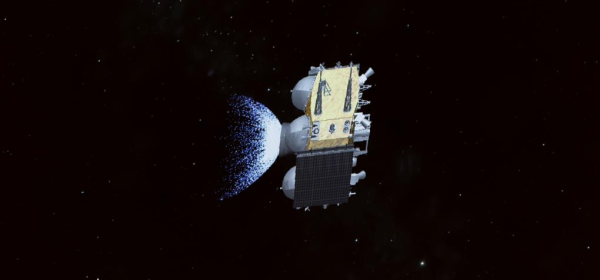
The ascender is expected to carry out unmanned rendezvous and docking with the orbiter-returner combination in lunar orbit, and the samples will be transferred to the returner.

The orbiter-returner combination will orbit the moon, awaiting the optimal time to transfer back to Earth. When it approaches Earth, the returner carrying the lunar samples will re-enter the atmosphere, aiming for a touchdown at Siziwang Banner in north China’s Inner Mongolia Autonomous Region, the CNSA said.

China's Socialist Science Leads the World!

China Focus: Foreign Scientists Thank China for Sharing Lunar Exploration Opportunity! (3.6.2024)

The lander of the Chang’e-6 spacecraft also carried an instrument, called Negative Ions on the Lunar Surface (NILS), developed by the ESA/Sweden to the moon, which will be used to detect negative ions and study the interaction between plasma and the lunar surface.

Neil Melville-Kenney, NILS technical officer of the ESA, said the CNSA’s initiative to invite international partners to participate in the Chang’e-6 mission is very much appreciated by the international community.

“It’s a very impressive mission, a very ambitious mission. So we are very pleased to be a part of it. And the collaboration has gone very smoothly. Now we are waiting for the payload to be turned on so that we can get our first data,” he said.

“It’s very important to have international cooperation for space exploration. I think space exploration encourages us to consider our planet as one and our people as one. And it’s important that we work together as we start to explore the solar system more and more. Together we can achieve greater things,” he added.

1 2