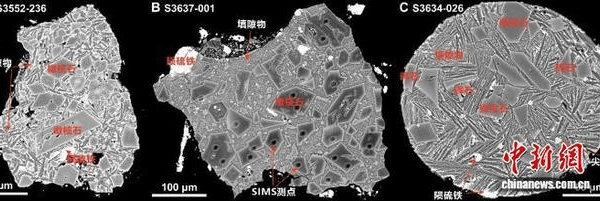
Fragments of impactor residues identified in the lunar soil of Chang'e-6 in this study. Photo courtesy of the scientific research team of the Guangzhou Institute of Geochemistry, Chinese Academy of Sciences

China: Scientists Discover Rare Meteorite Relics in Chang’e-6 Far-Side Lunar Samples! (21.10.2025)

Using advanced techniques to examine mineral composition and oxygen isotopes, the researchers scrutinized lunar soil and confirmed that the fragments came from CI-like chondrites — a type of meteorite rich in water and organic materials that typically originates in the outer Solar System.

The study implies that the Earth-Moon system may have experienced more collisions from carbonaceous chondrites than scientists had previously estimated.

This discovery not only indicates that material from the outer Solar System can migrate to the inner Solar System, but also has important implications for explaining the origin of water on the lunar surface, said Lin Mang, a researcher at GIG.

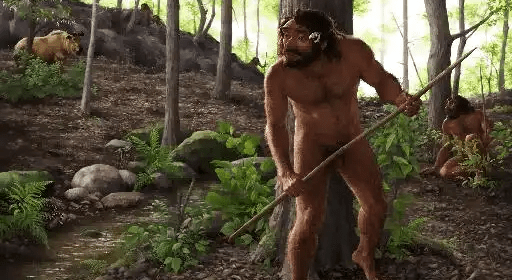
Homo Lomgi - Chinese Ancestor!

China: New [Evolutionary] Finding May Rewrite Human Family Tree! (26.9.2025)

The reanalysis further pushes back the divergence time of modern humans — Homo sapiens — whose ancestors are estimated to have lived in Africa around 500,000 years ago, Neanderthals, who lived between 24,000 and 130,000 years ago in Europe, and Homo longi, a species closely related to Denisovans, who thrived from 30,000 to 285,000 years ago across Asia and are the cousins of Neanderthals.

Lunar Magnetic Field

China: Chang’e 6 Samples Shed Light on Lunar Magnetism! (23.12.2024)

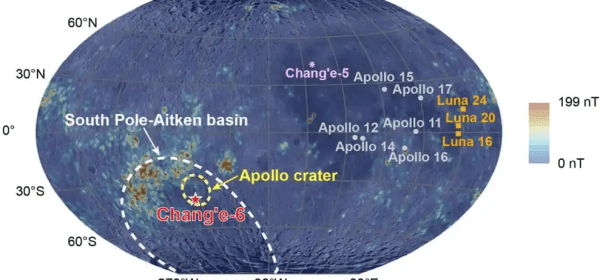
They discovered that the Moon’s magnetic field may have experienced a rebound around 2.8 billion years ago, suggesting that the Moon’s generator may have been reinforced after an early sharp decline.

“The reason for this rebound could be a change in the primary energy source of the generator or a restrengthening of the initial driving mechanism,” Cai said.

“The data fill in a billion-year gap in the evolution of the lunar paleomagnetic record and provide the first paleomagnetic measurements from the lunar far side,” a reviewer for the journal Nature said. “The authors are to be congratulated on a historic study that provides a major advance in our understanding of lunar magnetism.”

The evolution history of the Moon’s magnetic field is markedly different from that of the Earth’s, the research team said.