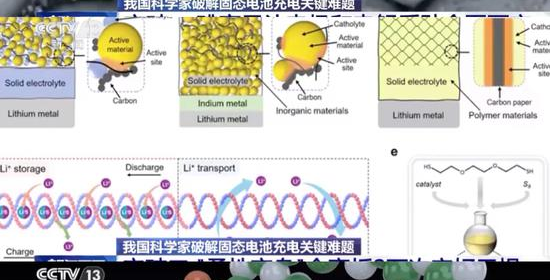
Chinese researchers announces a major advance in all-solid-state lithium battery technology. (Screenshot Photo)

China: Breakthrough in Solid-State Batteries Announced – Doubling NEV Range! (17.10.2025)

Chinese scientists have developed a self-adaptive interphase in all-solid-state lithium batteries that maintains intimate contact between the lithium metal anode and solid electrolyte without external pressure, a breakthrough that decisively overcomes a major bottleneck toward commercialization.

The researchers from the Institute of Physics of the Chinese Academy of Sciences (CAS), Ningbo Institute of Materials Technology and Engineering of the CAS and Huazhong University of Science and Technology found that the contact between the lithium electrode and sulfide solid electrolyte in all-solid-state lithium batteries is not ideal, with numerous tiny pores and cracks present. These issues not only shorten battery lifespan but may also pose safety risks.
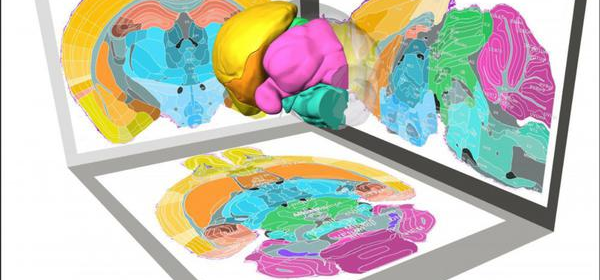
3-D Map Brain - Socialist Science Triumphs!

China: Scientists Create Most Detailed 3D Map of Mouse Brain! (6.7.2025)

International experts hailed the work. Doctor Javier de Felipe of Spain’s Cajal Institute called it “a highly significant achievement”, while Australian neuroscientist George Paxinos — whose own mouse atlases are lab staples — praised the “unprecedented” data quality.

The team aims to expand the stereotaxic topographic atlas’ applications, from testing drugs to guiding brain-machine interfaces. Luo also highlighted Hainan province’s unique resources: “With our primate research resources, this work could bridge mouse studies to human brain exploration.”

“While we’ve mapped distant galaxies, the human brain remains one of science’s final frontiers,” Luo said. The stereotaxic topographic atlas now bridges this gap, proving how microscopic breakthroughs – down to a single micron — can illuminate humanity’s most complex organ.

Smallest Mechanical Heart"

China: Child Recieves World’s Smallest [Magnetically Levitated] “Artificial Heart”! (28.4.2025)

The device, measuring 2.9 centimetres in diameter and weighing 45 grams, is the smallest and lightest of its kind globally, according to the hospital.

Operating at an optimal speed range of 1,500 to 3,600 revolutions per minute, it establishes a stable blood circulation system within young, low-weight paediatric patients, the hospital said.

This artificial device functions like a high-powered motor, allowing fatigued ventricles to rest while maintaining systemic blood circulation, effectively helping acute heart failure patients through critical periods with both minimally invasive procedures and notable efficacy, CNR reported.